Defence Forces must pay deserving cadets their true worth
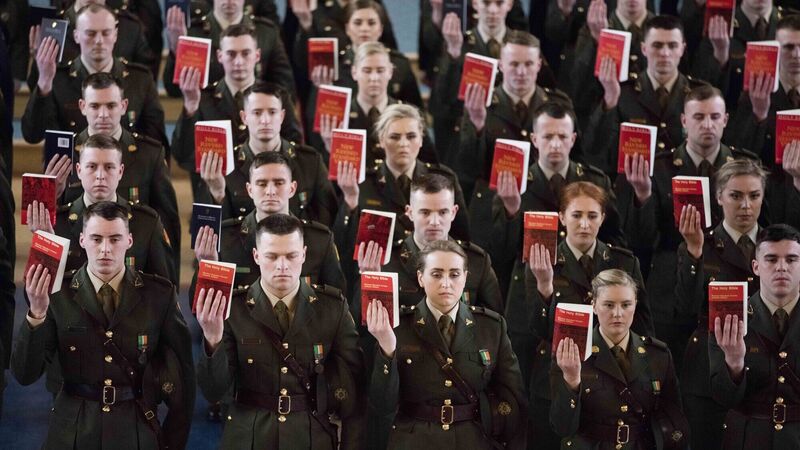
Cadets are paid far lower than the enlisted soldiers they work beside for the first five years — this anomaly would be indefensible in any other profession, writes Conor King
Defence Forces must pay deserving cadets their true worth

The alarmingly low pay for cadets acts as a barrier to entry for anyone who cannot rely on family to support them for the crucial early years of training. Picture: Eamonn Farrell/RollingNews.ie

Ireland asks a great deal of its Defence Forces cadets. We ask these young men and women to commit up to two years of their lives to one of the most demanding training regimes in the State. We ask them to accept military law, restricted personal freedoms, and relentless scrutiny. We ask them to lead others, often at a young age, and to represent the State at home and abroad. What we do not do is pay them fairly.

Cadet pay is not just low, it is shockingly low. In real terms, cadets are paid far below the national minimum wage for the hours they work. Cadet pay remains the lowest in the Defence Forces, at just €503 per week, compared to €550 for a recruit, rising to €627 after 12 weeks. Cadets remain on this pay for the entirety of their first year, while recruits move to a weekly salary of €814 after just six months, or €42,465.65 annually.

More striking still, they are paid significantly less than an enlisted recruit, despite being in full-time training for commissioned leadership and bearing far greater responsibility.

In the first year, a cadet earns 40.7% less than their enlisted counterpart. This disparity continues long after training. From the moment of enlistment, it takes an officer five years to catch up to an enlisted colleague in terms of career pay, despite undertaking longer training and assuming greater responsibilities.

This anomaly would be indefensible in any other profession. In a military organisation that depends on hierarchy, professionalism, and morale, it is actively corrosive.

A cadetship is a gruelling, high-intensity apprenticeship like no other. As well as undergoing long hours of education and training, cadets are deployable on aid to the civil power operations, and they are routinely used as the go-to unit for State ceremonial events, representing Ireland at moments of national and international significance.

Vital contributions

They are expected to deliver flawless standards of foot and arms drills, standards that will likely be on display during Ireland’s upcoming EU presidency, when the eyes of Europe will again be on Dublin. These are not symbolic duties; they are operational, public-facing, and demanding.

Cadets have also demonstrated their value in times of crisis. During covid, they played a central role in the State’s response, serving as contact tracers at a moment when public services were under immense strain.

That contribution is worth remembering now. When the State needed disciplined, adaptable personnel at short notice, cadets were there. Yet even as they perform genuine military service, they are denied military service allowance, which is paid to others precisely because military life involves unique demands and constraints. The contradiction is stark.

Low pay might be tolerable if cadetships were short, or if the financial impact disappeared once training ended. But under the single pension scheme, earnings are averaged across an entire career. This means that paying cadets a poverty-level wage for almost two years does lasting damage to their pension entitlements. 

In other words, the State is not just underpaying cadets now; it is permanently penalising them for having trained as officers. 

Allowing this to continue is not merely unfair, it is intolerable.
The consequences are predictable. Low cadet pay acts as a barrier to entry, excluding capable people who cannot rely on family support or personal savings. Anyone in their 30s with dependants, a mortgage, rent, or other financial responsibilities simply cannot contemplate entering a cadetship on the current rate of pay. This reality renders the recent increase in the maximum induction age to 39 years almost meaningless.

On paper, the Defence Forces are open to older candidates; in practice, the pay structure ensures that only the young and financially insulated need apply. It affects the quality and diversity of future leadership.

A system that quietly filters out both less well-off candidates and mid-career professionals is one that shrinks its own talent pool. At a time when the Defence Forces are struggling with recruitment and retention across all ranks, that is a self-inflicted wound.

Financial incentives

There is also a hard financial logic to this debate. Training a cadet is expensive. When cadets or newly commissioned officers leave after a short period, often citing financial pressure or a sense of being undervalued, the State loses that investment. Improving cadet pay would not be a gesture of generosity; it would be a retention measure and a protection of public money.

Ireland’s security environment is changing. Cyber threats, maritime protection, aid to the civil authorities, and international peace-keeping all demand skilled, motivated officers. 

Attracting and retaining that calibre of leader requires more than appeals to patriotism and service. Commitment does not pay rent, and pride does not cover childcare costs.

Cadets are already professionals in every meaningful sense. They serve, they deploy, they represent the State, and they step forward in moments of national need. Treating them as anything less when it comes to pay undermines morale and damages the institution they will one day lead.

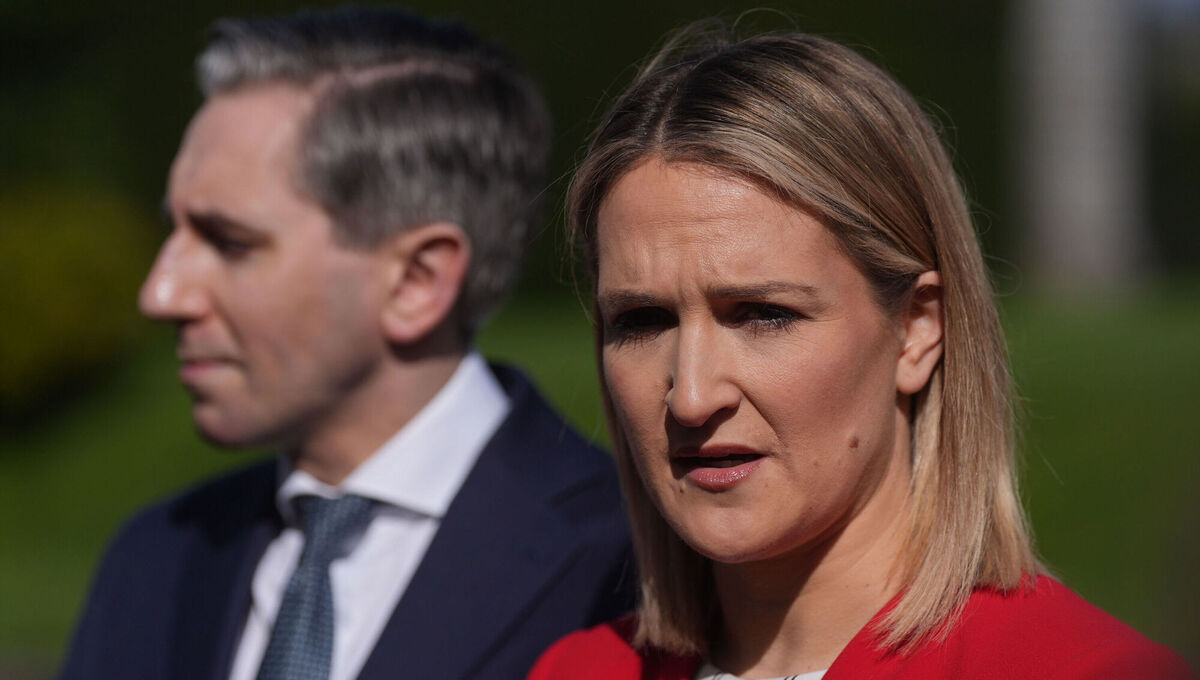
Defence minister Helen McEntee, seen standing beside Tanaiste Simon Harris, has asked her officials to consider options for enhancing the renumeration package for cadets. Picture: Brian Lawless/PA

There are simple solutions to addressing this injustice, and they are simply a matter of political will. All of these options have been advocated for with the Department of Defence and relevant minister for several years.

In October 2025, Tánaiste Simon Harris assured Raco delegates that the Government will work to ensure progress is made in the short term, to support the Defence Forces in bringing forward the leaders of the future. 

Defence minister Helen McEntee has asked her officials to consider options for enhancing the remuneration package of cadets. Yet the ongoing cadetship competition — launched last month with much fanfare, and supported by a hugely slick and professional advertisement campaign across all media — continues to be undermined by the pay rates (though there is a tendency to misleadingly refer to pay on commissioning, and not on enlistment).

The financial strain of living on cadet pay makes joining the Defence Forces less attractive, potentially limiting the pool of highly motivated candidates. Improving cadet pay is not just a matter of fairness, it is essential to attracting, supporting, and retaining talented personnel in the Defence Forces.

The Department of Defence and military leadership cannot aspire to becoming an ‘employer of choice’ while presiding over what is tantamount to exploitation.

 In the absence of any apparent improvement in this matter, our association has been left with little alternative but to recommend to prospective cadet applicants that they enlist as a recruit in the Defence Forces prior to commencing a cadetship, so they can start a cadetship on a much higher salary.

If we want a capable, credible Defence Forces tomorrow, we must start by paying today’s cadets properly. That is not charity, it is responsibility; and it is long overdue.

  • Lieutenant Colonel Conor King is the general secretary of the Representative Association of Commissioned Officers


x

More in this section

Revoiced

Newsletter

Sign up to the best reads of the week from irishexaminer.com selected just for you.

Cookie Policy Privacy Policy Brand Safety FAQ Help Contact Us Terms and Conditions

© Examiner Echo Group Limited