The State has not acted on the lessons from the crash of Rescue 116
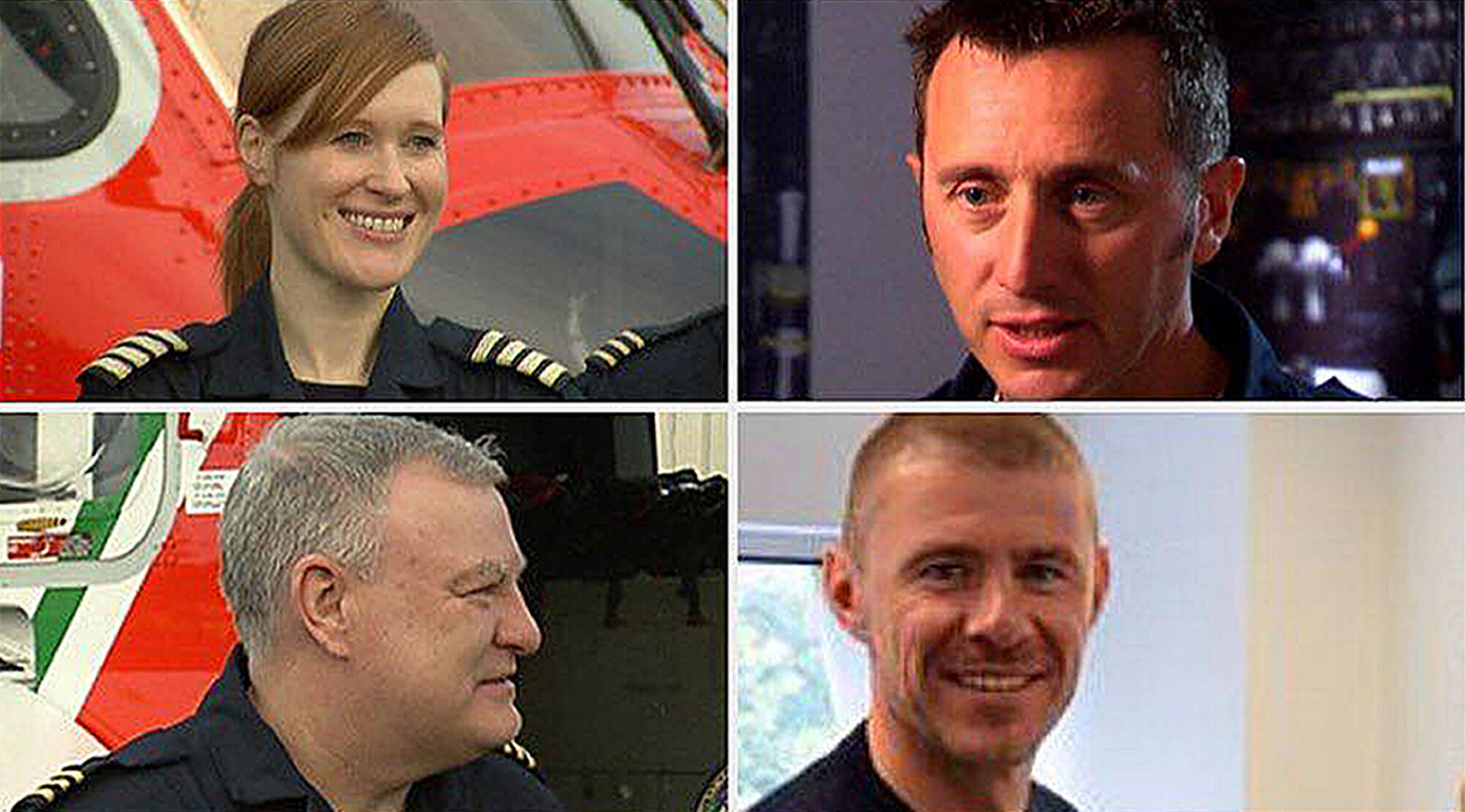
(From top left, clockwise) Captain Dara Fitzpatrick, Captain Mark Duffy, winchman Ciaran Smith and winchman Paul Orsmby, the four crew of an Irish Coast Guard helicopter, who died when Rescue 116 crashed into Blackrock Island in March 2017.
In November 2021, minister for transport Eamon Ryan told the Dáil he "fully accepts" the safety recommendations arising from the crash of Coast Guard helicopter Rescue 116, which killed Captain Dara Fitzpatrick, Captain Mark Duffy, winch operator Paul Ormsby, and winchman Ciaran Smith on March 14, 2017.
Last year, members of the North Runway Technical Group, a voluntary group of qualified aviation professionals who have been examining Dublin Airport's north runway operations since 2022, sought records under the Freedom of Information Act.
The Department of Transport was asked what qualifications it requires of staff who oversee Irish aviation safety. It said no records exist.
The Air Accident Investigation Unit's 350-page report had identified the crash as an organisational accident: not a single pilot error, but the accumulated failures of multiple agencies.
Read More
Among the most significant findings was a concession by the department itself. It told investigators it "did not have specialist aviation expertise within the department to discharge such oversight" of the Irish Aviation Authority.
The AAIU made 42 recommendations. Three were directed at the minister: ensure the department has "sufficient specialist aviation expertise," conduct a detailed review of IAA oversight mechanisms, and periodically review in-house technical capabilities.
The minister accepted all of them. The inquest jury endorsed all 42 in June 2022. The political consensus was unambiguous.
Three and a half years later, the FOI request tested whether any of this had been implemented.
The department's response, from qualifications and competencies to training requirements: refused under the FOI Act as no records exist.
The department pointed to the civil service capability framework on publicjobs.ie.
It did release the organisational chart showing 49 staff at grades from Principal Officers to Administrative Officers. All generalist civil servants.
The chart shows no role that specifies aviation qualifications or technical requirements.
This is the section that oversees daa, the IAA, and AirNav Ireland.
It oversees Dublin Airport, which in 2025 exceeded its cap by 4.4 million passengers and its night flight limit routinely by almost 50%.
It implements EU aviation regulations into Irish law.
The FOI record does not show a department that tried and fell short.
It shows a department that never started.
Separate requests have revealed a consistent pattern. In 2023, the north runway flight path controversy intensified causing increased scrutiny of all daa planning applications.
The records showed officials asking AirNav Ireland, the body that chose the changed route, to draft the department's own responses to public complaints and ministerial representations.
Perhaps most disappointing in the context of the AAIU recommendations, when the minister's special advisor asked in April 2023 for daa and IAA claims about flight path compliance to be "independently assessed", a department official refused.
She wrote that "it would not be appropriate that the minister or department would seek to bypass the IAA and seek separate independent advice on this issue."
The minister's office was overruled by his own officials when asking for precisely the independent expertise the AAIU specified the department must have to perform its function.
The pattern across these requests is not mere understaffing. This is institutional capture.
The department does not oversee the aviation bodies it is responsible for. It relies on them to tell it what to think, what to say, and what to write.
When a minister asks for independent assessment, officials refuse on the grounds that independence would be inappropriate. The regulated entities have become the regulators of their own oversight.
There is a particular form of bureaucratic failure at work here.
The AAIU found the department lacked the expertise to oversee aviation safety.
That was not a political opinion. It was the conclusion of a statutory accident investigation.
The department did not read this as: we have a statutory duty and we failed to resource it.
The department read it as: we cannot be held responsible for something we never equipped ourselves to do.
The incompetence became its own defence.
Before the crash, the department's lack of aviation expertise was a gap in the system.
After the crash, after the report, after the recommendations, after the minister stood in the Dáil and said he "fully accepts" the continued absence of that expertise is a choice.
It is a choice made with full knowledge of the consequences, because the consequences have already been demonstrated in the most final way possible.
The four crew members of Rescue 116 intentionally flew, at night, into a North Atlantic storm, so others might live. They trusted the systems behind them.
Four people died. The State investigated. The State found itself at fault. The State promised to act. The State did not act.
More than four years after the AAIU report, will minister Darragh O’Brien now direct his department to publish annually a report detailing its technical competence to perform its oversight function?
- Gareth O'Brien is a member of the North Runway Technical Group, a voluntary group of qualified aviation professionals who have been examining Dublin Airport's North Runway operations since 2022.

CONNECT WITH US TODAY



Be the first to know the latest news and updates