Nothing will improve at UHL without a problem-solving culture
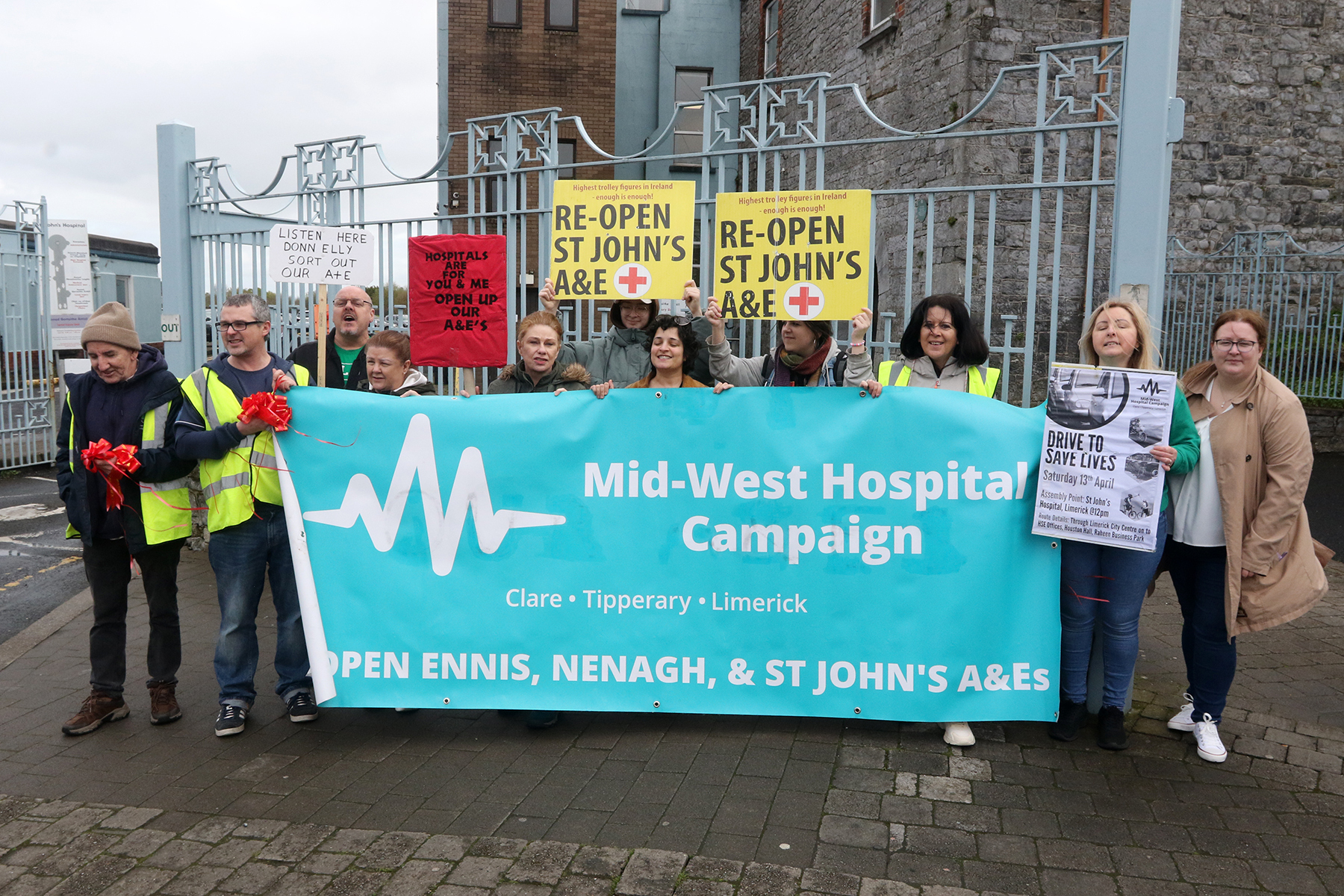
Protesters taking part in the UHL Midwest Hospital Campaign against overcrowding at St John's Hospital recently. File picture: Brendan Gleeson
The latest news from an âout of controlâ University Hospital Limerick, as reported by Niamh Griffin in Wednesdayâs Irish Examiner, will have caused anxiety for thousands of patients and their families throughout the Mid-West.Â
The circumstances described are familiar to anyone who has ever attended the hospitalâs A&E.

Over the past few years I have been through University Hospital Limerickâs patient journey many times with loved ones. My first impression of the hospital, as someone who worked for years as a Lean strategist in the corporate sector, was that it didnât have a problem-solving culture.Â
The contrast between being a professional in a solution-orientated workplace where everyone is focused on the same goal, and being the helpless helper to a vulnerable patient where the system seems designed to frustrate people trying to do their jobs, couldnât be greater.
Over the course of many, many admissions and discharges with different family members, I learned my first impression was right.
In the summer of 2023, my family and I encountered many problems in UHL. Accident and emergency was a nightmare on every visit and we had numerous issues on the wards, both with prescriptions and with obtaining critical medical information on discharge.
I complained and information was logged on UHLâs âelectronic incident systemâ which is probably similar to what Dr Suzanne Crowe wrote about in her excellent article in the , .Â
I knew Iâd never hear about these complaints again and I was right.
Meeting with the hospital PALS (Patient Advocacy and Liaison Service) filled me with hope. However, this was short lived as they explained that no action would be taken. I was advised to email the HSE at âYour Service, Your Sayâ. That didnât make sense, because what I needed was immediate help from a healthcare professional in UHL.
I was told "thatâs the complaints process".Â
The more time we spent in UHL, the more mistakes we experienced - serious mistakes on prescriptions, little to no communication on discharge, inaccurate information on discharge documents, blood results and changes to medications not followed up on â potentially life-threatening mistakes became the norm.
I submitted three written complaints to the hospital on its unsafe prescription process, unsafe discharge process and unsafe practices in accident & emergency. Naively I thought UHL would implement immediate improvements, yet I was wrong.
In response to one of my complaints, UHL outlined a list of actions they were going to take yet not one action they had actually done. A response to a complaint with no action taken is archaic and only serves to further frustrate patients and their families.
In January 2025 we ended up back in UHL's A&E department, which was the start of a new low in terms of my perception of UHLâs problem-solving culture.
The A&E department was still overcrowded and a frightening place to be for patients. It was difficult to get information, slow to get tests done, slow to get results back and test results werenât evaluated properly.Â
Keeping patients on trolleys for days and the consequent lack of privacy, comfort, dignity and safety of patients has over time become normalised.

Because no improvements had been made after my previous complaints, during our time in UHL, almost two years later, we experienced exactly the same problems as before yet the impact had become more life-threatening. We experienced mistake after mistake, many missed medical evaluations - poor processes delivering unsafe healthcare.
All of the above isnât surprising, because without a problem-solving culture, problems arenât solved. When problems arenât solved, they grow bigger, the impact to the patient becomes more serious and more patients are impacted.Â
This is referred to as the snowball effect - what starts as a snowflake, if not stopped, will one day become an avalanche.
I yet again submitted three written complaints to UHL on exactly the same processes in my previous complaints - their unsafe prescription process, unsafe discharge process and unsafe practices in accident & emergency.
I hope UHL take my complaints seriously and solve their problems so other patients donât experience what we did - yet I donât have much faith that they will.
Without a problem-solving culture, organisations will go around in circles trying to solve their problems only to find that these problems grow bigger, become more widespread and affect more people, in this case UHLâs staff and patients.
Problem-solving is a key element of Lean, which is a way of thinking and working that focuses on creating value for customers (in this case care for patients) while minimising waste which is everything that gets in the way of delivering value (care).Â
Lean is a culture of deep respect for people, respect for their time, skills and their unlimited potential. One way a hospital can show this level of respect for both their staff and patients is by implementing a robust problem-solving culture.
I have immense respect for UHLâs outstanding staff, they always went above and beyond delivering the best care to my loved ones.Â
In stark contrast, the hospital managementâs inability to solve their problems caused my family and I much stress and resulted in unsafe healthcare on numerous occasions.
In a problem-solving culture, staff and patients are encouraged to highlight problems, problems are made visible and not hidden in electronic systems, problems are discussed with leadership, staff are trained on and involved in problem-solving which is recognised and rewarded.
This culture creates an environment of trust and engagement which leads to safer healthcare.

Without a problem-solving culture, staff and patients are afraid to speak up and nothing changes even if they do. This is dangerous as problems just grow bigger and become more widespread affecting more staff and more patients.
This culture creates an environment of mistrust and disengagement which leads to a reduction in safe healthcare â something that has been seen over and over in UHL.
I want what everyone who attends UHL wants - safe healthcare that we can trust. A robust problem-solving culture delivers just that.Â
Here are the first steps to embedding a problem solving culture:Â
: If you donât have commitment from leadership, stop right there, culture change only occurs from the top. Consistent leadership presence at the frontline, supporting those who deliver care to patients is essential to a problem-solving culture.
: Problem-solving is a continuous learning curve and there is no end to the depths of understanding you can reach through problem-solving. The more staff that are upskilled in problem-solving, the more problems will be solved, the safer the healthcare.
: When you notice a problem, the problem is at its smallest, but the longer you leave a problem, the bigger it will become. This is why highlighting problems in real time and solving problems as soon as possible is so important.
: The most dangerous problems are those hidden away in electronic systems, collecting digital dust, never again to see the light of day. Making problems visible ensures they receive the spotlight and attention they deserve.
: An escalation process ensures problems are escalated to leadership as soon as possible, and that leadershipâs progress in solving these problems is monitored visually - no more hiding behind electronic systems.
: âProblems are treasures, reward the messengerâ is a wonderful quote from Pascal Dennis. This sums up a problem-solving culture where those who bring problems to light are rewarded for finding such treasures â the very opposite of what we hear about in most whistleblower accounts that make the news.
A problem-solving culture creates a more skilled workforce, builds immense trust, increases engagement and solves problems, all delivering safer healthcare.
Isnât that what every healthcare environment should be aiming for?
- Siobhain Danaher is a freelance Lean strategist with years of experience in corporate environments and the pharmaceutical sector.