Anne Looney: ETB schools will face challenges to their ethos of equality

There have been conscious efforts to reframe the identity of State schools which historically was framed as a negative — schools defined by what they were not. Picture: iStock
Revisiting origin stories is always enlightening. Each new reading reminds us of what we already know, but it also delivers fresh insight as it echoes through more recent developments and contemporary challenges.
The origin story of vocational education in Ireland is of particular interest as it represented the first education provision delivered directly by the relatively new state.

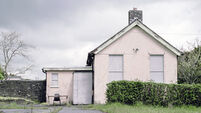
My father’s home town of Macroom, Co Cork, boasts one of the first schools of this kind.

Opened in 1934 and now known as McEgan College, it was originally named for Boetius McEgan, Bishop of Ross, who was executed in Carrigadrohid Castle by Cromwellian forces in 1650.
These first schools of ‘continuation education’ were established under the auspices of the new vocational education committees.
Although the Macroom school was named for a Catholic bishop, these new State schools made the Catholic leadership of the time uneasy on a number of fronts.
The idea of ‘continuation’ from primary education, which was almost entirely under religious auspices, was seen as a threat. The absence of any reference to religious instruction in the new system was a second source of concern; the provision of night classes that would be co-educational was a third.
A review by UCD’s Marie Clarke of the correspondence of the time also shows that the Catholic leadership actively campaigned to ensure that studies in this new system would not include ‘academic’ subjects and instead be confined to technical skills and preparation for work.
This particular constraint on the new scheme was partly responsible for a certain educational hierarchy that lasted for many years in towns across Ireland.
While the inevitable tensions between ‘the academic’ and ‘the vocational’ in education also played a part, the particular focus of vocational schools often saw them positioned as the school of last resort, after the ‘sisters’ for girls and the ‘brothers’ for boys.
This often resulted in an identity framed as a negative; schools defined by what they were not, which meant that they were, for the middle, landed, and merchant classes, “not for the likes of us”.
By 1952, given the central place of Catholicism in most Irish communities, most local vocational committees were chaired by Catholic clergy and included Protestant clergy as members.
In 1943, Memo V40 emphasised the religious purposes of all education, including in vocational schools, and encouraged the committees to ensure that religious instruction formed part of the curriculum offered.
How things have changed: Community colleges offer the full curriculum to all students under the patronage of the Education and Training Boards (ETBs) across the country.
The new framework on ethos, launched in 2022, is a conscious attempt to reframe the origin story as a positive one, focusing on what the schools are, rather than what they are not.
The framework says that the schools are State, coeducational, and multidenominational.
The five core values of excellence in education, care, equality, community, and respect are not for hanging on the wall or the schools, or for the school crest or gate. The framework challenges each school to self-evaluate against these values.
I was privileged to speak at the launch of the framework in 2022 and observed that the commitment to self-evaluation of this kind was a ‘smart move’ on behalf of the ETBs.
I suggested then that the challenge for Irish education as it eases itself into a new and more diversified school ecosystem, was for other school networks to set about the task of articulating their ethos with similar honesty, purpose, and conviction.
Some have already done so; for others it is a work in progress; for a few this is seen as an unnecessary task given that “everyone knows what we stand for”.
But ‘everyone’ is not the ‘everyone’ it used to be.
In Ireland, we are used to debates, and even rows, about religion in schools in Ireland. We have even come to expect them.
So, it was no surprise that some of the early struggles and controversies around the framework and the clarity around a multidenominational identity have been about religion in the life of the school, religious education in the curriculum, and the nature of rituals and celebrations of key moments in school life.
What has caught everyone by surprise — inside and outside the ETB system — has been the challenge of being identified with the State.
The increasing fragmentation in Irish society with the emergence of the far right, the rise of anti-immigration sentiment, and groups hostile to the State and its agencies, will inevitably position avowed State schools that promote equality and community as targets for the campaigns and hostilities of some groups.
In former times, skirmishes about relationships and sexuality education were more likely to be associated with denominational education; now, as part of the State curriculum, offered in State schools, the battles are just as likely to be fought in state territory, targeting the schools that celebrate their ‘State’ identity.
Equality is also at the heart of ETB schools; the US president will probably not have these schools on his ‘must see’ list if and when he next visits our shores. But in communities across Ireland, state schools that welcome all students are beginning to get unwelcome and hostile attention from those who believe that the State of Ireland has welcomed enough.
As the new framework on ethos becomes more embedded in the schools, as we move closer to celebrating the centenary of the 1930 Vocational Education Act, the ideological ‘wars’ about gender, culture, equality, and inclusion rumble on.
As ETB schools justifiably celebrate their State identity, they may well silently wish for the relatively civilised skirmishes about a school Mass or Christmas crib.
Boetius McEgan was hanged because he refused to advocate for surrender. ETB schools should be similarly resolute for the values they stand for — without the necessity for another Carrigadrohid martyrdom.
- Anne Looney is executive dean at the Institute of Education, Dublin City University (DCU). She is one of over 50 contributors to a landmark book, Education & Training Boards — Shaping the future, leaving no one behind, recently released by Education and Training Boards Ireland. The book is on sale now on BuytheBook.ie