Arrest of murderous former Filipino president Rodrigo Duterte a welcome blow for justice
A step towards justice for those mourning thousands of people killed in the Philippines 'war on drugs' 
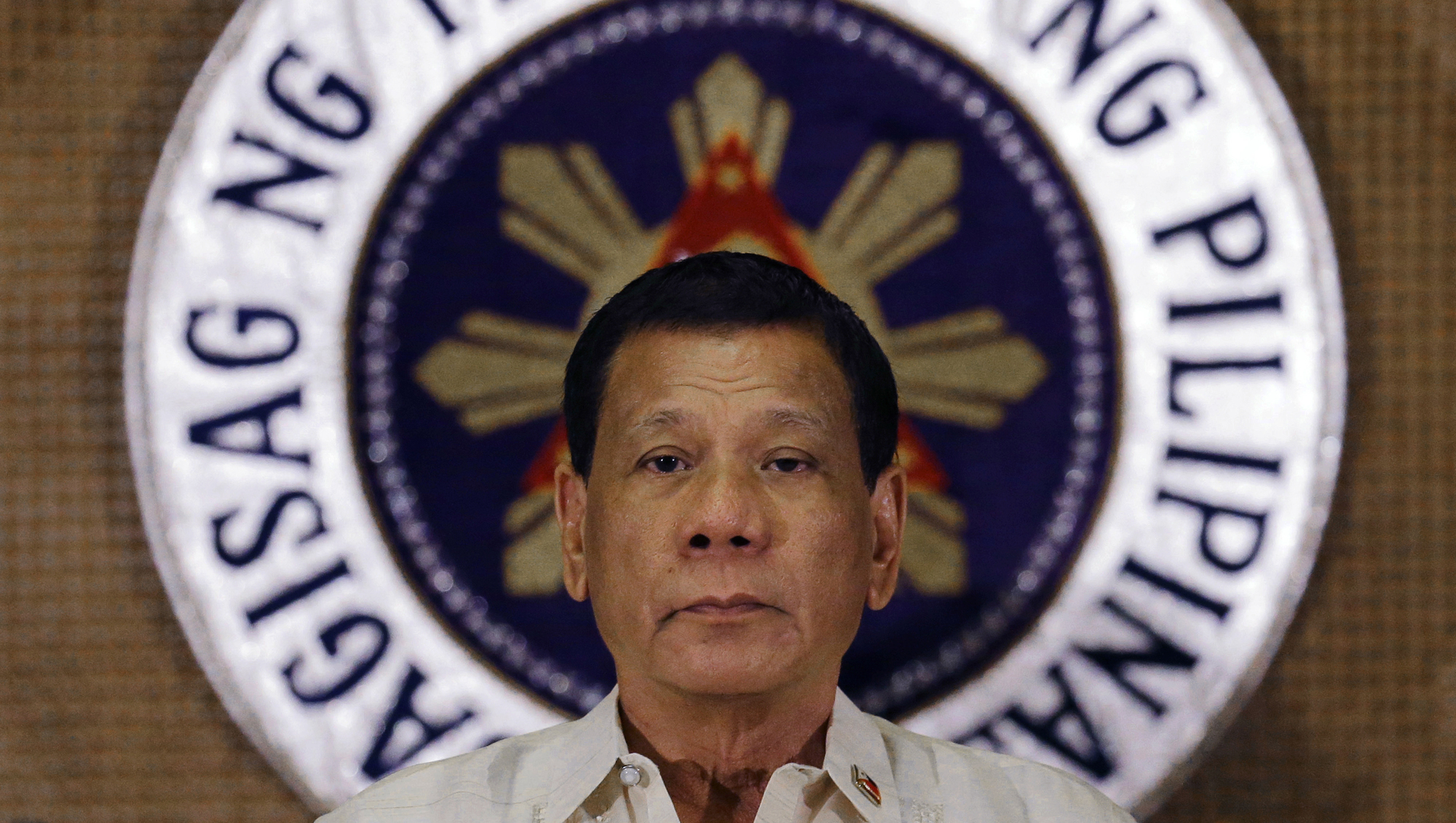
Former Philippine president Rodrigo Duterte operated a 'war on drugs' in the country which saw death squads carry out violence on a scale that shocked the world. File photo: AP/Aaron Favila

Former Philippine president Rodrigo Duterte operated a 'war on drugs' in the country which saw death squads carry out violence on a scale that shocked the world. File photo: AP/Aaron Favila

The arrest of Rodrigo Duterte, who served as president of the Philippines between 2016 and 2022, for crimes against humanity for his part in the country’s violent “war on drugs” is a welcome blow against impunity. 

Duterte was arrested on March 11 by Interpol, which was carrying out an arrest warrant issued by the International Criminal Court (ICC) charging him with crimes against humanity. It’s a step, at least, towards justice for the families of the victims of thousands of extra-judicial killings – maybe tens of thousands. Nobody knows exactly how many.

A key part of Duterte’s campaign platform when he ran for president in 2016 was to combat what he called “the drug menace”. During his previous 22 years as the mayor of Davao city in the province of Mindanao in the southern Philippines, he had operated a similar policy.

The 1,040 deaths during his war on drugs there became the subject of an excellent 109-page report by the pressure group Human Rights Watch: 'You Can Die Any Time': Death Squad Killings in Mindanao.

Duterte never shied away from that notoriety. His policy of running death squads from the presidential palace resulted in violence on a scale that shocked the world. But he wasn’t re-inventing the wheel. When he was mayor of Davao, his right-hand men included many of the same characters who then oversaw the national drug war (Operation Tokhang).

Relatives hold pictures of victims of alleged extra-judicial killings in front of a picture of former Philippine president Rodrigo Duterte with a sign that says "Jail Duterte" today. Many of these murders left no evidence. Photo: AP/Aaron Favila

The drug war escalated quickly from Manila and came to consume the whole country. At first, victims’ bodies would be left with a sign which claimed they were a drug pusher or user. Eventually, those signs disappeared and the victims were just left for dead.

Then the police became brazen. A “shoot first – ask question later” policy accelerated to the point where vendettas and vigilante assassination had the perfect cover to get away with murder on an industrial scale. Suspected police corruption or downright disregard for the law was caught on security camera and published in the media.

It was hoped by many citizens that the sentencing of three police officers to 40 years in prison in 2017 for the killing of 17-year-old Kian Loyd delos Santos signalled an end to impunity in the Philippines. But, this remains the only case of police accountability. And the guilty verdict was reached largely because CCTV footage refuted police attempts to cover up their part in the murder.

Thousands of people disappeared – children too – all caught up in the vigilante violence that the state had instigated but couldn’t contain. Activists, dissidents, journalists, lawyers and clergy were also increasingly targeted during the drug war. Many of the murders were barely investigated, if at all. Motorcycle assassinations by gunmen riding pillion became a scourge – and evidence proved hard to come by.

Prosecution

Prosecution will not be easy. There are numerous significant hurdles for the ICC prosecution to overcome. The police’s involvement in the killings presents a massive challenge. With the exception of Kian’s case, killings committed by uniformed police have long since been swept under the carpet. Police officers were allegedly involved in some of the vigilante killings, out of uniform as guns for hire – but were subsequently acquitted.

Many of these murders left no evidence. Bodies were quickly moved and the blood washed off the streets. Given the time that has now passed and police complicity in the violence, nobody should be under the impression there is a mountain of forensic evidence waiting to be analysed or that witness statements were even taken at the time. Many of the deaths were not even recognised as crimes when they occurred.

But timing matters. At the time of these crimes, the Philippines was a signatory to the Statute of Rome, the treaty which set up the ICC. In 2019, Duterte withdrew the country from the ICC’s jurisdiction, but this didn’t absolve those responsible for the three years of bloodshed before that.

But even given a case can now be brought against Duterte, witnesses and – most importantly, whistleblowers from inside the police – will be hard to come by. Many of those that have tried to bear witness to the reign of terror have had to flee the country.

Meanwhile, Duterte’s camp will be quick to mount a popular defence that this is a show trial. Rodrigo didn’t pull the trigger himself – even if he has openly admitted to killing people when mayor of Davao. His culpability and responsibility for the deaths isn’t something he has denied or refuted. Though his team will vociferously deny that the ICC has any cause to interfere with domestic Filipino affairs.

There is an awful lot of politics involved here too. Accountability for the murderous violence starts with Rodrigo Duterte. But it needs to delve much deeper into the Philippines national police and will be incredibly disruptive. It will require the support of the current president, Ferdinand Marcos Jnr. Thus far, he has been reticent to provide that support.

  • Tom Smith is Associate Professor in International Relations & Academic Director of the Royal Air Force College Cranwell, University of Portsmouth. This article was originally published on The Conversation. 

the conversation

More in this section

Revoiced

Newsletter

Had a busy week? Sign up for some of the best reads from the week gone by. Selected just for you.

Cookie Policy Privacy Policy Brand Safety FAQ Help Contact Us Terms and Conditions

© Examiner Echo Group Limited