We must hold Russia accountable for ultimate crime of aggression
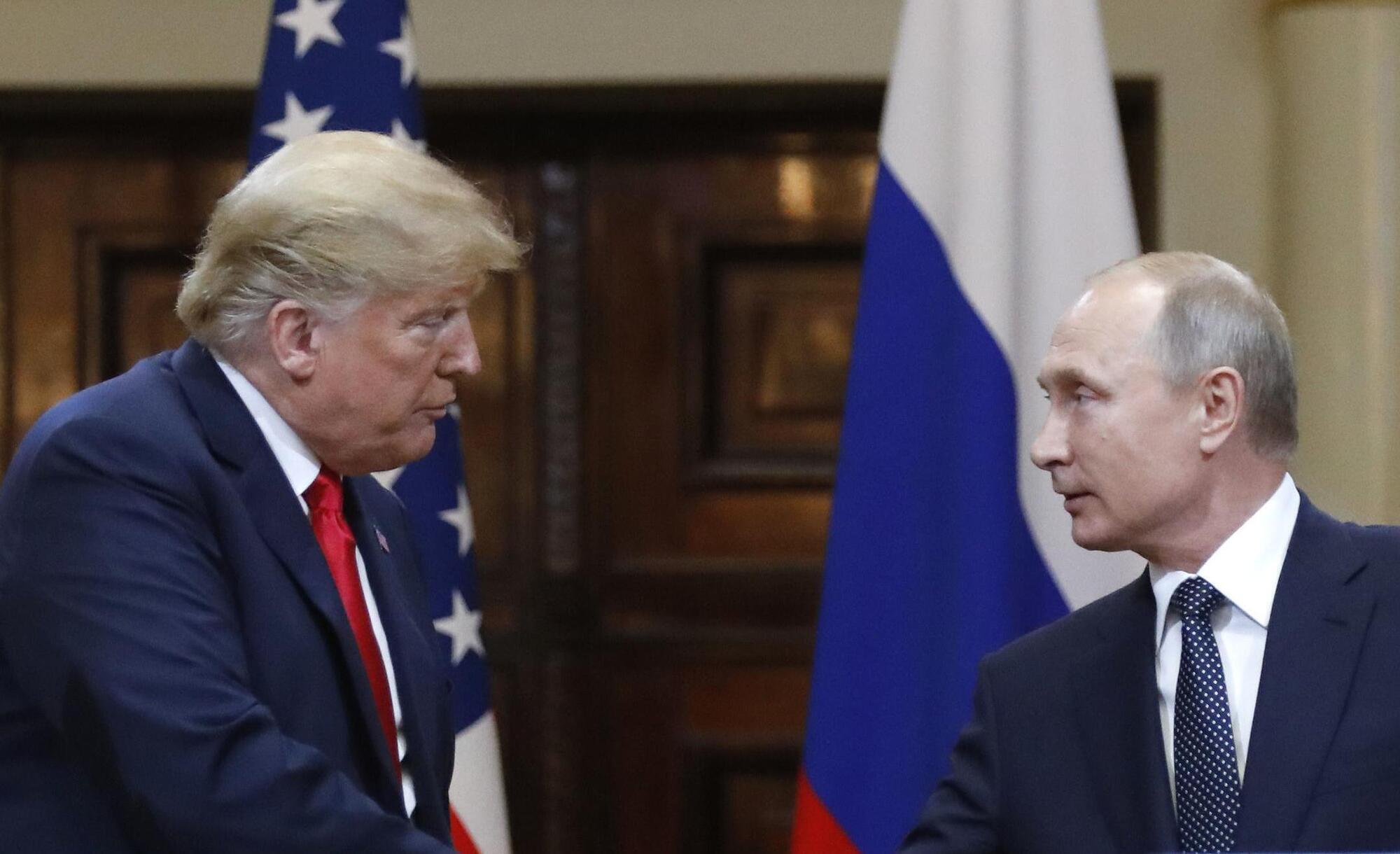
Donald Trump (left) and Vladimir Putin after a meeting at the Presidential Palace in Helsinki, Finland, in 2018. The new US President appears to be conceding on all major Russian demands before peace discussions even begin, and in the stark absence of the most important actor in any such discussion about the future of Ukraine: Ukraine itself. File photo: AP/Alexander Zemlianichenko
In February 1805, James Gillray caused quite a stir when he came up with a famous political cartoon depicting Napoleon and British Prime Minister William Pitt carving up the globe into spheres of influence. Fast forward 220 years to February 2025, and Trump’s détente with Putin smacks of this imperial caricature, except it is no joke.
It has been an extraordinary few weeks, with the new US President appearing to concede on all major Russian demands before peace discussions even begin, and in the stark absence of the most important actor in any such discussion about the future of Ukraine: Ukraine itself.
If two major countries are prepared (and allowed) to force a “settlement” on a country which has been the victim of invasion with no regard for its wishes, its sacrifices, its rights under international law, the threat is not limited to Ukraine, it is a risk to us all.
We no longer have the luxury of harbouring illusions; the future of Ukraine is inextricably linked to the long-term stability of Europe. Russia therefore must be held accountable for its war of aggression and it is Ireland’s interest as much as it is Ukraine’s.
Russia invaded Ukraine three years ago on February 24, 2022. Since then, tens of thousands of lives have been lost and almost seven million Ukrainians have been forced to flee their homeland, approximately 100,000 of whom are in Ireland. Every day more people are being killed, more families torn apart, and the need for accountability grows.
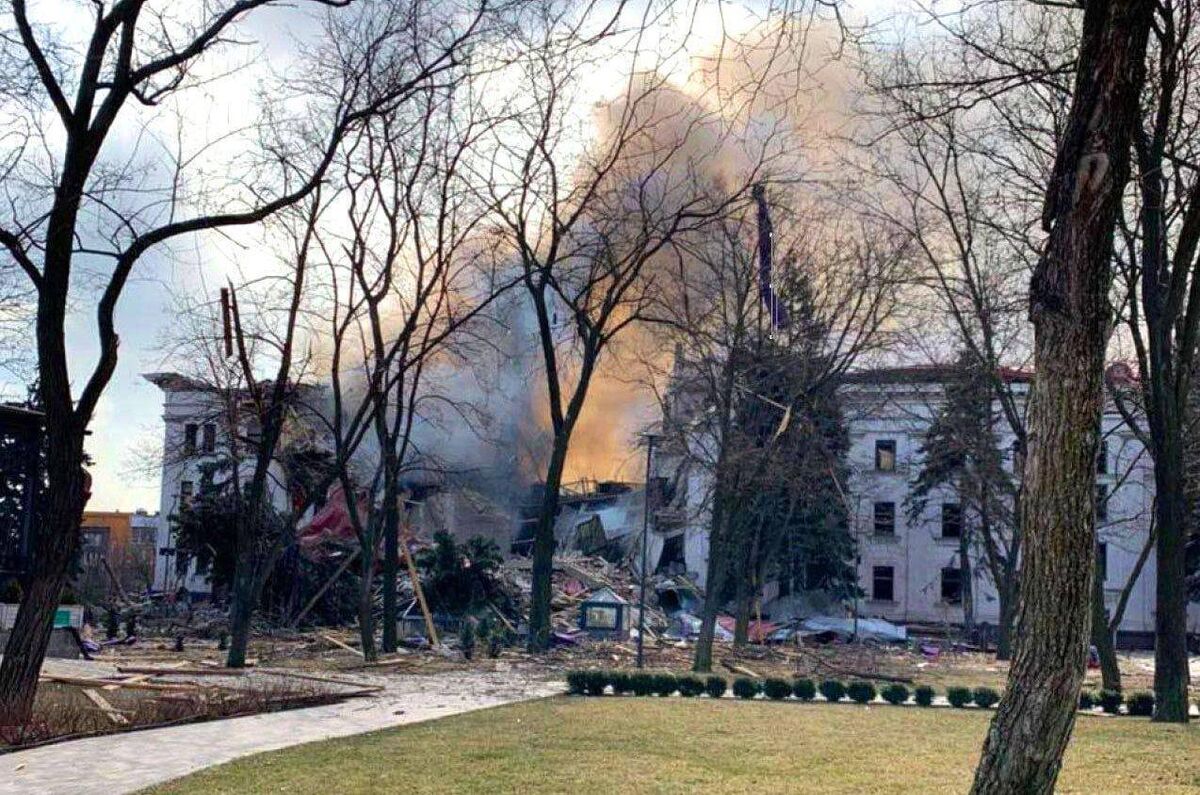
The images of slaughter and torture in Bucha, the deliberate air strikes on the Mariupol theatre where hundreds of civilians were sheltering, and the shelling of Ohmatdyt Children’s Hospital represent but a snapshot of the enormous human suffering linked to an illegal and unjustifiable full-scale invasion, part of a war which began in 2014.
The human cost is immeasurable, though the cost to rebuild Ukraine is now becoming clearer; in the order of €1trn. A cost that some see as a business opportunity.
With every passing day it feels like the international order established after the Second World War is being fracked and frayed, and peace and stability on this continent is being commodified. The truth is, the international order will never be the same again.
Moscow appears to have seduced the sensibilities of a US administration whose desire for power seems to outweigh its capacity to wield it. And all of this is a dream come true for the world’s autocrats. But why does this matter to Ireland, and to Europe, and what must we do about it?
Holding states to account for policy choices that violate international law is the very basis of any kind of civilised world order. Laws become meaningless without enforcement and without appropriate remedies (or reparations) for their violation.
The crime of aggression, which includes invasion, is often described as the supreme international crime because without it we would not have the slaughter, rape, torture and deportation of children or other egregious crimes committed against the Ukrainian people.
In this context, impunity means literally getting away with murder.
If Russia is not held accountable, it will be emboldened, but so too will other authoritarian states with territorial ambitions. This would be a catastrophic precedent, and direct threat to international peace and security far beyond Ukraine.
EU states proximate to the Russian Federation understand this threat in a manner Ireland does not, at least not yet. For Poland, Finland, Estonia, Lithuania, and Latvia, the threat of an irredentist and re-armed Russia is real, present and potent.
Moreover, if a sense of justice cannot be achieved for the tens of millions of people who have suffered from the invasion, the war is unlikely to end; it will merely go into abeyance. As people on this island know all too well, the veneer of peace is not the same as its practical and sustainable application.
One must not be naïve though, the prospect of every crime committed in Ukraine being identified, let alone prosecuted is nil. However, that shouldn’t dissuade us from seeking justice, on the contrary it reinforces the importance of focussing on the most serious crimes, including the crime of aggression.
Justice dies where impunity lies.
Ireland has stood steadfast in its support for Ukraine and committed to working within the system of international law to ensure a comprehensive, just and lasting peace in Ukraine. The Taoiseach reiterated this when he met President Volodymyr Zelenskyy in Kyiv in September and again on the third anniversary.
These words must guide real and meaningful action by Ireland. And Ireland’s influence shouldn’t be underestimated. We do not brandish hard military power, but we are at the vanguard of normative power. Ireland’s position counts.
Stopping the war is the most urgent priority, but attention must turn to holding accountable those responsible for international crimes without delay. One option open to the international community is the establishment of an international tribunal for the crime of aggression.
This would be one thread in the patchwork of international accountability mechanisms, and such a court could be established within the framework of the Council of Europe (home to the European Court of Human Rights). To realise this though requires leadership and political support; Ireland is well placed to champion such an effort.
The international system is under enormous pressure, and unity seems to be a scarce commodity in Europe nowadays. But what must unite us all is the basic principle that wars of aggression cannot be tolerated in the modern system.
The rules-based international order must prevail, for the sake of the people of Ukraine and for the future of Europe.
- Dr Andrew Forde is Assistant Professor of European Human Rights Law at Dublin City University and member of the Dublin European Law Institute.
- A major international conference on the Role of the Council of Europe in the pursuit of peace, justice and accountability in Ukraine is taking place on Thursday, February 27, at Dublin City University.

CONNECT WITH US TODAY



Be the first to know the latest news and updates