Mick Clifford: An Bord Pleanála report will make for interesting reading

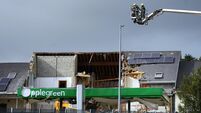
Digger, generic, stock
Burying the sins of the past and moving on to a bright new day is a stock tactic by successive governments.
This path to dealing with scandals, systems’ failures, and malpractice is a well worn one.
One tried and tested method is to hand it over to an inquiry which examines the issue and then reports years after it occurred, when everybody has moved on.
In that vein, the completion of a report into allegations of malpractice and conflicts of interest at An Bord Pleanála (ABP) is an interesting development.
As revealed in the the report by Lorna Lynch, senior counsel, is due to be delivered to the chair of ABP, Peter Mullan, on Friday.
The issues being examined pre-date Mr Mullan’s appointment as chair in January 2024, and even his appointment to the board 12 months previously.
How he deals with the report and whether he is of a mind to publish it may tell a lot about the supposed new culture at the planning body.
This report was commissioned at the end of a turbulent 12 months for ABP.
A series of scandals kicked off in February 2022 concerning a conflict of interest involving the deputy chair of the board, Paul Hyde.
He had made a planning decision on a proposed development in Blackpool in Cork that was close to a holding of land in which he was involved.
He was on the deciding body that turned down the proposal.
Following that, a number of other claims tumbled out, including issues around conflicts of interest, unusual decisions, two-person deciding bodies and perceptions of bias.
A theme running through a lot of the allegations was that elements within the board were eager to push a pro-development line, which impinged on the board’s long standing reputation for balance and fairness.
Housing Minister Darragh O’Brien appointed senior counsel Remi Farrell to examine some of the allegations.

His report has never been published.
Mr Hyde resigned in July 2022.
He was subsequently prosecuted, and received a two-month prison sentence which on appeal was suspended and replaced with a fine.
Three management figures in the board were detailed to examine close to 300 cases which had been dealt with and around which questions had been raised.
It is unclear whether the case that led to a protected disclosure and gGarda investigation was among these.
That case involved the doctoring of an inspector’s report after the inspector had refused to make adjustments to it.
The adjustments would have made it more palatable to give the applicant in question the go-ahead for a development.
But the inspector felt that such changes were not evidence-based and refused to do it.
The inspector was shocked when a later viewing of the report showed that the adjustments had been made.
The inspector submitted a protected disclosure on the matter which was then forwarded to An Garda Siochana for investigation.
Either way, there were a number of malpractice issues raised among the 300 cases examined by the three-person investigation team.
These included:
- A romantic relationship in the organisation that could have impacted on board decisions and procedures.
- The changing of inspectors’ reports to a “substantive” extent.
- Cases where the applicant or appellant was well-known to a board or senior staff member involved in the case.
- Cases where files allocated or handled by board members were in locations near to their home.
- A number of cases where two-person boards decided on planning for major housing schemes under the Strategic Housing Development system, contrary to legal requirements.
The report’s authors were highly critical of some of the practices that had taken hold in the organisation over the preceding few years.
The report was completed in October 2022 and presented to the chair of the board, Dave Walsh.
A week later, the published details of the report and within another seven days, Mr Walsh announced that he was retiring early with immediate effect.
There was no allegation of malpractice against Mr Walsh personally but much of what had gone on happened while he was chair.
Then something strange happened.

Civil servant troubleshooter Oonagh Buckley was drafted in as interim chair and within two months, she had decided that she would commission another report.
This new report would be done by an external agent and would, to the greatest extent, go over the ground covered by the three internal management figures.
Usually, an external probe follows an internal one when the outcome from the latter is unsatisfactory.
This has occurred a number of times over the years in organisations such as An Garda Siochana.
This time around, the opposite was the case. The internal report was comprehensive and did not hold back in pointing out malpractices and where standards had fallen to an unacceptable level.
In that context it is difficult to see why exactly a new report going over the same ground was required.
Should the Lorna Lynch report be published, or find its way into the public domain it will be interesting to compare its conclusions with those of the internal report.
Much has changed since the matters at issue first arose. There is a new chair and a whole raft of new board members.
Two other figures, who were at the centre of a number of the allegations, have also left.
No findings were made against these two individuals.
The planning bill currently making its way through the Oireachtas includes a number of provisions for the board which are designed to enhance its capability and function, although there is some controversy around some of the measures.
The bill also includes a provision to change the board’s name to An Coimisúin Pleanála.
This measure is seen as a rebranding, as if it might wash away all the recent controversies.
For that reason, it has met with some opposition from staff who believe that the controversies were attributable to a few individuals and the rebranding reflects badly on all who worked at the body.
Whether the past can be dispensed that easily remains to be seen.