Cianan Brennan: All is not well with unions and Government in pay talks
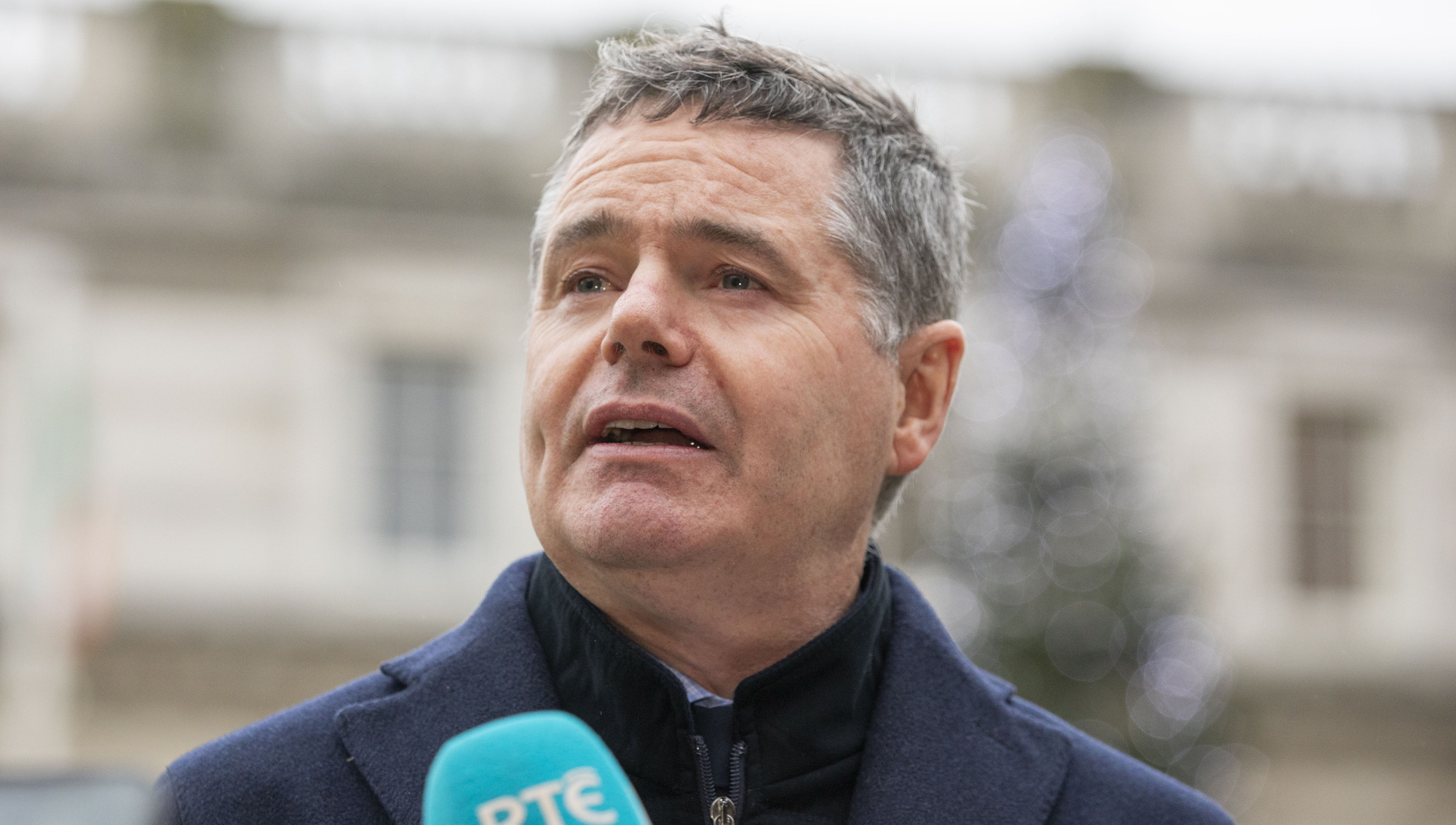
Paschal Donohoe allowed on Wednesday that it is 'really regrettable' that the spectre of industrial action had raised its head, he insisted the talks had broken down because the unions had raised 'a number of new items... at a relatively late stage of the process'. Picture: Gareth Chaney/Collins
All is not well in the industrial relations between the Government and its public servants.
For several weeks, it had been clear that things weren’t going well at the latest round of public sector pay talks.
Those negotiations had been under way since November 27. Some 11 meetings had been held up until Tuesday of this week, ahead of the deadline to reach a new deal by December 31, when the current deal — itself a stopgap known as Building Momentum — is set to expire.
Throughout the previous week there had been rumblings of discontent: that the talks weren’t moving swiftly enough, and the pay section — which will always be of most importance to workers, but also the section that invariably comes last in such talks — hadn’t even been broached yet.
It was a far cry from the first week of the talks, which finished with the Department of Public Expenditure, charged with negotiating the pay deal on behalf of the Government, stating that its Minister Paschal Donohoe was prepared to repeal the Financial Emergency Measures in the Public Interest (FEMPI) — the austerity-era laws which have seen public pay curbed for the past 15 years — legacy measure, the repeal of which the unions had made clear was a priority.
Bearing that in mind, at the start of this week veteran union watchers had been unmoved. “This is how these things go,” was the common thought. “By Wednesday they’ll be sweating through the night to get a deal over the line.”
And that is indeed how these things normally go. Not this time though.
On Tuesday evening the officials at the Workplace Relations Commission, who were facilitating the talks, declared that following another day of non-movement a deal could not realistically be reached as things stand.
To repeat, it wasn’t either side pulling the plug — the game’s referees said that there was no point in the game continuing.
Make no mistake, we’re into uncharted territory here. A public pay deal hasn’t been allowed to expire without a replacement being on the table in over 35 years.
Lead union negotiator and Irish Congress of Trade Unions (ICTU) president Kevin Callinan was quick to note his disappointment that talks had ended inconclusively. There wasn’t so much anger floating about the enterprise but more puzzlement. “How has this happened?” is now the question being asked. “What will happen next?” follows shortly on its heels.
What's the hold up?
On the union side (there are 19 of them represented by the ICTU in the talks), officials met to decide on a position, and declared that if there is to be no further engagement between Christmas Day and the New Year then the various organisations will meet in the New Year to draw up ballots for industrial action.
While Paschal Donohoe allowed on Wednesday that it is “really regrettable” that the spectre of industrial action had raised its head, he insisted the talks had broken down because the unions had raised “a number of new items... at a relatively late stage of the process”.
The problem is, the unions aren’t clear what those issues are. From two months before the negotiations kicked off in earnest ICTU had made clear what its four priorities were for the talks: pay increases in line with cost of living pressures; stabilising parts of Building Momentum that hadn’t been successfully enacted; the doing-away-with of FEMPI; and the ‘future-proofing’ of public services.
Mr Donohoe wouldn’t be drawn on what new issues had caused the slowdown in progress, nor would his Department. Both have said that new pay proposals will be introduced once a “credible and comprehensive” framework is in place as an underpin to a pending multi-annual agreement as a successor to the short-term solution that was Building Momentum.
So the Government side isn’t happy, but the unions side isn’t sure why.
Neither side wants to spook the other, though it is now certain that talks won’t reconvene before the new year, which in itself should be enough to give the negotiators sleepless nights.
Union sources say there are “two different versions” in terms of what transpired at the various meetings held since November 27. They have also stressed that they are “determined to get back into it” in the new year to finalise a deal per their aforementioned agenda.
The Government side is more inscrutable. Could it be that departments officials showed up for talks without being fully prepared for what would be necessary to strike a deal? That seems a little unlikely given the importance of what’s at stake, and yet no other credible explanation has been proffered.
One thing is for certain, we’re in unknown waters now. Both sides will hope they can navigate back to dry land as quickly as possible.
CONNECT WITH US TODAY
Be the first to know the latest news and updates

More in this section