Elaine Loughlin: Trauma heaped on trauma in what Palestinians see as a second Nakba
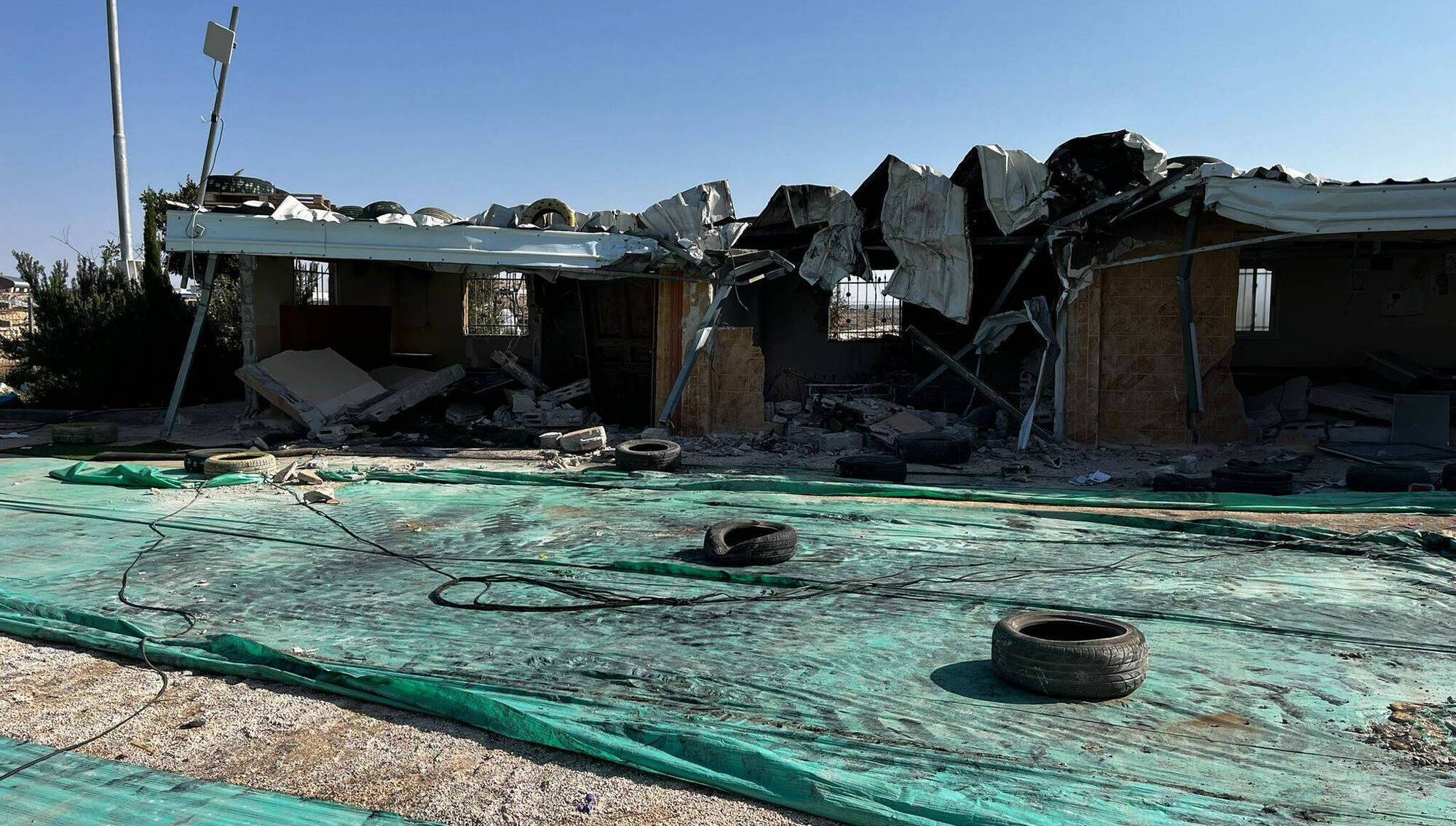
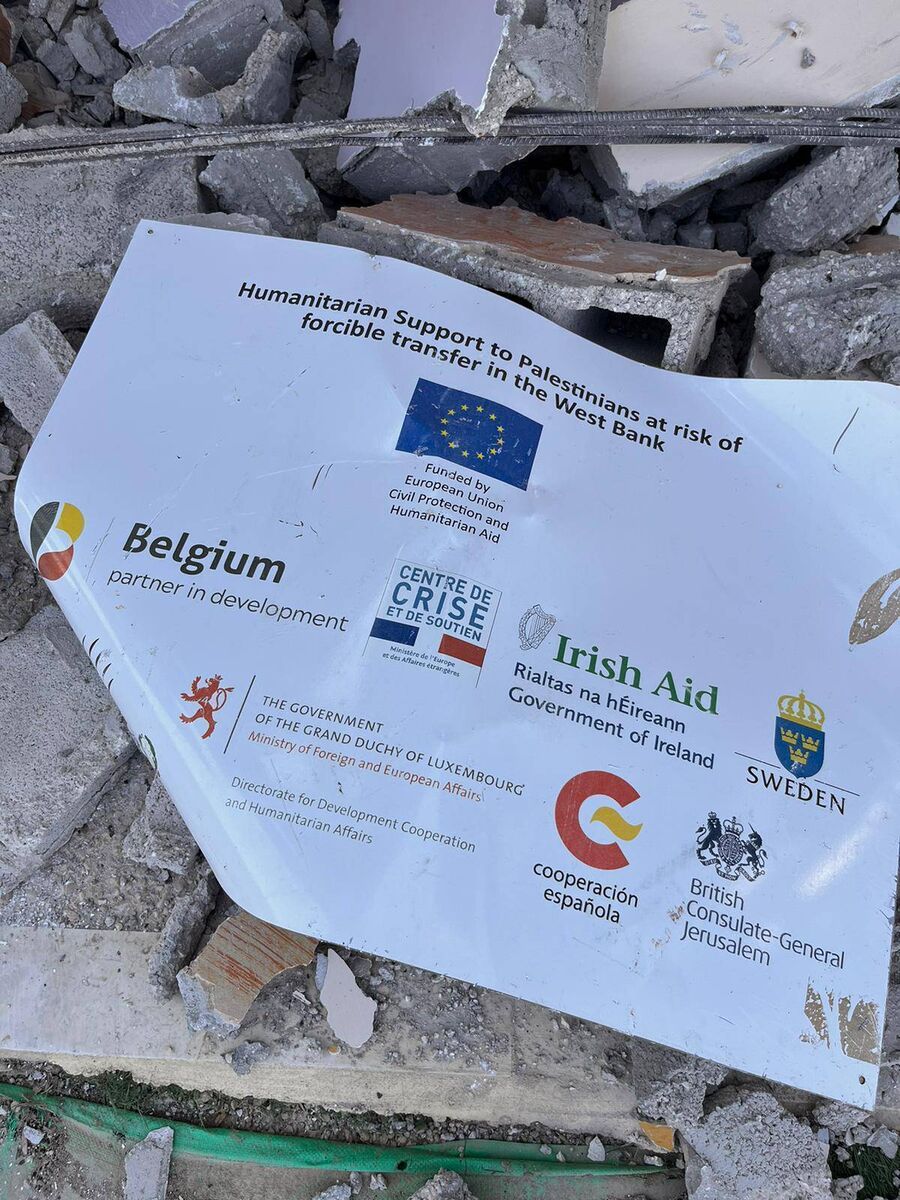
A demolished school in the abandoned Palestinian village of Khirbet Zanuta. Picture: Southern Mount Hebron Activists group/Times of Israel
Looking at a map of Israel and Palestine can feel familiar.
Names like Bethlehem, Jerusalem, and Nazareth transport many of us back to Irish classrooms at Christmas time and the story of a baby in a manger.
We thought at the time, in our innocence, of words like ‘hope’ and ‘cheer’ and the tale of our ‘saviour’ being born in this holy land was chief among our teachers' messages.
Today though, these biblical locations resonate more as being at the centre of on-going clashes, detentions, and raids with attacks and counter attacks being launched from both sides.
This year, there will be no Christmas tree in Bethlehem and one church in the occupied West Bank has changed the nativity scene to lay the baby Jesus in the rubble, as a mark of solidarity with the people of Gaza.
It can be very difficult to look on at the devastation and suffering being inflicted on more than 1m children born in the "open air prison" in Gaza.
And yet we continue to share the online clips of grieving and blooded children that have been shared and reshared.
The tiny Gaza strip has become "the world's most dangerous place to be a child" according to Unicef.
The violence has stolen the lives of 10,000 infants and children since the start of the bombardment.
It has robbed children of their parents, with around 25,000 orphans now surviving and struggling to find food and water in the enclave.
While we are no strangers here to hearing of wars and conflicts that have been waged across the world in recent times, the attack on Gaza has particularly resonated with Irish people. Somewhere deep within us we feel and share the pain of the oppressed.
Countless videos have been reposted, quotes shared, and the #ceasefirenow hashtag used.
The appalling and deepening humanitarian crisis has mobilised previously non-political mothers, teenagers, grandparents.
In Dublin, Cork, Galway, Ennis, Castlebar, Newbridge, Limerick, Belfast and in smaller towns people have marched each week calling for an end to the killing.
Amid such public outcry, it can be difficult to understand when world leaders appear to put politics and economic considerations ahead of innocent lives.
Even more difficult to understand is how a conflict can spiral so far that the main objective on both sides is to eradicate the other.
But the unconscionable Hamas attacks of October 7, followed by the sustained bombardment of Gaza, is the latest and deadliest round in what has been a decades-long conflict that has spanned generations in the disputed region.
For many Jewish people, Israel is "the promised land", but the same stretches of land are also considered the ancestral home of their Arab neighbours.
The ancient city of Jerusalem itself, which both Palestinians and Jewish people see as their capital, is home to the holiest site in Judaism which is sandwiched next to the third most important site to Muslims.
Tensions between the neighbours have simmered and have cemented further a deep hate.
Like many disputes, the conflict between Israelis and Palestinians has been punctuated by a number of significant events that have altered the history and geography of the broader middle east region.
Jewish people can point back to the bible and before as evidence of their long association with the region.
But by the 1880s there were fewer than 25,000 Jewish people living in what they consider their ancient homeland, with the majority concentrated in Jerusalem.
A growing anti-Semitism across Europe sparked a Zionist movement which saw small number of people to relocate.
Theodor Herzl, an Austro-Hungarian Jewish journalist now generally considered to have founded Zionism, began advocating a Jewish state around this time.
The new development was cited by Irish writer James Joyce in Ulysses, when the main character Leopold Bloom visits a Jewish butcher in Dublin. While waiting in line he picks up a page of a newspaper that is advertising farmland at Kinnereth, northwestern shore of the Sea of Galilee.
The advert read: "You pay eighty marks and they plant a dunam of land for you... Every year you get a sending of the crop. Your name entered for life as owner in the book of the union. Can pay ten down and the balance in yearly instalments."
While fictional, the advertisement, which aimed to lure Jewish people abroad to invest in a collectively owned agricultural project, was inspired by actual initiatives.
“Still an idea behind it,” said Bloom to himself after reading it.
The Balfour Declaration issued by the British in 1917, promised “a national home for the Jewish people” and paved the way for further settlers to seek a new home on their ancestral lands.
Between 1918 and 1947, the Jewish population in Palestine increased from 6% to more than 30%.
In 1947, the United Nations General Assembly adopted the United Nations Partition Plan for Palestine, but this was not implemented.
The following year the state of Israel was founded, with the US president Harry Truman immediately recognising the new nation.
1948 is also a year Palestinians view as seminal in their history.
The Arab-Israeli war, which followed the establishment of the state of Israel, led to the violent displacement and dispossession of Palestinians. Entire villages were levelled and 700,000 people were forced to flee seeking refuge in Jordan, Lebanon, Syria, the West Bank and Gaza.
Palestinians call this the 'Nakba'; the catastrophe.
In the intervening decades the region has suffered violent outbreaks including the Six Day War; Yom Kippur War, as well as the First and Second Intifada.
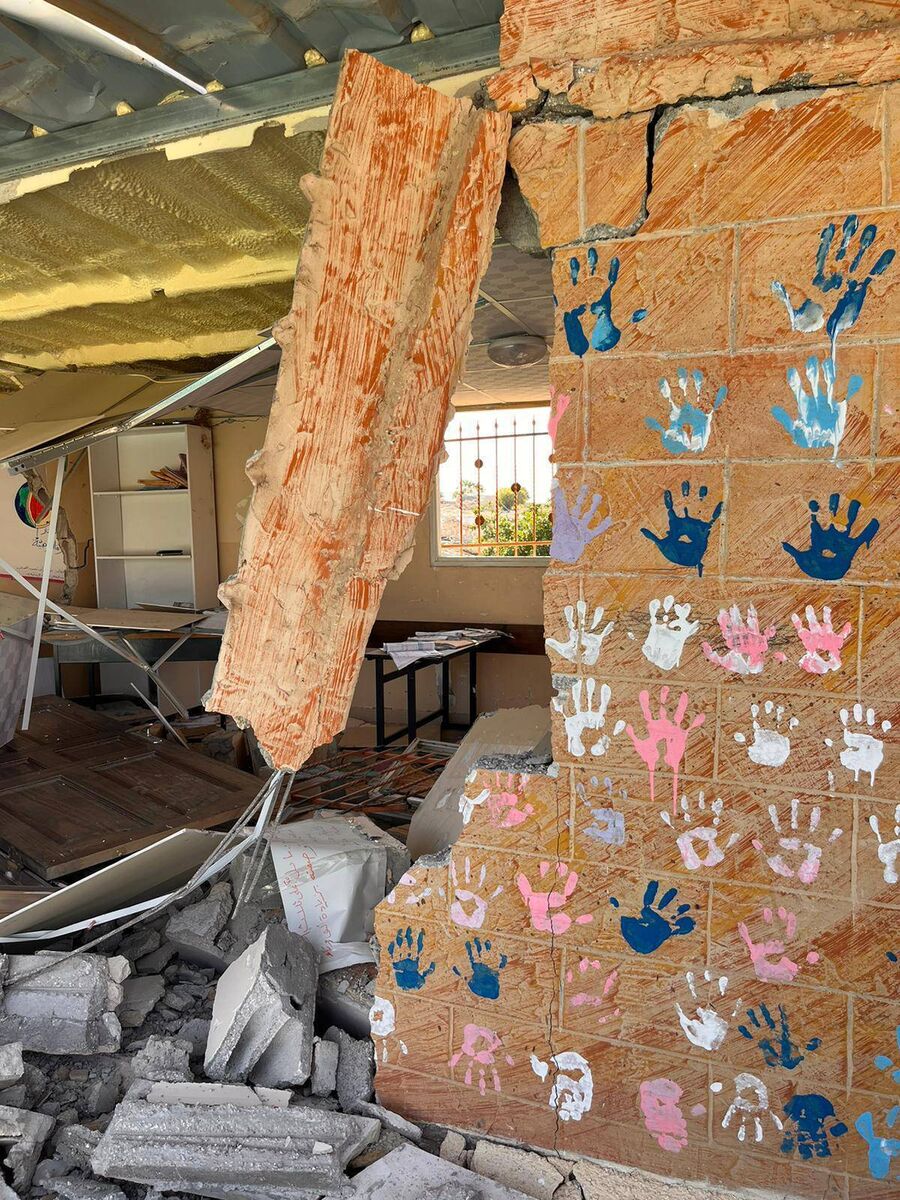
In the West Bank, Palestinians have had their homes, businesses and schools demolished by Israeli settlers who have become increasingly violent since Oct 7. Israeli raids and arrests in the West Bank have also dramatically increased.
Each bout of violence has deepened the scars.
Some of the remaining 1948 survivors, their children, and grandchildren still considered refugees, are now being caught up in what they see as a second Nakba in Gaza.
Trauma is being heaped on trauma, horrors mounted on top of horrors. Like the images being shared over and over again, the cycle of violence continues.

CONNECT WITH US TODAY



Be the first to know the latest news and updates