Mick Clifford: No lessons will be learned from a closed-door Tusla inquiry

The fitness-to-practise inquiry into social workers' handling of false allegations against Garda whistleblower Maurice McCabe being held in private is certainly not justice being seen to be done
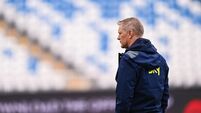
Garda whistleblower Maurice McCabe was the subject of outrageous and erroneous allegations of child abuse. Picture: Leah Farrell/RollingNews.ie

Garda whistleblower Maurice McCabe was the subject of outrageous and erroneous allegations of child abuse. Picture: Leah Farrell/RollingNews.ie

This week, an inquiry has taken place behind closed doors into a serious matter of state. It relates to the case of Garda whistleblower Maurice McCabe, who was the subject of outrageous and erroneous allegations of child abuse. 

The erroneous allegation was generated within the Child and Family Agency, Tusla. It occurred at a time when McCabe was discommoding senior management in An Garda Síochána, and by extension, the government of the day. 

A complaint against three of the social workers who were directly involved is only being dealt with now, eight years after it first came to attention, and five years after the Disclosures Tribunal completed its inquiry into the matter. What occurred was extremely serious and its excavation in relation to complaints should be a matter of major public concern.

Fitness-to-practise inquiry

On Monday, the regulatory body for social workers, Coru, opened the fitness-to-practise inquiry into two of the three social workers. The specific allegations against the pair was professional misconduct and poor professional performance, as set out in the Health and Social Care Professionals Act. 

Immediately once the inquiry opened, one of the two social workers, through their barrister, applied for the inquiry to be held in private. The application itself was held in private and the three-person board retired to consider the issue. 

The board is chaired by barrister Susan Ahern and includes a registered social worker and a registered physiotherapist. Within an hour, the board returned and Ms Ahern said it was acceding to the request for a private hearing.

She noted a previous application for a private hearing from the same party in October was rejected. Now, she said, the balance has changed. She was referring to the balance between the rights of the individual who is the subject of the inquiry and the right of the public to view it. 

In its application on Monday, the social worker involved, referred to as Applicant Z, furnished the inquiry with a “detailed medical report outlining a number of matters of concern”, according to a statement issued by the inquiry board.

'Entitlement to privacy'

“It is not proposed to recite the detail of same in this ruling in circumstances where Applicant Z has an entitlement to privacy in respect of their medical history,” the statement read. 

“For the purpose of this ruling, the committee notes that the medical report identifies specific medical issues experienced by Applicant Z. The medical report also expresses a view that a public hearing of the current inquiry would put Applicant Z’s health at risk.” 

The ruling also affects the second social worker, Ms Ahern stated, as there are a number of overlaps between the two cases. So this person’s fitness to practice inquiry will also be private. The third person at issue is due before an inquiry later but it is now highly unlikely this person’s hearing will be in public as these two were not.

The inquiry board acted completely within the law, referencing a High Court judgment as its legal scaffolding. However, questions do now arise. 

Firstly, it is entirely unclear whether the hearing in private will lead to an outcome that will also be kept from the public. Secondly, it is difficult to understand why the inquiry could not have proceeded in public with the social workers involved anonymised.

Allegation of inappropriate contact

What occurred within Tusla in this matter is of the gravest concern. A colleague of Maurice McCabe in Co Cavan had some animus towards him. This garda’s daughter made an allegation of inappropriate contact by McCabe on her at a children’s party. This was investigated and found to be groundless, but McCabe was unhappy at how the whole affair was handled. 

Years later, in 2014, when McCabe’s complaints of malpractice were in the news, this girl, now a young woman referred to as Ms D, attended counselling and referenced the incident from her childhood. The counsellor, from a group called Rian, reported this to Tusla, as per her obligations.

Within Tusla, this matter was somehow mixed up with a serious allegation of child rape by a man who was anonymised in the tribunal as Mr Z. Then, in April 2014, when McCabe’s allegations were being raised in the Dáil by opposition politicians, the serious allegation was processed.

“The tribunal has been asked to believe that in that very month, April 2014, by sheer coincidence, social services decided to progress the referral by Rian containing the rape offence allegation against Mr Z, ascribed by a bizarre mistake to Maurice McCabe and to action it for Garda attention,” Judge Charleton reported. 

“This matter was an unbelievable coincidence. Yet, as it emerges, despite its bizarre nature, this was a genuine mistake.

False allegation

The unbelievable coincidence was discovered within Tusla the following year. Yet there was no effort to inform Maurice McCabe what had occurred. Meanwhile, within the gardaí, the false allegation was circulating up to senior management at a time when McCabe was discommoding them with some home truths.

Then, in an even more bizarre twist, despite the major error having been detected in Tusla, McCabe received a letter from the agency in December 2016 saying he was the subject of a serious allegation of child abuse. The correspondence alerted him to what was going on and there was major fall-out afterwards, culminating in the Disclosures Tribunal.

Charleton didn’t hold back in his assessment. “A public body, paid for by the taxpayer, has a fundamental duty of self-scrutiny in pursuit of the highest standards. The administration of Tusla was sorely lacking in application and in dedication to duty,” he reported.

Now, years later it emerges that those who may have a case to answer will be doing so in private and any sanction may also be dispensed in private. 

Justice is certainly not being seen to be done in this case and one wonders where lessons can be learned through a process taking place behind closed doors.

More in this section

Revoiced

Newsletter

Had a busy week? Sign up for some of the best reads from the week gone by. Selected just for you.

Cookie Policy Privacy Policy Brand Safety FAQ Help Contact Us Terms and Conditions

© Examiner Echo Group Limited