Rory Hearne: Retrofitting Ireland's ageing housing stock must be a Government priority
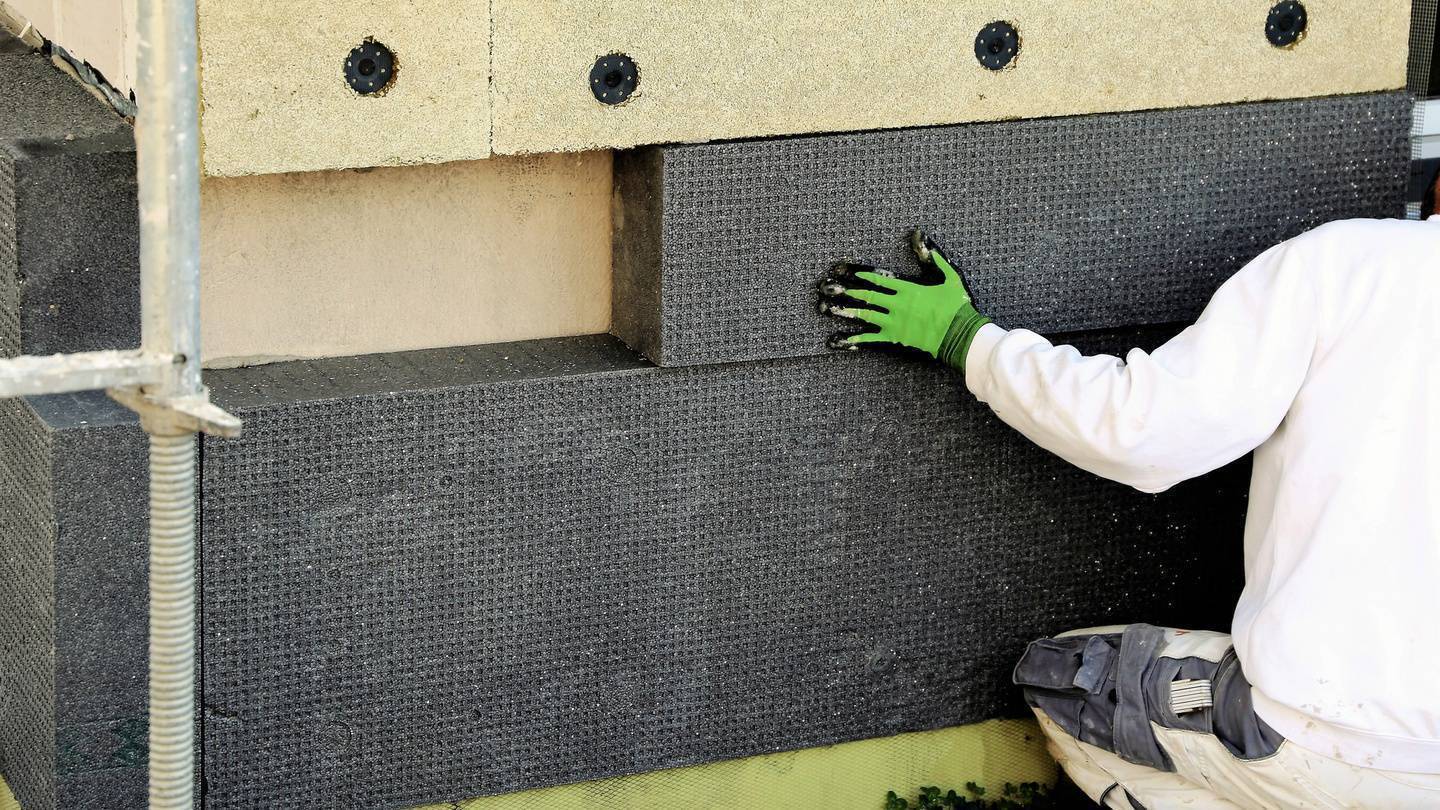
Those who can afford retrofits and upgrades can reduce energy consumption and bills, while those who cannot face higher, and still inflating, fuel prices, says Rory Hearne
Rory Hearne: Retrofitting Ireland's ageing housing stock must be a Government priority

If Government is going to be serious about a just transition and meeting climate targets, it will have to significantly increase State investment in retrofitting.

The escalating cost of living crisis means lower and middle-income households are less likely to be able to afford retrofits, posing further challenges in achieving climate change targets.

In addition, it will lead to a worsening equality gap as those who can afford to invest in retrofits and upgrades can reduce energy consumption and bills, while those who cannot are left exposed to higher and further inflating gas and electricity prices.


This has major implications for the Government meeting its climate retrofit targets and achieving a so-called 'just transition'.

The unprecedented warm weather again highlights the urgency to tackle climate change but as in Covid, it also highlighted how important our homes are as a place of refuge in times of pandemics or extreme weather, be that heat or winter storms. 

And there are major economic storms underway, that will get even harder as the weather gets colder and wetter in the autumn and winter. A third of households are already affected by energy poverty. 

And it is going to get worse. Irish households consume more energy per household than the EU average, not just because of our cold and damp climate but also because of the poor energy efficiency and standards of our housing. 

This means the rise in energy costs is disproportionally hitting Irish households. It is another area where the cost of living crisis is being exacerbated by successive Irish Government’s failure to invest in our social infrastructure – in areas like poor housing conditions.

This is shown in the latest Housing for All quarterly report which showed that the Government has failed to meet its own retrofitting targets for social housing.

Action 21.2 of Housing for All included the target to retrofit 2,400 social homes in 2021. But the target was missed and the timeline for delivery was shifted by an entire year from Q4 2021 to Q4 2022. Just 1,730 units of the 2,400 had been completed by the end of April 2022.

The Government states that "to reduce emissions from all homes and ensure a just transition, retrofitting local authority housing stock to create warmer, more energy efficient homes with less operational costs is a priority for Government". 

The failure to meet social housing retrofit targets, and the overreliance on individuals to pay for retrofitting, highlight a lack of understanding of the real inequalities that have to be addressed within the climate transition that directly intersects with the cost of living crisis.

I highlighted in this paper last year that a flaw in the Government’s Climate Action Plan was how it relied mainly on individual homeowners to pay for the cost of retrofitting and therefore was likely to fail, and lead to rising inequality. Now, with the cost of living crisis, this is even more likely. 

Recent Red C polls show that 63% of people have ‘little to no’ disposable income, and 50% are ‘using savings or credit to pay for ordinary everyday expenses”.

In this fundamentally changed economic environment, where will people get the money from to pay for retrofits? Even those that can be refunded in part or in full through grants often require hefty up-front payments, which are simply out of the reach of many.

Furthermore, there is still no move on addressing the issue of the private rental sector - there are no targets - so Generation Rent is left suffering from higher and higher bills. And landlords that do engage in retrofitting can use it as a way to evict tenants and increase rents - there are still no protections around this.

There is a real issue of the inequality within the climate transition that the cost of living crisis will worsen. The Climate Change Advisory Council has concluded that “the impacts of climate change will not be equally distributed, neither geographically nor socially". 

"How persons are affected by climate change impacts, and what ability they have to deal with those impacts, is largely dependent on their social and economic situation,” it states. 

It goes on to say there is a need to understand “conditions which prevent members of society from benefitting from adaptation measures to the same extent as others”, and in Ireland “socioeconomic vulnerability and just resilience have not been adequately considered in national, sectoral and local policy to date."

The council recommends that such policies “must be a key focus of future national adaptation policy and planning.” 

There also remains an ongoing issue of ensuring sufficient construction workers are available to engage in retrofitting. How is this challenge to be met? Why is the Government not setting up a new semi-state construction company that could start building up the capacity of skilled workers to engage in a much greater amount of retrofitting of social and private housing? 

This is also important given the UCD report that showed that poorly done retrofits might need to be redone in just 10 years' time. Furthermore, the latest EPA report on housing emissions still does not include emissions from embodied carbon - the emissions produced from building and construction of new homes. 

As we endeavour to increase the number of new homes constructed, it reminds us that how they are constructed really matters. Yet, there is no consideration of this in the Climate Action Plan.

The Climate Change Advisory Council also highlights that there is also no adaptation plan for the built environment and recommends that a statutory sectoral adaptation plan should be developed for it.

If Government is going to be serious about a just transition and meeting climate targets, it will have to significantly increase State investment in retrofitting social housing and, in the September Budget, it needs to set down targets for retrofitting the private rental sector in ways that protect tenants.

In this fundamentally changed economic environment, where will people get the money from to pay for retrofits? Even those that can be refunded in part or in full through grants often require hefty up-front payments, which are simply out of the reach of many.

There is a need for immediate financial support for households hit by the cost of living crisis, but there is also a need to increase investment in ensuring that everyone can benefit from improved energy efficiency in the short term rather than allowing the cost of living crisis further exacerbate the gap between those who have-retrofitted homes and benefit from lower energy costs and those who cannot afford to and therefore suffer disproportionally from escalating energy costs.

A 100% retrofit grant needs to be rolled out with emergency speed.

Chair of the Climate Change Advisory Council, Marie Donnelly, has explained this need for increased State investment to meet its targets. “It is imperative that an initial adaptation budget to 2030 be set, following an assessment of what is required to make Ireland resilient by 2050 and beyond. 

"This budget must be determined in light of the social cost of climate change over at least the next 30 years and must reflect the need to prioritise funding for adaptation to a significantly greater degree than is currently the case."

  • Rory Hearne is assistant professor of social policy at Maynooth University.

More in this section

Revoiced

Newsletter

Sign up to the best reads of the week from irishexaminer.com selected just for you.

Cookie Policy Privacy Policy Brand Safety FAQ Help Contact Us Terms and Conditions

© Examiner Echo Group Limited