Seth Borenstein: Most major nations lag in acting on climate-fighting goals

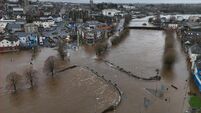
Emissions of heat-trapping gases don’t stop at national borders, nor does the extreme weather that’s being felt throughout the northern hemisphere. Picture: Philippe Lopez/Pool Photo via AP
For most of the major carbon-polluting nations, promising to fight climate change is a lot easier than actually doing it. In the United States, President Joe Biden has learned that the hard way.
Among the 10 biggest carbon emitters, only the European Union has enacted polices close to or consistent with international goals of limiting warming to just a few more tenths of a degrees, according to scientists and experts who track climate action in countries.
But Europe, which is broiling through a record-smashing heatwave and hosting climate talks this week, also faces a short-term winter energy crunch, which could cause the continent to backtrack a tad and push other nations into longer, dirtier energy deals, experts said.
“Even if Europe meets all of its climate goals and the rest of us don’t, we all lose,” said Kate Larsen, head of international energy and climate for the research firm Rhodium Group.
Emissions of heat-trapping gases don’t stop at national borders, nor does the extreme weather that’s being felt throughout the northern hemisphere.
“It’s a grim outlook. There’s no getting away from it, I’m afraid,” said climate scientist Bill Hare, chief executive of Climate Analytics. His group joined with the New Climate Institute to create the Climate Action Tracker, which analyses nations’ climate targets and policies compared to the goals of the 2015 Paris Agreement.
The tracker describes as “insufficient” the policies and actions of the world’s top two carbon polluters, China and the US, as well as Japan, Saudi Arabia and Indonesia.
It calls Russia and South Korea’s polices “highly insufficient,” and Iran comes in as “critically insufficient".
Bill Hare says number three emitter India “remains an enigma".
“We are losing ground against ambitious goals” such as keeping global warming to less than 1.5C since pre-industrial times, according to veteran international climate negotiator Nigel Purvis of Climate Advisers. The world has already warmed 1.1C since pre-industrial times.
Seven years ago, when almost all the nations of the world were preparing for what would become the Paris climate agreement, “it was all about ambition and setting ambitious targets”, according to Kate Larsen.
“Now we are transitioning into a new phase that’s really about implementation...I don’t think the international community knows how to do implementation.”
Other nations and the United Nations can pressure countries to set goals, but enacting laws and rules is a tougher sell.
While Europe has been successful with what Kate Larsen says is “a long history of implementing and ratcheting up existing policies”, that’s not the case in the United States.
It is on path to cut emissions by 24% to 35% below 2005 levels by 2030, far shy of the nation’s pledge to reduce emissions by 50% to 52% in that time, according to a new analysis by Rhodium Group.
Biden is running low on options, according to Larsen. Congress is balking on the president’s climate-fighting legislation, and the Supreme Court curbed power plant regulations.
She says Congressional action was a big window of opportunity that would have allowed the US to be on track to its goal. A second window is available in the suite of federal regulations that the Biden administration plans to release.
“These are the two big deciders of whether the US will meet its target, and one we have largely failed on. So in that sense, it is a big miss because these opportunities don’t come along very often,” she said, adding the US can get close to reaching its goal, but it’s not close yet.
Whether that happens “depends on the next three to 18 months of what the administration does".
Other nations, particularly China, look at what the US is doing to fight climate change and are reluctant to ratchet up their efforts if America isn’t doing much, according to Nigel Purvis and Bill Hare.
At the urging of activists and some Democrats, the Biden administration is considering declaring a national emergency because of climate change and using special powers to cut carbon pollution from power plants and vehicles. Calling it an emergency is not enough; what matters is the actions that follow, Purvis said.
Biden could put a moratorium on federal lands and water. He could reinstate a ban on US oil exports. He could move up spending on wind and solar. But all are subject to a conservative Supreme Court.
“The big question is where can Biden go with executive orders and how convincing is that going to be to other leaders?” Bill Hare said.
Elsewhere in the world, Hare says the Russian energy crisis has definitely been a major setback.
It’s a short-term problem for Europe, and it’s even loosened some of their rules, but “their long-term policy framework is very robust, and this might help them double down on alternative energy”, Larsen said.
But the panic over natural gas has other countries, specifically in Africa, jumping onto the bandwagon of liquified natural gas, which still emits carbon. The pivot to LNG has added 15% to 20% to the amount that the world uses, Hare said.
While there is a risk Europe might add infrastructure for natural gas that will be hard to abandon, it looks like the Russian invasion of Ukraine strengthened Europe’s resolve to reduce Russia’s energy influence and get off fossil fuels, Purvis said.
There are other places where weaning the world off carbon looks more possible. A new report from the International Renewable Energy Agency found the cost of electricity last year from onshore wind fell by 15%, offshore wind by 13% and solar panels by 13% compared to 2020.
Meanwhile, electric vehicle sales in America are rising, and the time when they could hit “escape velocity” and really make a difference is on the horizon, Larsen said.

CLIMATE & SUSTAINABILITY HUB
CONNECT WITH US TODAY



Be the first to know the latest news and updates