€95m in Storm Éowyn-related costs shows climate action urgency 'has never been clearer'
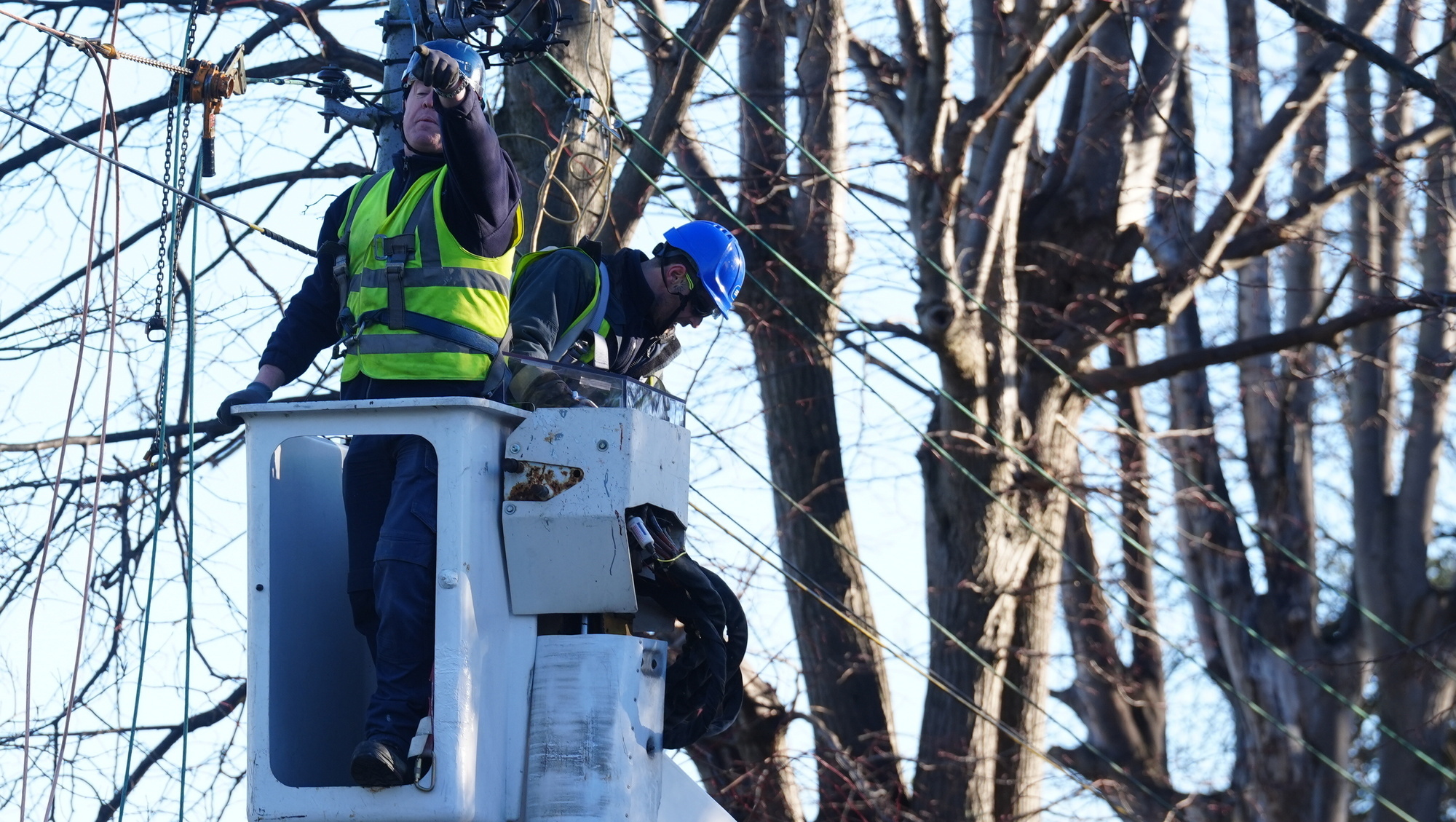
ESB Networks managing director Nicholas Tarrant said 768,000 customers lost electricity at the peak of Storm Éowyn with over 10,000 faults recorded, much of it caused by 'falling timber and forestry'. File Picture: PA
The urgency of climate action “has never been clearer”, as seen with the “unprecedented damage” caused by Storm Éowyn to the country’s energy infrastructure, ESB Networks has said.
The electricity company said the storm cost it €95m and that “multi-year investment” was required to improve the storm resilience of the network.
In its 2025 annual report, the ESB said there were other threats to its operations:
- Geopolitical tensions and trade tariffs;
- Cyberattacks, with worsening global security requiring “increased cybersecurity vigilance”;
- Fragility of interconnected energy systems, as seen in Spain and Portugal;
- Increasing supply chain risks, affecting availability and cost of raw materials.
Written before the US and Israeli bombing of Iran, and the Iranian effective blockade of the Strait of Hormuz sending the price of oil upwards, the annual report warned that “geopolitical tensions and trade tariffs could pose challenges” to growth in Ireland.
In his statement, ESB chair Terence O’Rourke said: “The urgency of climate action has never been clearer. 2025 began with an extreme weather event, Storm Éowyn, that tested the resilience of the electricity networks.”
He said that, while the company recorded operating profit of €914m in 2025, Storm Éowyn-related costs came to €95m.
He said the Government’s investment of €1.5bn will help support the delivery of more than €13bn of capital investment between 2026 and 2030.
In his review, chief executive Paddy Hayes said Storm Éowyn caused “unprecedented damage” , adding that ESB Networks published a plan identifying actions regarding storm preparedness, forestry corridors, and communications.
ESB Networks managing director Nicholas Tarrant said 768,000 customers lost electricity at the peak of Storm Éowyn with over 10,000 faults recorded, much of it caused by “falling timber and forestry”.
He said the 3,200 crew members had power restored for 90% of customers within three days, but that some customers were without power “for up to 18 days” and experienced “significant hardship and disruption”.
He said that “multi-year investment” will be needed to improve storm resilience of the network.
The report said the company completed network surveys of the “worst-affected areas” hit by the storm, adding that the overhead network damaged was being fixed.
It said that rising international insecurity and advances in technology “demanded increased cybersecurity vigilance”.
It said that the company had carried out a “cyber crisis simulation” and conducted regular testing of critical response plans.
The report said ESB would continue to participate in wider simulation exercises with the National Emergency Co-ordination Group.
It said supply risk “rose in 2025” due to politically driven disruptions in global trade.
The report said that offshore wind developments face “significant financial challenges”, including rising costs and supply chain interruptions.
- Cormac O'Keeffe is the Security Correspondent with the

CLIMATE & SUSTAINABILITY HUB
CONNECT WITH US TODAY



Be the first to know the latest news and updates