'Anti-war' groups drown out voices of Iranians opposed to Islamic Republic regime 
Mahya Ostovar says protests in Ireland echo a global phenomenon — Iranians protesting against the repressive regime are being swamped by the dominant political narrative
'Anti-war' groups drown out voices of Iranians opposed to Islamic Republic regime 

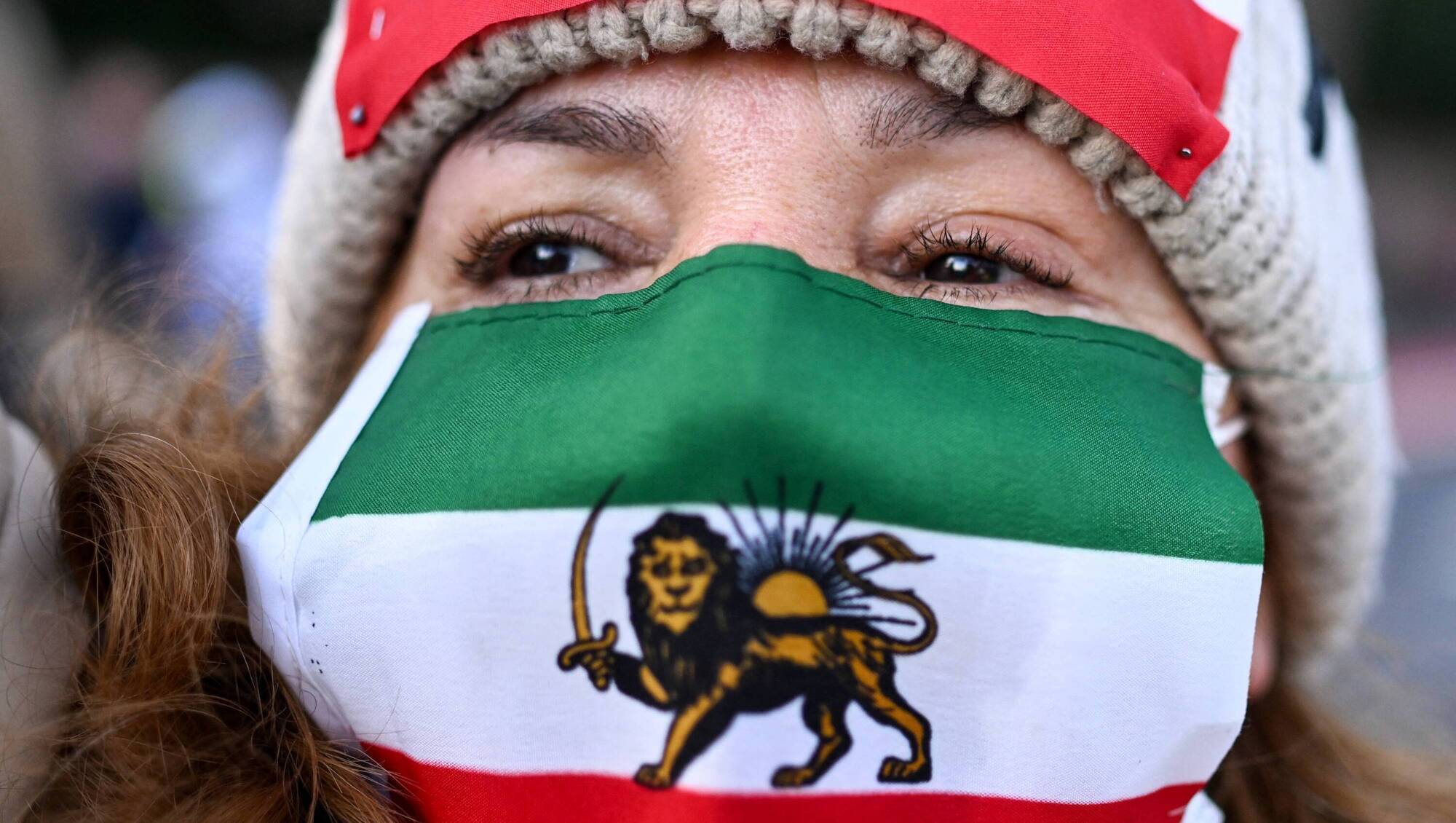
A woman wearing a mask with the pre-1979 Iranian lion and sun flag at a protest in Frankfurt against the current regime in January. Picture: Kirill Kudryavtsev/AFP

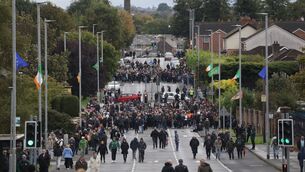
A few days after the war began in Iran, our small community of Iranians in Galway came across a poster for a local anti-war protest.

It advertised, among other things, “a guest speaker from the Iranian embassy” and framed the event as solidarity with “Iranian people”.

For many of us, this was difficult to process. Our families and friends were under bombardment. Some of us cannot return to Iran for political reasons. Others had lost loved ones just weeks earlier, when tens of thousands were killed by the Islamic Republic during anti-regime protests.

Iranians have risked their lives for years, through cycles of brave protests, crushed one after the other, to make one thing clear: They do not recognise the Islamic Republic as their legitimate government. 

Galway's Iran protest

So we went to this protest to be the voice of our people, our families and friends in Iran, who could not speak for themselves under the internet blackout imposed by the Islamic Republic —something these anti-war protesters rarely mention, let alone challenge.

And we faced an anti-war crowd that had not only failed to engage with the Iranian community to understand its realities, but also spoke over these fragile minority voices. 

In doing so, it comfortably legitimised their oppressor as their representative as “a guest speaker from the Iranian embassy”. 

We were met with a crowd, largely non-Iranian, proudly waving the flag of our oppressors and murderers in our traumatised faces, while attempting to drown out our voices and labelling them pro-Israel or pro-US.

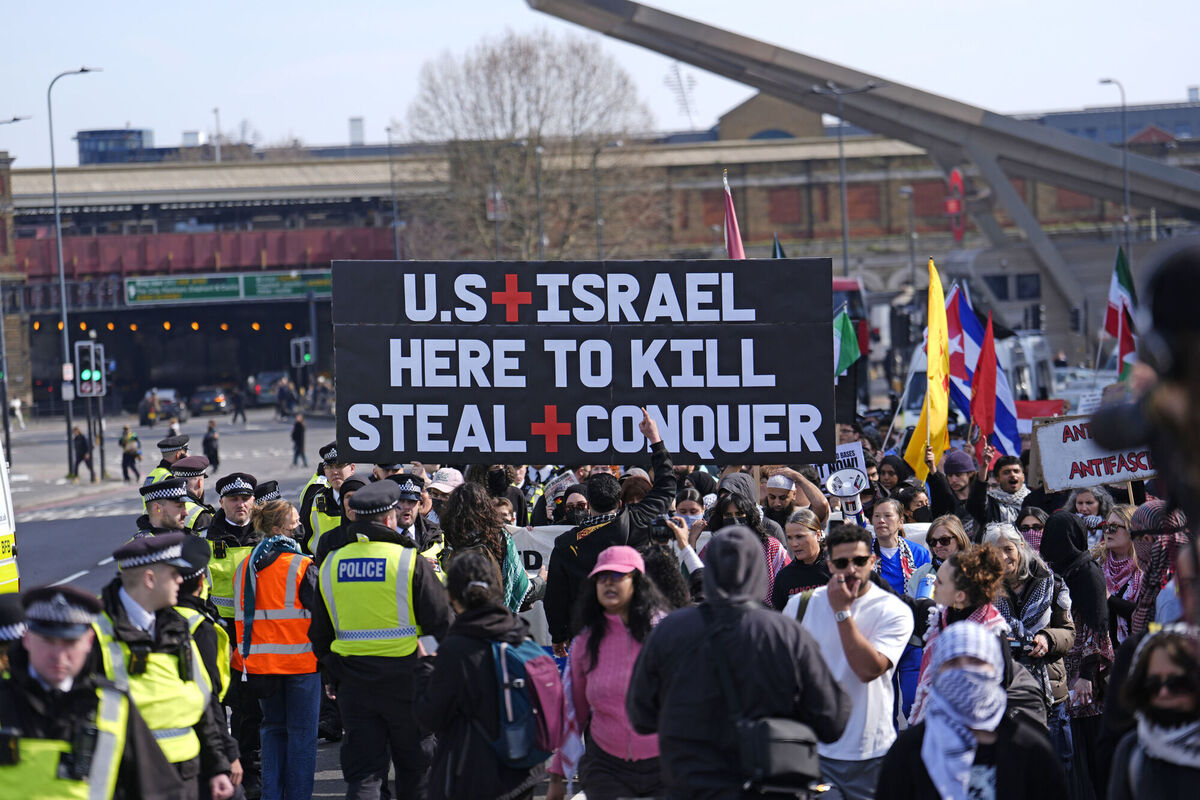
A protest in London against the war on Iran and the US embargo on Cuba. Mahya Ostovar writes that amid such rallies, 'the suffering of silenced communities is reduced to a political prop'. 	Picture: Jordan Pettitt/PA
A protest in London against the war on Iran and the US embargo on Cuba. Mahya Ostovar writes that amid such rallies, 'the suffering of silenced communities is reduced to a political prop'.  Picture: Jordan Pettitt/PA

Similar scenes have circulated widely on social media: Videos of Iranian diaspora counter-protests in cities across Europe, some increasingly confrontational.

These are not isolated moments, but part of a wider pattern emerging in Western protest spaces. What they reveal is a growing tension between the stated values of solidarity movements — centring lived experience and amplifying marginalised voices — and the reality that not all voices are equally heard. Especially when those voices challenge dominant political narratives and ideological agendas, they are often dismissed, questioned, or spoken over.

It may be that, for some, political commitments take precedence over supporting minority voices.
But when the suffering of silenced communities is reduced to a political prop — while still being framed as solidarity — that tension becomes difficult to ignore. In such moments, political positioning can begin to override more universal principles: Human rights, and the basic human capacity for empathy.

What these debates often miss is that, for people living under authoritarian rule, politics is rarely the luxury of choosing between ideological camps. It is about survival. For Iranians, this is not an abstract or distant question, but a daily reality shaped by repression, censorship, and the constant threat of violence.

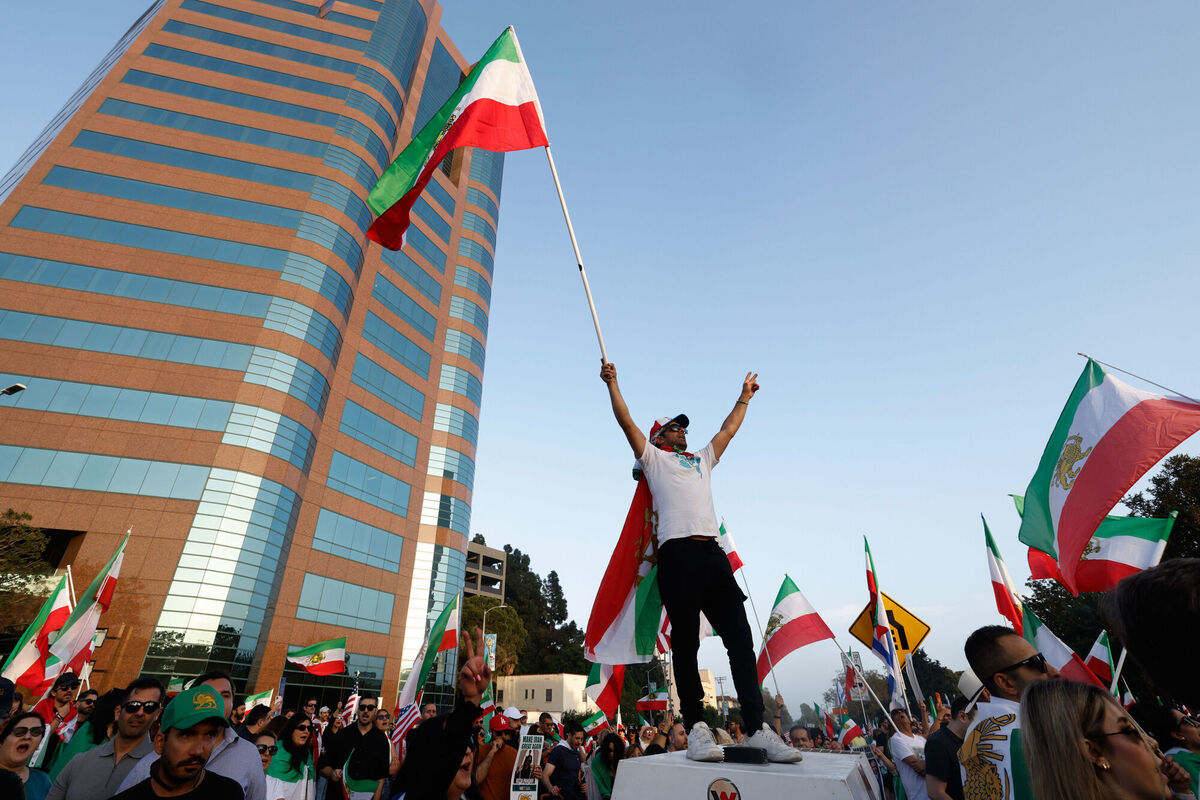
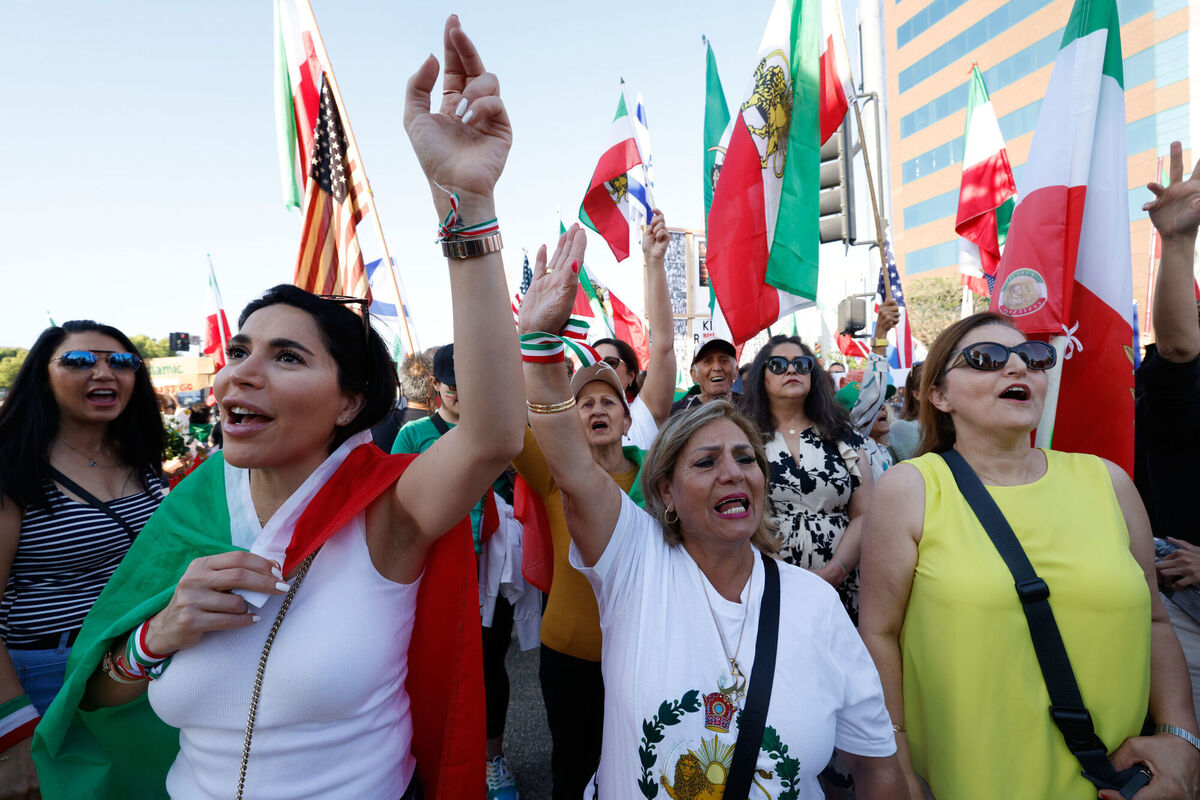
Iranian-Americans at a protest against the Iranian regime at the Federal Building in the Westwood section of Los Angeles last Sunday, March 22. Picture: Jill Connelly/AP

In this context, diaspora voices are not simply expressing opinions; they are attempting to communicate the lived realities of those who cannot speak freely. 

Yet when these realities enter Western protest spaces, they are often filtered through pre-existing political frameworks that prioritise ideological consistency over the complexity of lived experience. 

What gets lost in this process is not just nuance, but the urgency of voices trying to be heard beyond the structures that silence them.

For many Iranians, the reality is a regime occupying their country and clinging to power by killing thousands of its own people, while seeking to expand its ideology beyond its borders.

It is a reality in which civilians are effectively held hostage in times of war — threatened, silenced, and even executed, as in the recent cases of January protesters, to instil fear.

These are the realities that today’s anti-war protests often filter out, downplay, or dismiss, replaced instead by narratives that are more comfortable, more familiar, and more easily aligned with existing political positions.

A closer look at these encounters reveals a broader inconsistency in how some Western protest spaces approach struggles for freedom. 

Solidarity, in practice, is often conditional — shaped by how well certain voices align with existing political positions.

Mahya Ostovar writes that, at a rally in Galway, ‘we were met with a crowd, largely non-Iranian, proudly waving the flag of our oppressors’. File picture 

Iranian diaspora communities, many of whom have lived under repression and continue to advocate for basic freedoms, attempt to amplify the voices of those inside Iran facing systematic censorship and recurring internet shutdowns. 

Yet when these voices complicate dominant narratives, they are often reframed, downplayed, or set aside. The issue is not a lack of clarity, but a discomfort with complexity. 

In this process, a form of selective listening emerges, where rights and freedoms are defended in principle, but applied unevenly in practice.

This disconnect becomes even clearer when we look at how Iranians themselves have tried to navigate this reality.

While many Western movements have, at times, expressed symbolic solidarity or issued statements condemning the Islamic Republic, there has been far less meaningful engagement with what Iranians have consistently asked for: Support that helps delegitimise the regime and protects Iranian lives. 

A protest in Los Angeles last Sunday against the current regime in Iran. Picture: Jill Connelly/AP 

In this context, some of the actions that confuse or unsettle Western audiences, such as the presence of US or Israeli flags in diaspora protests, take on a different meaning. 

Without necessarily endorsing these acts, they can be understood as signals directed outward: An attempt to say “we are Iranians, not the Islamic Republic” — a message we ourselves chanted during our counter-protest on Shop St in Galway.

For many, this is not about alignment with geopolitical powers, but about survival: An effort to be seen, distinguished from the regime, and not treated as its extension, particularly in moments of war when such distinctions can shape who is seen as a legitimate target and who is not.

More than two months ago, at the beginning of the anti-regime protests in Iran — later referred to by some as ‘the Lion and Sun revolution’ — I came across a tweet from a Syrian woman that stayed with me: 


“One of the most frustrating and painful experiences of being a Syrian was having our story and narrative hijacked, being silenced and spoken over by people and platforms from all over the world paid for or following various agendas and ideologies from Iranian disinformation and propaganda, Axis of resistance, Russian, far left, far right.”
I did not expect how quickly it would become personal.

Ukranians, Jews, and Iranians share similar experiences

After the experience with Western anti-war protests, I began writing about it on social media and heard similar reflections from others, including Ukrainians and members of Jewish communities.

A woman of Jewish heritage shared a parallel frustration with media’s selective coverage of Iranian and Jewish voices, amplified only when they fit a particular narrative: “They are tokenising an Iranian woman to maliciously warp public perception about what it is that Iranians want and believe.

“This is what the Irish media establishment has done to the Irish Jewish community for 2.5 years.”

These are not isolated grievances, but signs of a wider pattern. Across different contexts, many of these communities are fighting for the most fundamental and universal values: Freedom, equality, dignity. Yet in parts of Western protest culture, solidarity risks losing sight of its core — listening to those most affected — and is instead shaped by geopolitical obsessions and ideological rigidities. 

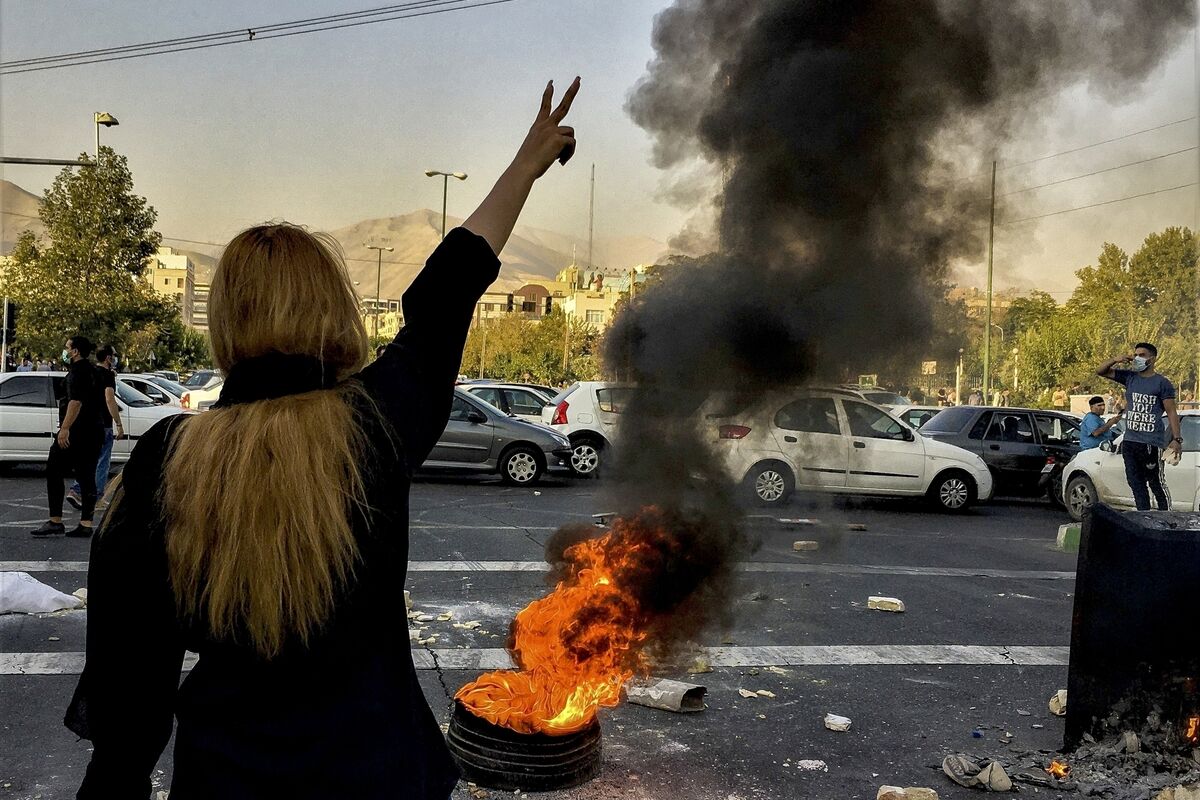
Iranians protest the death of 22-year-old Mahsa Amini after she was detained by the morality police in Tehran in 2022. Picture: Middle East Images/AP 

When that happens, solidarity no longer amplifies voices; it reshapes, filters, and at times silences them. And in doing so, it drifts away from the very values it claims to uphold, becoming disconnected from the struggles it seeks to represent.

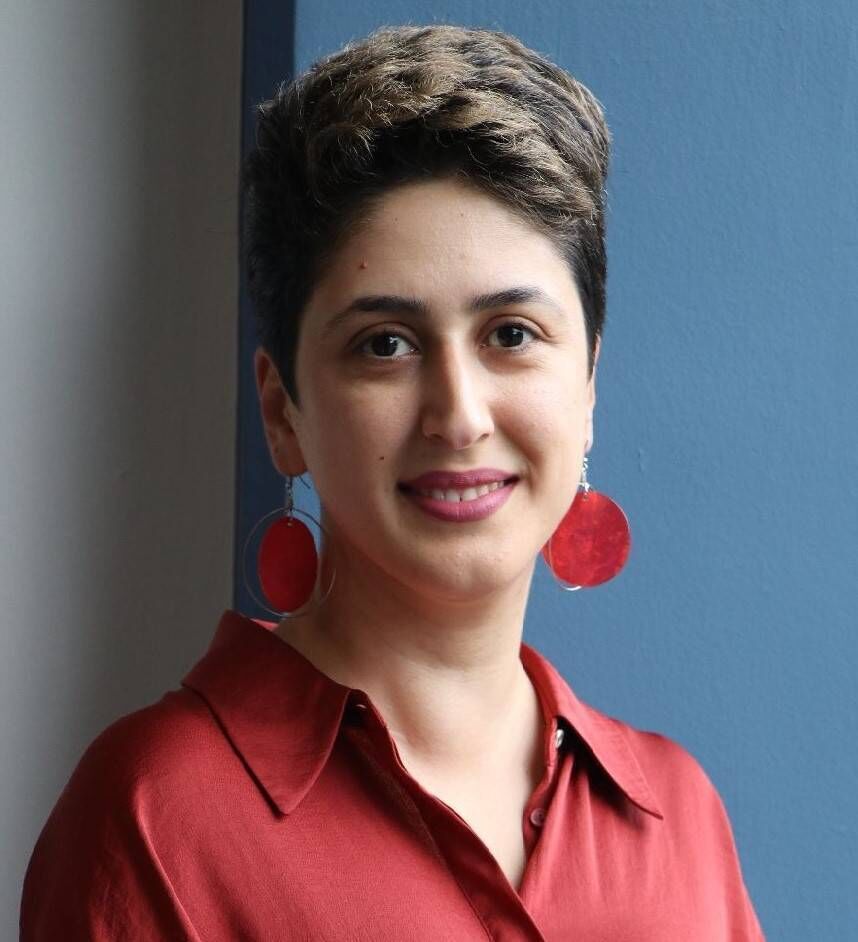
• Mahya Ostovar is an assistant professor at the University of Galway and an Iranian women’s rights activist.

• Her research broadly focuses on social movements and digital activism, with particular attention to resistance against compulsory hijab in Iran.

• She has been actively involved in advocacy initiatives, including the #LetUsTalk campaign, which calls on Western feminist and progressive spaces not to silence criticism of Islam, especially from Middle Eastern women.

• She is a leading member of the Irish End Gender Apartheid Campaign and member of the Afghan and Iranian Women’s Coalition, a collaboration supported by the George W Bush Institute and the International Republican Institute’s Women’s Democracy Network. Her work bridges academic research, media engagement, and grassroots activism.

More in this section

Revoiced

Newsletter

Sign up to the best reads of the week from irishexaminer.com selected just for you.

Cookie Policy Privacy Policy Brand Safety FAQ Help Contact Us Terms and Conditions

© Examiner Echo Group Limited