'If the entire nation lost a stone, would Omicron have less effect in the autumn?'
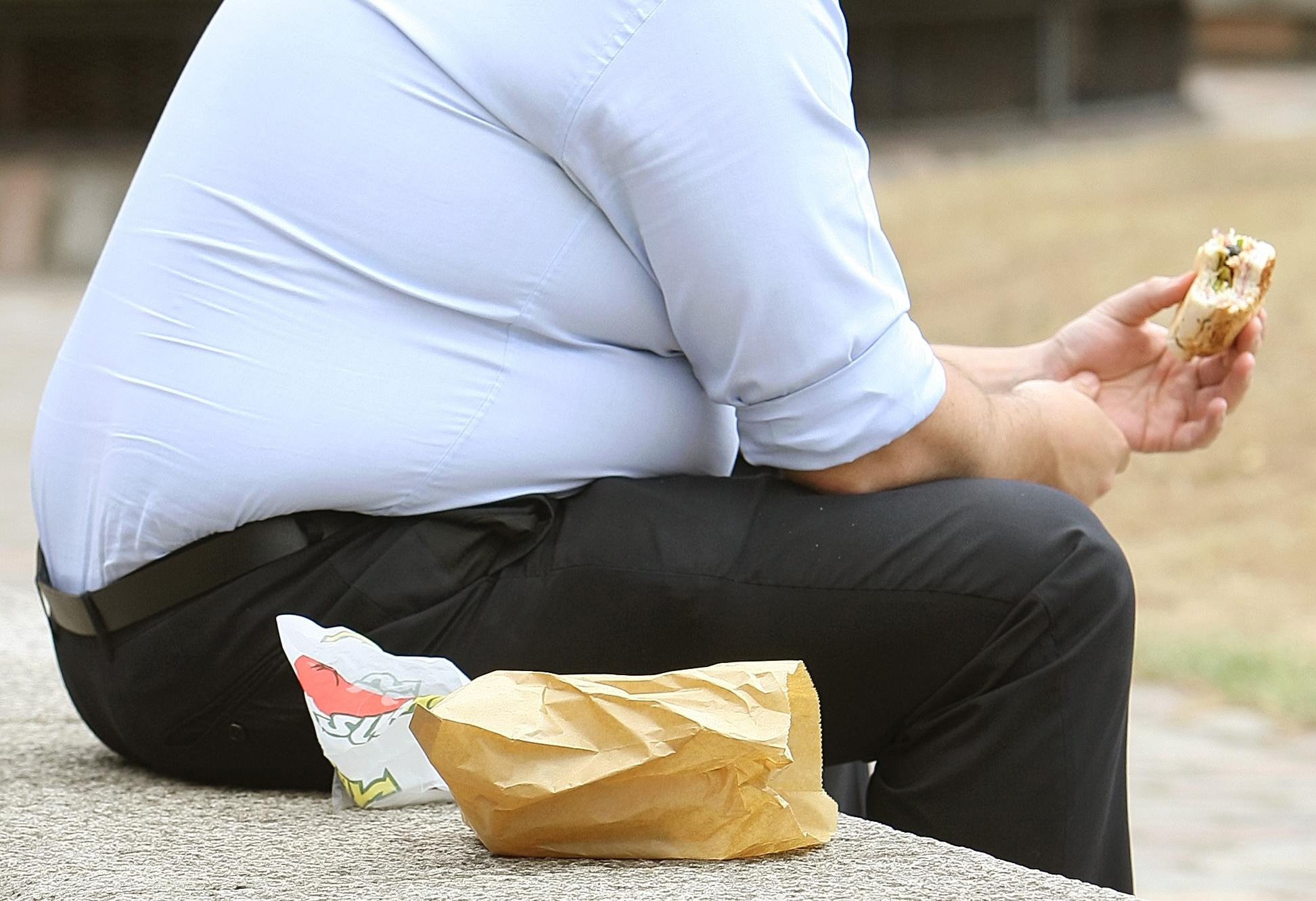
European Centre for Disease Control found “moderate to high certainty evidence” linking Covid-hospitalisation to obesity among other underlying conditions.
Professor Cliona O’Farrelly, chairwoman of comparative immunology at Trinity College Dublin, said we need to start including Covid awareness into our understanding of a healthy lifestyle.
“I’ve been saying for a long time — and people didn’t really want to hear it — that Covid is going to be around for a long time,” she said.
“So the whole thing is teaching us how to live better, we need to live better.”

A member of the Covid-19 Advisory Group which has replaced Nphet, her first advice is to get vaccinated or boosted, and get the flu vaccine.
“Those are the most fundamental things you can do,” she said.
More generally, the European Centre for Disease Control found “moderate- to high-certainty evidence” linking Covid hospitalisation to obesity, among other underlying conditions.
“The third thing to do if people want to feel more control about improving their immune systems, … then more exercise, eat better, and drink less,” said Prof O’Farrelly.
“I often wonder if the entire nation lost a stone would Omicron have less effect in the autumn.”
She also called for Ireland to support wider vaccine access for low-income countries. Some countries are still struggling to get the first round of vaccines out, despite greater availability of vaccines from a larger number of companies.
Another preventative measure which needs more attention is ventilation, said professor of chemistry at University College Cork, John Wenger.
Understanding of airborne transmission and how better ventilation can reduce transmission has improved significantly during the pandemic.
“We could be facing an autumn surge, maybe a Christmas surge," he said.
"These are times when we are indoors, and we know the virus spreads more easily indoors.
Schools made a huge effort last year to learn about Hepa filters and other ventilation approaches, and he suggested this be expanded into nursing homes and other areas where vulnerable people congregate.
Workplaces should look at the Health and Safety Authority ventilation guidelines, available on their website.

“What we’ve been seeing is many of the smaller businesses can’t afford this, so they do need some supports, financial support,” he said.
Also a member of the Covid-19 Advisory Group, he is hopeful ventilation can stay central to the approach this year, noting stronger messaging on this recently.
“There is not much that is new, it is just a question of doing it and doing it properly,” he said.
He advised the public to make sure they have cross-ventilation in rooms, which can be done by opening windows and doors if available.
Assistant professor of virology at University College Dublin, Gerald Barry, said more focus on the risks caused by re-infection is needed.
“We basically have no restrictions at the moment, and we didn’t see any major surge in hospitalisations, so that would give you confidence in what the vaccine is doing,” he said.
“I would be a bit concerned looking at the bigger picture.”
It used to be unusual to know people who took weeks off work with illness, but that is more common now, he said.
“Potentially we are looking at regular waves," he said.
“Obviously not everyone is going to get infected once or twice a year, but it is not outrageous to suggest people will get infected once or twice a year, and a proportion of those will end up in hospital, but a bigger proportion will get sick to the point they can’t go to work for a couple of days.”
This will affect social lives and have an economic impact for companies that are regularly short-staffed, he warned.
“That kind of burden concerns me, because that doesn’t appear to be being considered when policy is being decided on how to manage Covid,” he said.
“It appears to be very much focused on ICU numbers and hospitalisations, that is right in a way, but we need to move into a position beyond that, and see the overall burden on people’s lives.”
There is not yet enough data on the potential long-term risks of getting multiple infections, he said.
"I don’t think that is being taken into account,” he said.
Professor Eoghan de Barra, senior lecturer at the Royal College of Surgeons and infectious diseases consultant at Beaumont Hospital, is expecting further surges.
“It is not the end of the story I'm afraid, not yet,” he said. “The pattern we have at the moment is basically every two months, every two and a bit months, a wave.”
He also recommends vaccinations as one way to stay healthy this winter.
They are seeing fewer severely ill Covid-19 patients, but risks remain for some groups, he said.
“There is a phenomenal amount of Covid going around at the moment, so like we had in January or March, it would be unusual there wouldn’t be some people who had a positive test and end up in ITU [intensive therapy unit],” he said.
"It’s slow and incremental at the moment.”
The biggest risks are for immunocompromised people the vaccines do not work on. To combat this, he called for wider access to antiviral treatments, including Paxlovid, this autumn to give these people a better chance to fight off the virus.
“It may be that in an elderly frail person with a fall, Covid was the thing which pushed them to end up in hospital, but they are not terribly symptomatic from a Covid-pneumonia point of view,” he said.
“The people we are seeing with Covid-pneumonia have really quite compromised immune systems by way of therapies they are on, or underlying diseases.”
CONNECT WITH US TODAY



Be the first to know the latest news and updates