Paul Hosford: Will successive governments have the nerve to stick with climate targets?
At least two general elections will pass in the lifetime of the Climate Action Plan – will those in power see it through, or drop it in search of votes?
Paul Hosford: Will successive governments have the nerve to stick with climate targets?

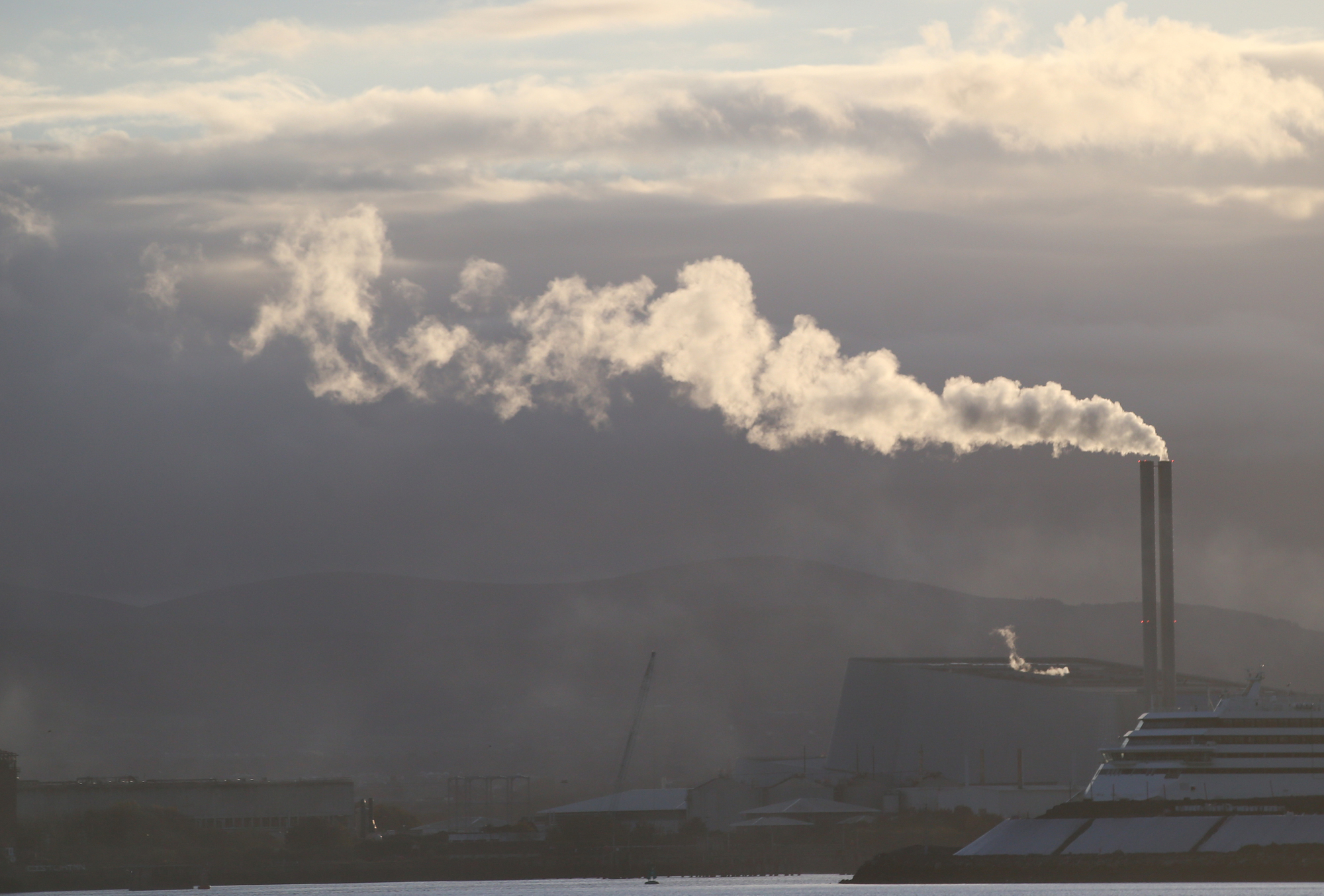
Ireland faces the challenge of firing dirty fossil fuel plants to keep the lights on even as Cap21 calls for a reduction in electricity emissions of between 62% and 81% by 2030. Picture: Stephen Collins/Collins Photos

Another day, another fine document.

After a few weeks of waiting in anticipation, the Government has unveiled how it believes Ireland can reduce carbon emissions by 51% by 2030. Or, rather, it has unveiled a broad series of sectoral expectations and actions which will undoubtedly be the subject of intense argument and discussion in the coming weeks.

As a document, the Climate Action Plan or Cap21 is... fine.

There are few out there who continue to argue against the need to do something about climate change and for Ireland to play its part, regardless of the size of our rock in the Atlantic. 

Indeed, there is no doubt this Government wants to do something, as well. Taoiseach Micheál Martin fundamentally grasps the scale and breadth of the problems and challenges posed by changes to our climate. This was never more clear than his stirring appearances at the Cop26 climate conference in Scotland this week, in which he called for change and said it was not too late to turn the tide on climate change.

But the question is rarely desire. It is rarely about whether or not somebody gets the problem. It is far more often about whether or not they are willing and able to do what is necessary to succeed. The decisions which will have to be made over the coming decade to ensure Ireland moves beyond policies and a slow rate of change that saw the country labelled a "climate laggard".

The Government has made all the right noises thus far about "bringing people along" and selling the benefits of a greener, cleaner future. Speaking at the aforementioned Cop26 climate conference, the Taoiseach singled out the "belching" buses of Cork City's Patrick Street as something he'd like to see the end of, while also wistfully recalling his fondness for a walk in the countryside as evidence that he gets it. 

But there will be those who cannot be swayed even by a near-idyllic portrait of Pana on a summer's eve, topped with the addition of electric buses cutting in front of Brown Thomas like Corkonian gondolas. Those people will be held back by somewhat justified self-interest or just plain pig-headedness and for those people, the carrot may not work. 

And at this point, the question that cannot be answered by a nice document and an infographic that suggests people should "consider switching to an electric vehicle" (wow, a new top-of-the-range car, why didn't I think of that?) is, will the political nerve be there to do what's unpalatable, particularly given this timeframe includes not one, but two general elections? 

Populist backlash

There will be a populist backlash to the climate movement which will cynically attempt to portray any negative impact on a sector – and there will be negatives, make no mistake – as not worth the trade-off in a bid to garner votes of those most harshly impacted. The bulwark against that cannot be a government which does not have the courage of this document, as vague as it is.

It must be seen through because too much depends on it. It is often said that generations do not inherit the earth, they are entrusted with it for safekeeping for those behind them. If many of those of a certain age are brutally honest with themselves, they will recognise that trust has been breached in many ways across the globe. The minimum ask, at this point, is that the children born today have a habitable earth to enjoy.

The big day for the environment began with Environment Minister Eamon Ryan answering Dáil questions. 

But, actually it didn't. 

Mr Ryan had been scheduled to answer questions on the environment and transport but was at Cabinet at the same time so he delegated responsibility to junior ministers Ossian Smyth and Hildegarde Naughton. This angered Sinn Féin's Darren O'Rourke, who hadn't been informed of the late substitution. But it was the content of the Sinn Féin man's first question which summed up where we are as he sought assurances from Mr Smyth that we will not see blackouts this winter.

That issue highlights much of the challenge which Ireland faces. We must take a short-term decision to keep firing dirty fossil fuel plants to keep the lights on even as Cap21 calls for a reduction in electricity emissions of between 62% and 81% by 2030. 

While 2030 may seem like a long time away, in just nine weeks' time we will only be eight years off that target.

That is just eight years to completely revolutionise our entire power infrastructure from generation to storage, to electrify our fleet and to encourage tens of thousands to ditch private cars for walking, cycling and public transport.

For context, it is now nine years since the government chose the St James's site in Dublin as the home of the new national children's hospital, and we all know how smoothly that plan has run since.

Projects in Ireland take some time to complete and that is to say nothing of the problems in our planning and bureaucratic systems. On the morning the Government made its announcement, The Irish Examiner's Mick Clifford revealed that leading offshore developer Equinor has decided to pull out of the Irish market because of concerns about the regulatory framework.

Three government ministers – Mr Ryan, along with Public Expenditure's Michael McGrath and Housing's Darragh O'Brien – scrambled to play down concerns that this could limit our ability to hit an increased target of up to 5GW of offshore wind energy. We have, they said, a number of interested parties because the wind generation opportunities around our coast are so great. 

Mr O'Brien said there were 70 such operators interested in next year's auction of the rights to begin building windmills in the sea. For his Government's sake, and ours, we should hope he's correct.

Much was made, earlier this week, of the DC Comics announcement that Superman would come out as bisexual from January. But what many missed in that manufactured controversy was that the cover of the comic shows Jon Kent, who now wears the symbol of the House of El since his father Clark left earth for good, protesting climate change.

The climate crisis has now enlisted the Man of Tomorrow – we can only hope that our leaders keep their eyes in the same direction.

x

CLIMATE & SUSTAINABILITY HUB

More in this section

Revoiced

Newsletter

Had a busy week? Sign up for some of the best reads from the week gone by. Selected just for you.

Cookie Policy Privacy Policy Brand Safety FAQ Help Contact Us Terms and Conditions

© Examiner Echo Group Limited