Q&A: Parents' guide to close contact changes
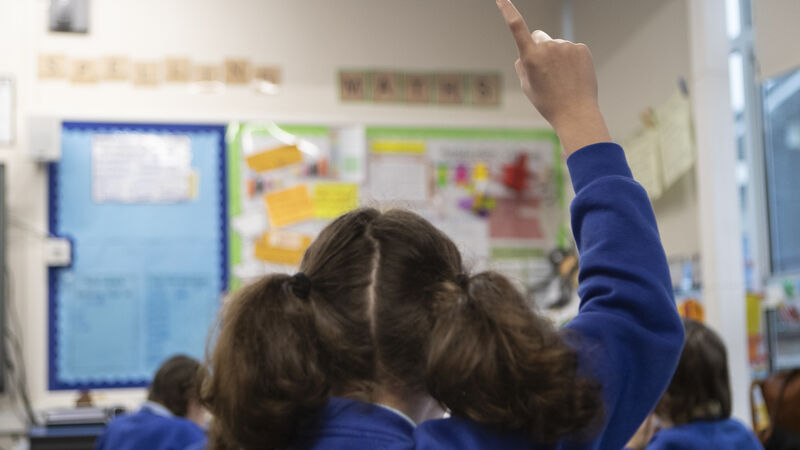
All other infection prevention and control measures will remain in place, such as pods, bubbles, a focus on hand hygiene and ventilation, and the wearing of masks amongst staff.
: From Monday, the automatic contact tracing of asymptomatic close contacts in children over the age of three months, and under the age of 13, that arise in creches, primary schools, social and sporting groups will no longer take place.
Close contacts in these circumstances will not be required to restrict their movements and stay home from school or creche, providing they have no symptoms.
Cases and outbreaks in special educational needs settings, and respite care will still have a public health risk assessment, which may still require children to be identified as close contacts, be referred for testing, and have their movements restricted.
However, they will generally be requested to restrict their movements for five days and be referred for one Covid test.
: Children identified as household close contacts and who are not fully vaccinated or have had a confirmed Covid-19 diagnosis in the last nine months, even if they have no symptoms, will still need to restrict their movements and get a Covid-19 test.
Any child with symptoms should immediately self-isolate. They should not attend childcare or school or socialise, and parents should contact their GP for advice.
: No, for the most part. Guidance issued to schools today says that if they become aware of a case of Covid-19 who recently attended, they do not need to contact the HSE, and they will not be routinely contacted by the HSE.
Public Health teams will continue to contact special educational needs schools, or special educational needs classes within mainstream primary schools, or respite care when they are notified of a confirmed case of Covid-19 who was infectious within your setting.
: The HSE public health guidelines issued to schools today states that effective vaccines against Covid are now available and a robust vaccination programme is underway in Ireland for children aged 12 years and older.
Thousands of children were self-isolating during the first weeks of the school term but the HSE said that the positivity rates among close contacts remain low.
Dr Abigail Collins, the HSE schools lead, said on Thursday morning: “For the vast majority of children, it's appropriate that we consider whether the thousand plus children who are completely well, who are being excluded from society, is a price that we should reasonably be asking them to pay.”
: According to guidance issued to schools, a child will be considered a household contact if they were present overnight, in the household of a Covid-19 case while the case was infectious.
“This may be in their own home or someone else’s home, for example children who may have been on sleepovers with family or friends.”
: Any child previously identified as a close contact of a case from anywhere outside the household, special educational needs, or respite care setting who is currently restricting their movements, can return from Monday, provided that they have no symptoms of Covid-19.
They do not need to have another Covid-19 test before returning.
Children identified as close contacts within a special school, special class or respite care, should remain restricting their movements until 5 days of restricted movements are complete, according to public health.
Children identified as close contacts through a household case of infection, ie a parent who has Covid, must remain restricting their movements.
: The most common symptoms are fever with a high temperature of 38 degrees Celsius or more, a dry cough, and tiredness.
Less common symptoms include the loss or changed sense of taste or smell, a blocked nose, conjunctivitis, sore throat, headache, aches and pains, skin rash, nausea, vomiting or diarrhoea, and chills or dizziness.
The advice to parents remains that even if your child's symptoms are very mild, keep them at home for 48 hours and phone your GP for advice.
Dr Abigail Collins, HSE schools lead, said on Thursday morning that it is up to parents to gauge if their child is well enough to go to school, and that if they had a runny nose and no other symptoms, then they should go to school.
: All other infection prevention and control measures will remain in place, such as pods, bubbles, a focus on hand hygiene and ventilation, and the wearing of masks amongst staff.
: The fact the changes to testing and self-isolation policies in schools exclude children in special classes and schools has been described as “flagrant discrimination” by AsIAm.
The charity said that students with the greatest level of need in the education system will face discrimination by having to remain at home under these circumstances. Many of these children learn in small groups, in larger classrooms, and have no underlying health conditions. AsIAm is consulting with its senior council on the issue.
The Irish National Teachers’ Organisation (INTO) has called for changes to be postponed until after the mid-term break, to allow for better planning.
CONNECT WITH US TODAY



Be the first to know the latest news and updates