Q&A: What's in the economic recovery plan and what changes are being made to PUP?
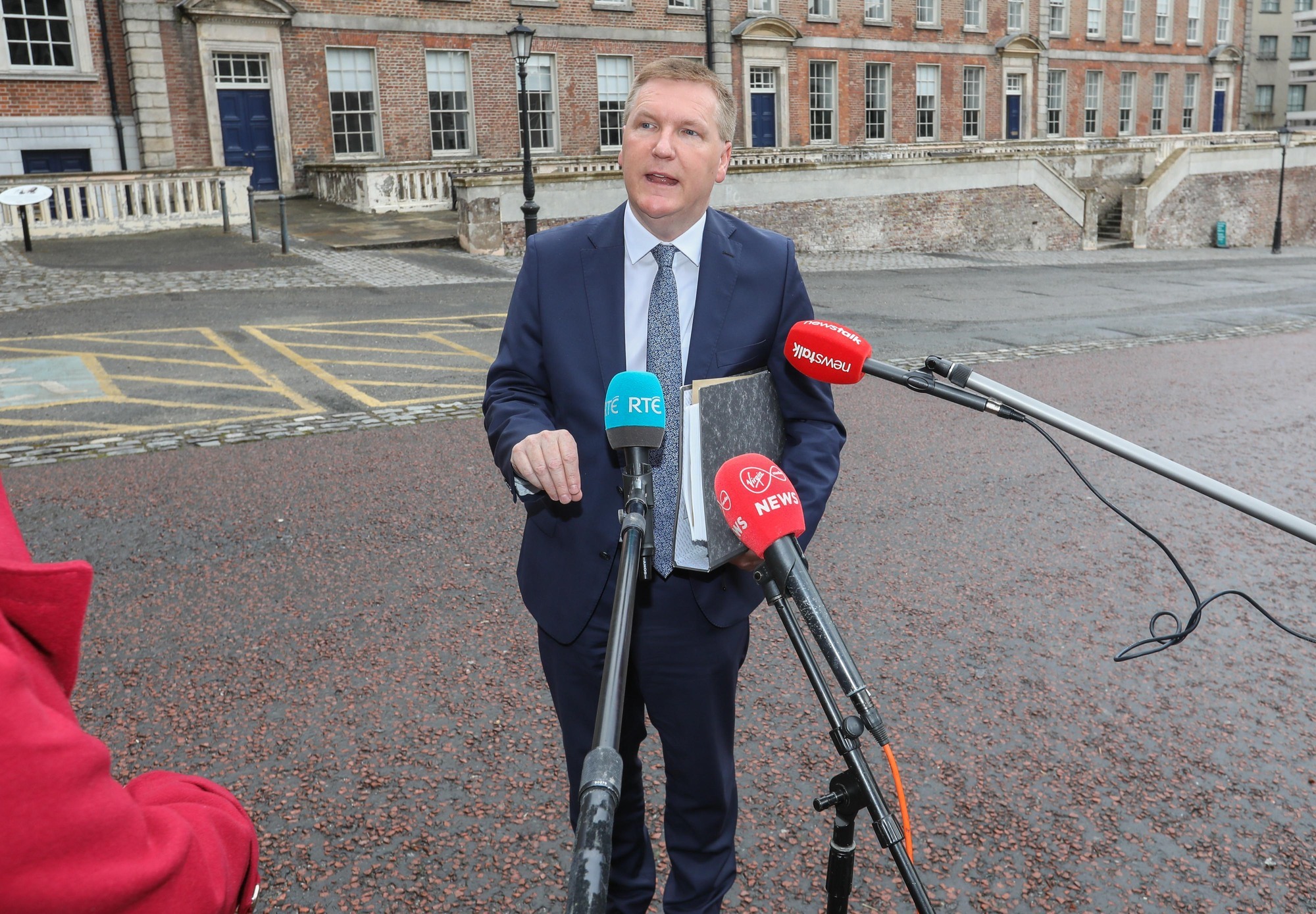
Mr McGrath said the Government is âdeeply consciousâ of how important the pandemic supports are for people, which is why changes will be made in a gradual way. Picture: Sasko Lazarov / RollingMews.ie
The Government has announced a National Economic Recovery Plan to get people back to work following the pandemic.Â
Here's a snapshot of what has been announced.
The plan aims to get 2.5 million people back to work by 2024.
It will look at new measures for businesses and sector that have been impacted by Covid-19.
The Government said the plan is âall about new jobs, more jobs, better jobs.â The plan will place an emphasis âon upskilling and research, providing targeted support for those sectors most impacted, and investing in areas for long-term growthâ.
The Employment Wage Subsidy Scheme (EWSS) is extended until the end of the year, while the Covid Restrictions Support Scheme is also being extended until the end of 2021.
âInitial funding of âŹ915 million through the National Recovery and Resilience Plan, under the European Recovery and Resilience Facility, plus the forthcoming revised National Development Plan, will create a green and digital job revolution,â said the Government.
The plan is broken down into four pillars:
- Helping people back into work by extending labour market supports and through intense activation and skills;
- Re-building Sustainable Enterprises through targeted investments and policies to make enterprises more resilient, innovative and productive;
- A Balanced and Inclusive Recovery through strategic investment, balanced regional development and improving living standards; andÂ
- Ensuring we have robust, sustainable public finances.
Controversially, however, there will be changes made to the PUP.
What are the PUP changes?
The PUP was due to finish at the end of June, but that has now been extended until September 7.
From September, there will be a three-phase reduction of the payment by âŹ50.
The current weekly rates of support will be gradually reduced over three phases by âŹ50 increments. The first phase of rate changes will apply from 7 September provided progress on re-opening continues. Two further phases of changes will take place over the following months, on 16 November and 8 February, if progress continues as expected.
The rate of payment for the PUP is linked to previous earnings.
At the top end, if your average weekly earnings were more than âŹ400, the rate of PUP was âŹ350.
At the lower end, if your weekly earning was less than âŹ200, the rate of PUP was âŹ203.
The payment was due to end at the end of the month, but that is to be extended.
As of May 25, 333,993 people were in receipt of the payment, with the Department of Social Protection issuing weekly payments valued at over âŹ102m.
The figure represents a decrease of 29,174 people compared to the previous week.
The Minister for Public Expenditure told RTĂ's  prior to the announcement that it is important the country moves to âa more normal social welfare systemâ.
Mr McGrath said the Government is âdeeply consciousâ of how important the pandemic supports are for people, which is why changes will be made in a gradual way.
He said that it must be remembered that there are people on a basic social welfare rate that is âconsiderable lower than the current rate of PUPâ.
âIf you lost your job in January or February of last year, for example, you're on a considerably lower core weekly social lever rate.âÂ
Sinn FĂ©inâs Pearse Doherty the Governmentâs was pulling the rug from under families who lost their job during the pandemic.

He told the same show that come September, there were will be some in sectors such as hospitality, event management, aviation and tourism who will still be ârestrictedâ from going back to work.
The Sinn FĂ©in finance spokesperson said some people canât go back to full-time work due to public health restrictions.
âThere was a principle here, that for as long as the Government places barriers on people returning to work that those individuals needed to be supported, not fully but with a level of support.âÂ
The Society of St Vincent de Paul (SVP) said the winding down of the PUP âwill create a storm of problems and hardship for thousands of individuals and familiesâ.
The charity welcomed that there âwill be no cliff-edge of supportsâ and has called on the Government to make full use of poverty proofing safeguards in the implementation of changes.
âTaper supports towards those most at risk of financial hardship including low-income families with children, renters and workers in sectors that will be slower to recover from the pandemic,â SVP said.