Colin Sheridan: New reforms risk transforming what it means to be an immigrant in Ireland
Recently unveiled reforms signal a sharper, more conditional, approach to migration and integration, a policy shift seemingly premised not only on numbers but on redefining belonging
Colin Sheridan: New reforms risk transforming what it means to be an immigrant in Ireland

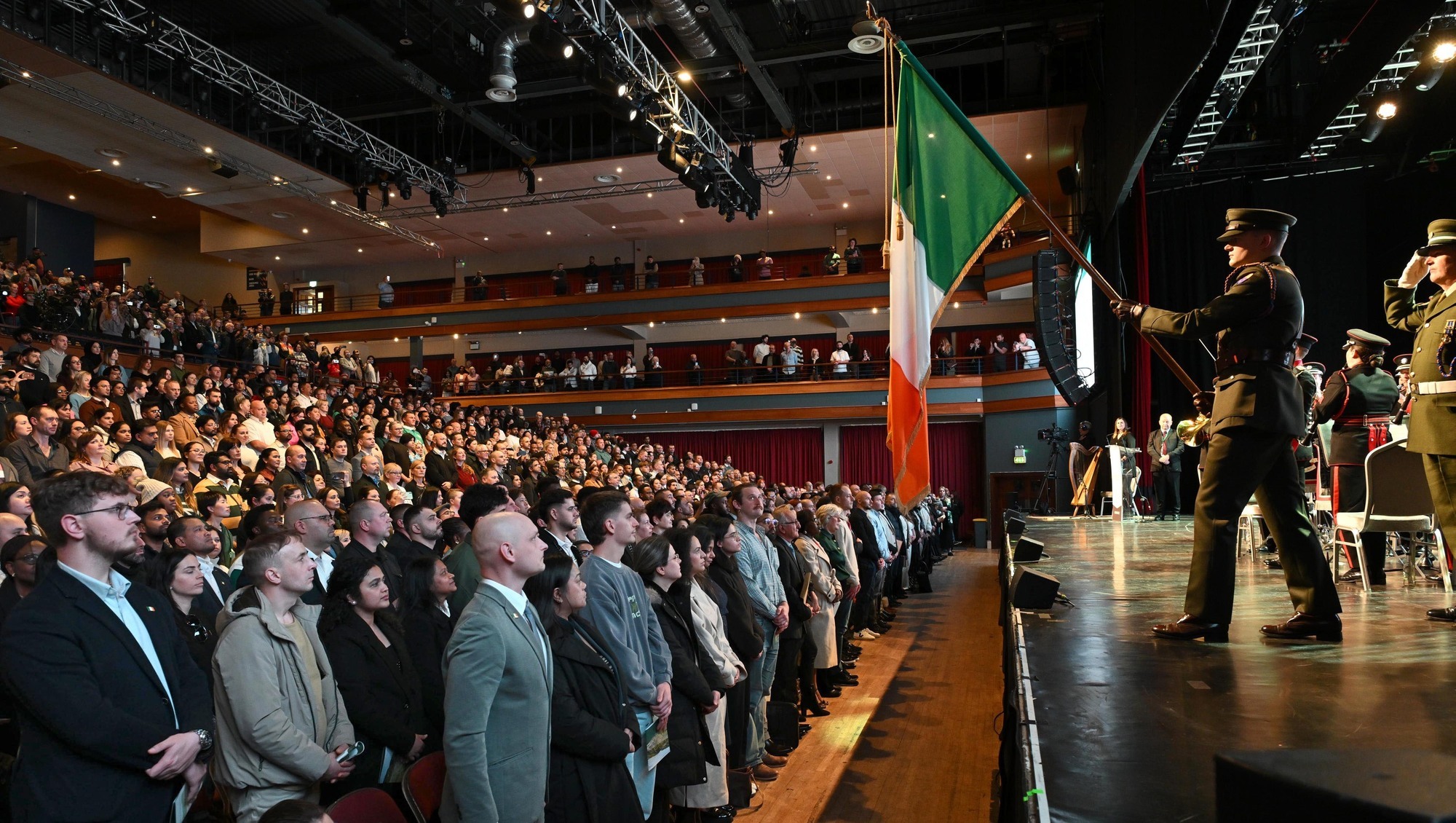
New Irish citizens stand to attention for the national anthem after receiving their citizenship at a special ceremony in Killarney, Co Kerry, last week. Picture: Don MacMonagle

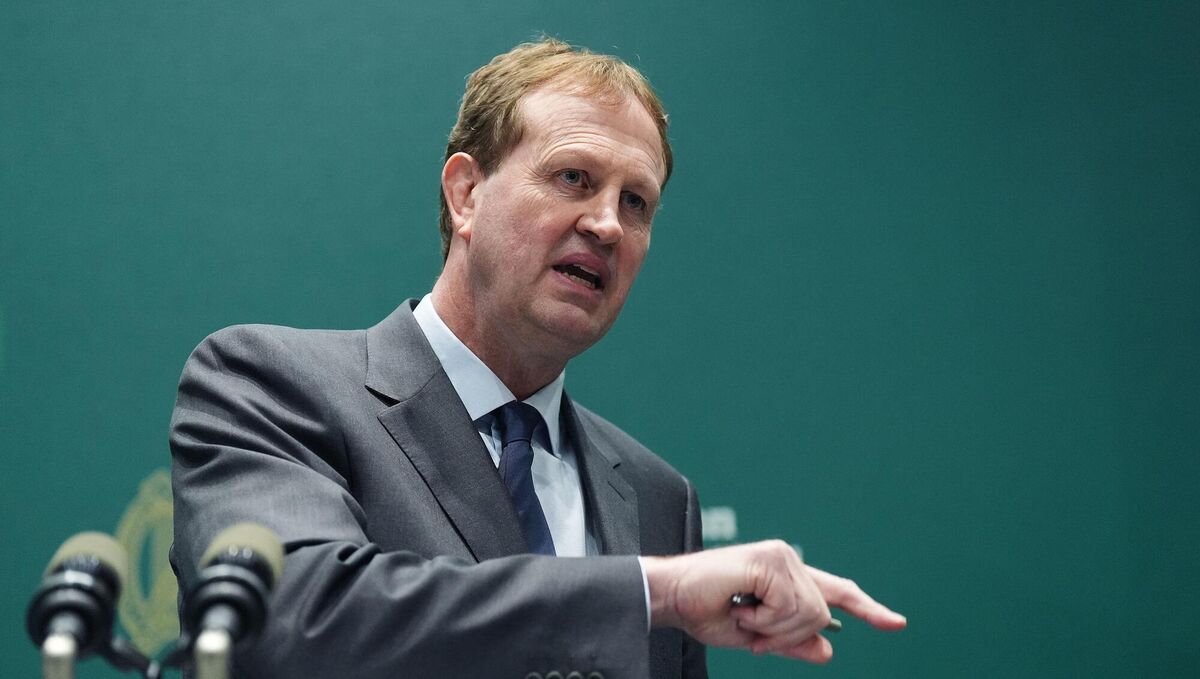
When justice minister Jim O’Callaghan stood on the plinth outside Government Buildings recently to unveil the Government’s latest migration reforms, it was clear: this was not just a tweak, it was a major revamp of how Ireland treats asylum seekers, refugees, and non-EEA residents.

With population growth reaching 1.6% last year, reportedly seven times the EU average, the Government says the reforms respond to pressure on public services, housing, and overall State capacity. But many who are already living, working, or raising families here fear the new rules will affect their lives in a markedly negative way, eroding their sense of belonging, even after years, sometimes decades, of building lives in Ireland.

The new measures approved by the Cabinet amount to the most sweeping package of migration reforms in Ireland in decades.

Key changes announced by the minister for justice include tougher citizenship criteria for people granted international protection. The required residency period before application for citizenship will rise from three to five years.

Applicants must also be “self-sufficient” and cannot have received certain State social welfare payments in the two years before applying.

Broader “good character” requirements will also be introduced, along with new powers to revoke refugee status for those convicted of serious crimes or deemed a danger to State security.

The reforms will seek financial contributions by employed asylum seekers toward their State-provided accommodation. For those earning and working while in protection accommodation, a portion of their income must be contributed toward housing costs.

When justice minister Jim O’Callaghan unveiled the Government’s latest migration reforms, it was clear that this was not just a tweak, it was a major revamp of how Ireland treats asylum seekers, refugees, and non-EEA residents.	Picture: Brian Lawless/PA
When justice minister Jim O’Callaghan unveiled the Government’s latest migration reforms, it was clear that this was not just a tweak, it was a major revamp of how Ireland treats asylum seekers, refugees, and non-EEA residents. Picture: Brian Lawless/PA

While the minister preached pragmatism, the new laws are unequivocally punitive. For those seeking to bring in spouses, children, or other family members from outside the EEA, there will be stricter income and housing thresholds; applicants must demonstrate they can financially support their family, as well as provide suitable accommodation.

The new policy aims to limit family reunification to what the Government calls “nuclear family” (spouses/partners, children under 18), placing “strict limits” on other relatives.

Perhaps the only nod to improving the lot of those seeking refuge here is the Government plans to reduce first-instance asylum decisions to three to six months by mid-2026.

Proponents say the reforms reflect a shift toward a more “rules-based and efficient” system, aligning with standards in many other EU member states. But for those immigrants already here, and those who work to support them, it represents a further politicising of vulnerable people.

Author, social justice activist, and academic Ebun Joseph describes the new laws as “fundamentally reshaping Ireland’s immigration landscape. The narrowing pathways, expanded enforcement are placing thousands upon thousands of migrants’ futures in a more fragile and vulnerable position”.

“These people are already vulnerable. These reforms make them much more so.”

Ebun Joseph: Migrants are being treated as political capital by politicians. Picture: Marc O'Sullivan

Ms Joseph, who last year was appointed Special Rapporteur for the National Action Plan Against Racism (due out in early 2026), says migrants are being treated as political capital by politicians, who, she believes, are motivated more by votes than any duty of care to many of the State's most vulnerable people.

“Why are they so proud of deportation flights? Why are these flights announced with such triumphalism by politicians as if they are an achievement?" she asks. "Maybe we should be looking at how much these flights cost and reinvest that money into a humane immigration policy as opposed to gloating about sending people ‘back to where they came from’.”
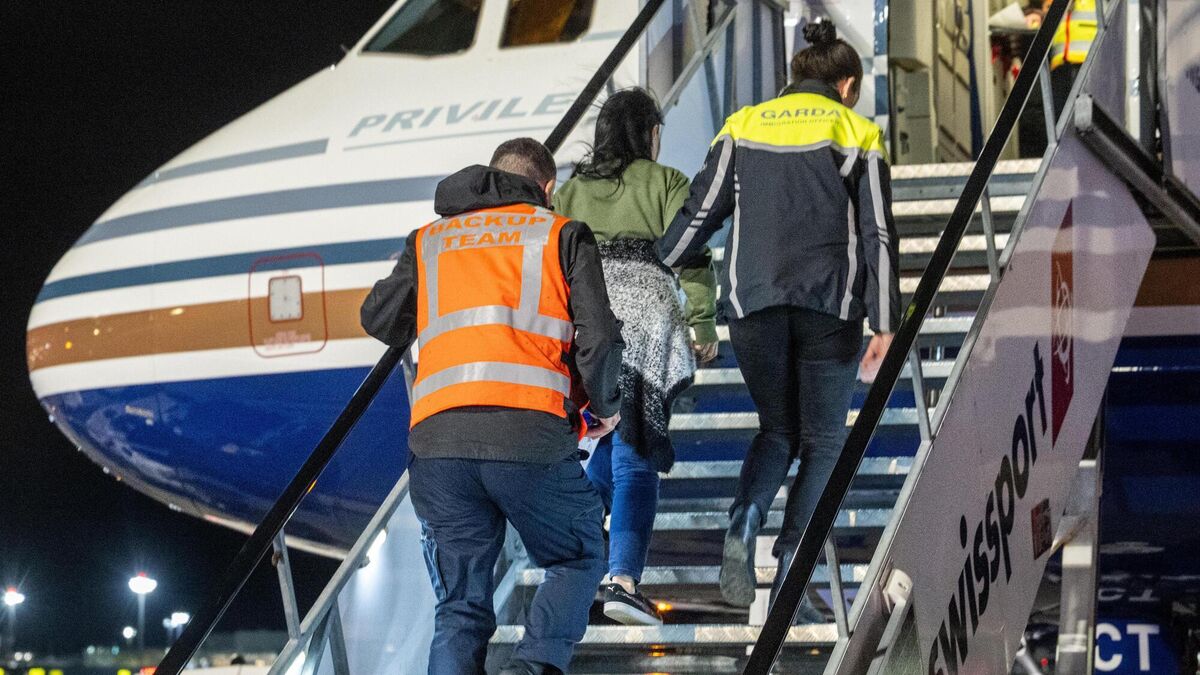
In 2025, the Department of Justice reported spending €2.525m on removing 318 people from the State, via both chartered and commercial flights.

“Ireland’s immigration policy already commodifies the lifes of at-risk human beings,” says Ms Joseph. “These new measures will only make it much worse.”

During his press conference, Mr O’Callaghan was candid: the impetus, he said, was not only the increase in asylum applications, but a broader demographic shift. Ireland’s population growth, he said, though in many ways a positive sign, is “worryingly high” and putting strain on housing, services, and social infrastructure.

He said that those who receive international protection should, when working, pay toward the cost of their State-provided accommodation, especially if they are earning money.

“Do they know how much many of these migrants earn and the pressure they’re under?” says Ms Joseph in response. “Irish society needs these people to work. Taking more of what little money they have will punish them to breaking point.”

On family reunification, the aim, the Government says, is to ensure that those calling for relatives to join them can genuinely support them, and to avoid scenarios where family members arrive and become a burden on social services or housing systems. Lastly, by extending the residency requirement for citizenship and adding conditions of self-sufficiency and “good character”, the Government says it is safeguarding the integrity of Irish citizenship.

While the Government frames the reforms as necessary, critics say they will inflict a heavy human cost, especially on people who have already settled in Ireland, built lives here, and had hopes of eventually gaining citizenship and bringing family over.

For refugees and people granted international protection, the extended five-year residency requirement feels punitive. Some had been planning, perhaps after three years, to settle long term, integrate fully, and bring family over. Now, that goal is pushed further into the future.

Even more troubling for many is losing eligibility if they received social welfare in the preceding two years, a rule that could disproportionately affect those who, due to exclusion from the labour market when seeking protection, had to rely on support while awaiting status.

This creates a new form of conditional belonging: integration is no longer just about time or community contributions, but about whether an applicant has avoided welfare reliance, regardless of their past struggles.

As Ms Joseph says, for asylum seekers who are employed and living in State-provided accommodation, the new requirement to contribute a portion of their income toward housing can drastically reduce already modest earnings. That can make everyday living harder; it reduces already narrow margins for supporting dependents, saving for future moves, or establishing stability. Some already work two jobs just to survive here. Then, there is always the burden of sending money home.

Ms Joseph says many will face the impossible choice: continue working and pay significant rent, or leave State accommodation, even if they have nowhere else to go or cannot secure private housing because of discrimination, low wages, or administrative barriers.

Migrants believe perhaps the most demoralising and draconian facet of the new rules involves family reunification which will make it much harder to bring and keep families together.

Under the new rules, many immigrants fear they will be unable to reunite with spouses, partners, or children. Especially those who came on work permits or through protection, but earn below the new income thresholds or cannot secure suitable housing, may find family reunification out of reach.

For single parents, extended families, or people who had planned long-term stays, the change may feel like a forced fracture. The narrower definition of “family” and the tougher criteria reduce the possibility of broader family networks joining, which in many communities is essential support, especially for childcare and cultural and emotional wellbeing.

Deportees being escorted from Garda vehicles to a charter aircraft as part of Operation Trench last month. 	Picture: Chani Anderson
Deportees being escorted from Garda vehicles to a charter aircraft as part of Operation Trench last month. Picture: Chani Anderson

Campaigners say perhaps most insidious is the psychological effect: the sense that no matter how long someone lives here, how well they work or contribute, their pathway to belonging can always be rescinded.

The new power to revoke refugee status, in cases of security concerns or serious crime, while not new in principle, now sits alongside stricter citizenship and reunification rules, sending a message to many immigrants: acceptance is conditional, and not guaranteed. Even among working migrants, those contributing taxes and labour, the requirement to pay for accommodation might feel like a reminder that they remain outsiders, dependent on State decisions rather than granted full equality.

Swift backlash

The backlash was swift. Green Party leader Roderic O’Gorman denounced the changes as “anti-integration” and fundamentally unfair to people who had already had their right to stay recognised by the State.

Critics say there is no evidence the reforms will produce the benefits the Government claims. Income thresholds and housing requirements won’t necessarily reduce pressure on services, they may simply block vulnerable families from uniting. Meanwhile, imposing charges on working asylum seekers may undermine their ability to settle and integrate.

Others say the reforms risk creating a permanent underclass of immigrants: legally present, working, but constantly reminded of their conditional status, vulnerable to revocation or exclusion, and separated from loved ones.

Some also draw parallels with more restrictive migration models in other jurisdictions such as the UK, raising questions about whether Ireland is shifting away from its reputation as a welcoming destination.

Other concerns have been raised about the fast-tracked asylum processing. While shorter decision times may relieve pressure on reception centres and reduce costs, legal aid groups caution that accelerating procedures could lead to rushed decisions, with inadequate time for proper legal representation and appeals.

Taken together, the reforms signal a sharper, more conditional, approach to migration and integration in Ireland. The shift seems premised not only on numbers (population growth, asylum demand) but on redefining belonging. It’s no longer enough to be present, working, or building a life over years; immigrants must now meet strict financial and character benchmarks.

That has consequences. It may deter future migrants. It may discourage family reunification. It may push vulnerable people into worse-off situations. And it may create divisions in immigrant communities, between those who “qualify” under the new rules and those forever kept uncertain.

At the same time, the reforms could deepen social stratification, favouring those with stable employment and higher incomes, while penalising people who fell on hard times, relied briefly on welfare, or whose work is insecure or informal. In effect, the message is clear: Ireland will continue to accept immigrants, but only under tighter, more conditional, more controlled circumstances.

For many in Ireland, immigrants and non-immigrants alike, the new laws raise fundamental questions about identity, community, and what it means to belong.

For immigrants, the changes could upend long-term life plans, delaying citizenship, delaying family reunification, increasing housing costs, and exposing them to uncertainty even after years of residence. For broader society, by tying migration to stricter economic and financial criteria, the reforms redefine who is “deserving” of integration, potentially eroding the ideal of a plural, inclusive Ireland. For children and families, the narrower definition of eligible family members and tighter criteria risk splitting families, placing pressure on those already here, and affecting community cohesion.

For civil society and policy, the reforms test whether migration policy in Ireland will prioritise control and limitation, or continue to balance economic need, humanitarian protection, and social justice.

Behind these policy shifts are real people: skilled workers who have lived in Ireland for years but now face new uncertainty; refugees who dared to dream of citizenship and settling permanently, only to find their timeline extended; parents forced to postpone bringing a spouse or child over until they secure higher wages or acceptable housing; asylum seekers earning a wage but having to contribute part of it toward their accommodation, leaving less for daily needs.

By weaving in voices from immigrants, their hopes, fears, frustrations, we can move beyond abstractions and statistics. We can show the human cost of policy: the anxiety, the limbo, the recalibration of what home means.

The new reforms under Mr O’Callaghan may satisfy a desire for order, control, and fiscal responsibility. They may make the asylum and immigration system more “efficient”, reduce pressure on housing and services, and align Ireland with stricter European norms.

But in doing so, they risk transforming what it means to be an immigrant in Ireland, from someone gradually becoming part of the fabric to someone perpetually proving their worth, their financial stability, their character, all while under the threat of revocation or rejection.

As the country debates the laws, the question must be asked: When does integration become a privilege rather than a right? When does residence become conditional belonging?

For readers, for immigrant communities, for Ireland’s future identity, these are not abstract dilemmas. They are urgent and very personal. And the story needs to be told.

x

More in this section

Revoiced

Newsletter

Sign up to the best reads of the week from irishexaminer.com selected just for you.

Cookie Policy Privacy Policy Brand Safety FAQ Help Contact Us Terms and Conditions

© Examiner Echo Group Limited