Restoring the Army's lost brigade could be vital for border security
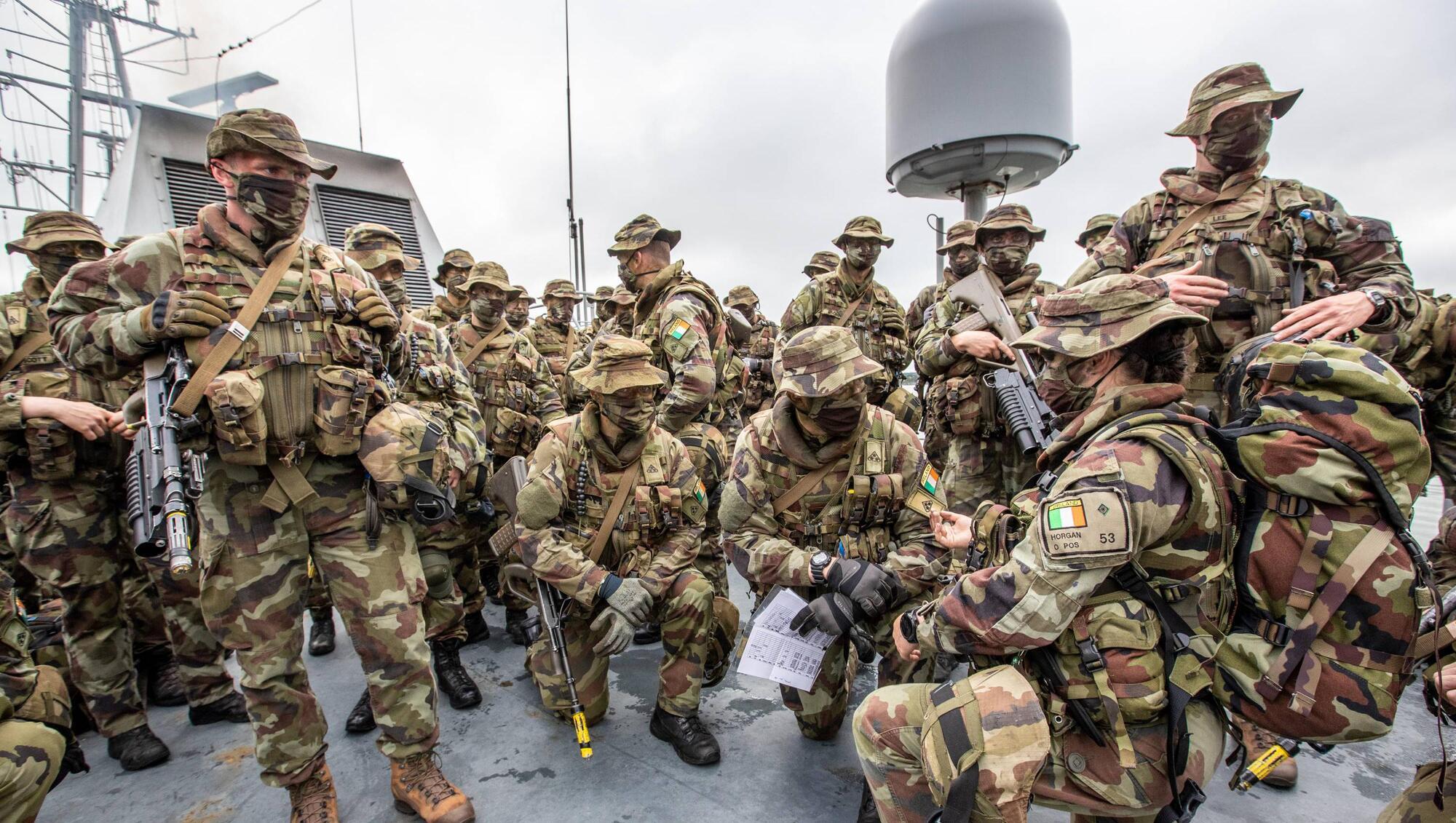
The disruption to family life for soldiers as a result of the 2012/13 redeployment has turned out to be far greater than was previously estimated. Picture: Neil Michael
Everyone wants change, it seems. Change is now a virtue word, like inclusivity or caring. If you dare speak up against change, you are quickly dismissed as right-wing, delusional, old, or all of the above. Moreover, to suggest that it might sometimes be a good idea to turn the clock back to the past, is the ultimate heresy.
And yet that might be part of the dilemma facing the newly established Commission on the Defence Forces. The general expectation is that the Commission will make recommendations for change to resolve the current problems in the Defence Forces. But it is now becoming increasingly obvious that part of the solution is to turn back the clock. In particular, the Army should revert, from the present two brigade structure, to the pre-2012 three brigade structure. This is the subject of much speculation right now in the military community.
Back in 2012 the State’s finances were in a desperate situation. Every Government Department faced cuts, and the Defence Forces was seen as ‘low hanging fruit’. By that time, previous mini reorganisations had removed the ’fat’ from the Defence Forces, mainly through innovations in technology and streamlining administration. In reducing the Army from three to two brigades, one third of its operational units and one third of its key specialists’ appointments were suppressed.
The 4th Brigade HQ in Athlone was closed down. It had coordinated operations over 10 counties, including Connaught, the Leinster Midlands and the Ulster Counties of Donegal and Cavan, with 263km of the border. Columb Barracks, Mullingar, was closed down. Dublin City, where the Defence Forces have a key back-up role for the security of the Seat of Government, Dublin Airport and Dublin Port, lost one of its two infantry battalions. Cork lost its only infantry unit, the 4th Battalion.

As a cost-cutting exercise the 2012 reorganisation was a resounding success. Defence spending fell gradually from 0.56 % of GDP in 2012 to 0.27 % in 2020 (EU average is 1.2%). No wonder the imposed cut from three to two brigades left the Army substantially dysfunctional.
With the benefit of hindsight, we can now see just how dysfunctional the two brigade model has turned out to be. Reducing the number of brigades ruptured the operational cycle which facilitated lead brigade for national operations such as security for Portlaoise Jail, and facilitated the overseas cycle of pre-deployment, deployed and recovery, of overseas troops. Territorially, the country is now reduced to two brigade operational areas, each bigger than Belgium, each twice the size of Northern Ireland. Remaining occupied posts are further removed from operational areas, such as the Border. Crucially, Dublin and Cork can no longer reinforce the Border units, as heretofore.
Training was adversely effected with soldiers required to spend too much time on the road getting to training locations. We now have the ridiculous situation where Donegal based soldiers, have to travel to Dublin for training courses instead of Athlone.
Moreover, the disruption to family life for soldiers as a result of the 2012/13 redeployment has turned out to be far greater than was previously estimated. Soldiers, for the most part, live, work and form relationships close to their home locations. Unlike officers, they are less able to afford long distance commuting, or secure mortgages to relocate their families. The defence forces no longer has married quarters to offer soldiers on transfer.
Many highly qualified personnel left voluntarily, as they did not wish to be commuters in perpetuity, due to the loss of large numbers of appointments which disappeared overnight in Dublin, Cork and the Midlands. The stark reality of the reorganisation was that anyone wishing for a career and promotion through the ranks could never again put down family roots in the Midlands, West and Northwest.
The three brigade structure based on the old Commands functioned quite well and gave the Army a greater geographic ’footprint’, which is an overriding contributor in recruitment and retention. Restoring the third brigade, with HQ in Athlone, is achievable, if the recommendations on increasing the size of the Army and bringing the Reserve Defence Forces back to full strength, are also considered.
However, the biggest single reason for reverting to the three brigade structure is the developing situation in the North. Brexit, and the changing demographics in Northern Ireland, have brought forward the prospect of unification, and, with it, the spectre of both a UK withdrawal and a loyalist backlash. Next time around the State could be faced with a security situation far worse than in 1969.
Until the situation in NI is resolved we need the Army to have at least the minimum capability to secure the Border. The best way to do that is to restore the lost brigade. Time to turn the clock back before it is too late.

CONNECT WITH US TODAY



Be the first to know the latest news and updates