Tara Flynn: I don’t trust ‘nice’. I prefer to be honest, outspoken, and kind
‘Just be nice’ is an insidious mantra designed to keep us quiet when we should speak out against injustice. And we should equally be wary of ‘politeness’ that is a cover for hate, writes .
I’m over ‘nice’. I’m over it. And I’m sorry if that means Santa is going to leave coal in my stocking this Christmas (honestly, I’ve always thought fuel was a decent present; never been sure why it’s had such a bad rap). I’ve seen ‘nice’ for what it is and I want no more dealings with its sugary nonsense.
Girls, especially, are taught that niceness is the pinnacle of social interaction: Meek, pliable, appeasing. But all of us are inclined to fall for it. DON’T. It’s a trap. Of course, the broader concept of niceness encompasses truly good stuff: Being kind, giving pleasure, not hitting someone in the face when they put the wrong amount of syrup in your €10 gingerbread latte.
At its core, being nice is sound. But when it is misused, it can be insidious. And, for that, we must be vigilant for data-harvesting devices that send us ads based on recent conversations. (I didn’t know my dog needed a stress-relief bed; now, it’s all I can think about.)
Nice can be used to keep us quiet, and I’m certain that’s not what Santa meant. Nice can mean being afraid to speak up when someone is being naughty — bad, even — because we’re afraid of being perceived as unpleasant, loud, annoying.
Our niceness is what’s being appealed to, manipulated, whenever we’re told there are two sides to discussions on the rights of a particular group in society; that we should hear everyone out no matter how heinous their proposals (up to and including hate speech or incitement); or that standing up to injustice must take some nebulous, polite form.
We ask those being discriminated against not to raise their voices, not to appear angry, not to make us in any way uncomfortable, in the face of stuff of which Santa really wouldn’t be a fan (or not the Santa I’ve seen in those daytime TV Christmas movies, anyway).
Niceness is being used as a cloak to disguise injustice: A creepy, but effective way to dress hate up as acceptable.
Taking people’s fears and grievances about homelessness, unemployment, personal safety, or medical care, and apportioning blame to a blameless group is a strategy old as the solstice itself, but, right now, it’s getting a lot of traction.
Apparently, all someone needs is a nice suit in the name of ‘politics’, and they’ll be let on all the airwaves and taken seriously, unchallenged, even when their claims are wholly inaccurate, their views laced with hate. So long as they dry-clean that suit and don’t swear, it doesn’t matter if they don’t have lived experience.
It doesn’t matter if they use made-up, easily disproved ‘facts’. It doesn’t matter that they’re clever enough to only just hide the real and dangerous implications of what they’re saying: they will be allowed to say it, if the package is nice.
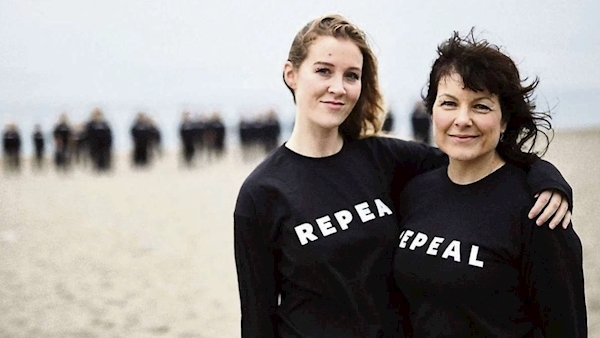
A few years ago, I was swarmed by Twitter trolls for being in an interracial marriage. Our wedding photo was shared, with disgusting slurs and threats. I used to get trolled all the time, for all kinds of reasons, from campaigning to repeal the Eighth Amendment, to “you’re not funny”, to being a woman on the internet.
All manageable enough. I’m aware that, as a straight white woman, I only see the tip of the iceberg of abuse. But there was a deluge of hate against my family, and there was no way I (or anyone else) should have been asked to “rise above it”. I swore. I lashed out. It was my family, lads. I wasn’t going to sit still and not push back.
What did some people focus on? Not the threats to me and my family, or whether they were credible, or real.
Not the debilitating effect of my being engulfed by a tsunami of darkness. No, their focus was on my reaction. I should not have sworn. I should have been more dignified; should have “heard out legitimate concerns”. I stooped to their level, and was as bad as them. I should have been nice. But the attack and response are not equivalent. Who’s really naughty? Santa knows.
It didn’t used to be like this. I remember when Santa brought a book and an orange, and you’d be glad of it. A hoop and a stick and a cough-drop: God bless us, every one. Back then, we used to look past the façade and ignore haters, not their targets.
So, this Christmas, instead of nice, let’s be kind. Which can mean being loud. Or standing up for someone unable to perform artificial sweetness,because they’re under real threat: hateful thoughts lead to words, lead to action. Let’s be more diligent at laying blame at the feet of policy-makers, not those worst affected by their policies.
Kindness isn’t always gentle. It’s robust and brave. It abhors hate, no matter how fancily dressed or how shiny its shoes. It is true love, peace, and goodwill. Wouldn’t that be nice?