Analysis: The British people have a new Prime Minister and Boris has much to play for
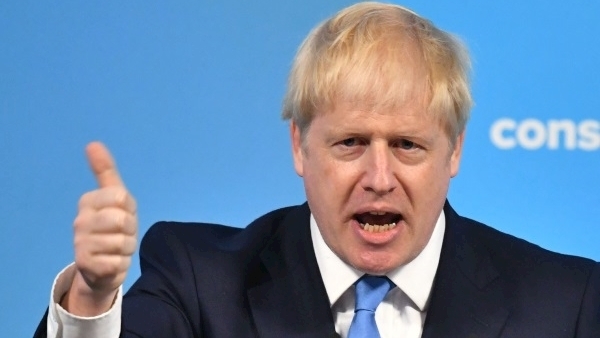
They did it. Despite knowing all that they know about him, they still voted for him.
And in huge numbers.
By a 2:1 majority, the mercurial serial liar Boris Johnson was elected the new leader of the Conservative Party to become Britain's new Prime Minister.
The Eton and Oxford-educated Johnson is a political enigma and, despite countless gaffes and personal scandals, takes the helm of the deeply divided Tories with just 100 days to deliver Brexit.
Fired from his job with the Times for making up a quote, he was later sacked by then Tory leader Michael Howard for lying to him about whether he was having an extramarital affair.
Johnson has long sought this result and was forced to miss out on the grand prize in 2016 when Theresa May beat him to the post after being betrayed by his long-time friend and campaign manager Michael Gove.
Every move he has made since, including within Cabinet as Foreign Secretary, has been geared to undermining Theresa May and ensuring that when she fell, he would be in pole position to succeed her.
But just what kind of Prime Minister will he be?
Will he be the chaotic malcontent who proved to be an unmitigated disaster in the Foreign Office?
Will he be the out and out hardline Brexiteer leader he has promised to be during the various leadership hustings events in recent weeks?
Or will he seek to confound all his critics, be a grown-up and seek to compromise in order to avoid a crash out Brexit in October?
In truth, a lot of it will hinge on his appetite for a deal.
Now that has been confirmed, from an Irish perspective, the big question is how does Taoiseach Leo Varadkar go about dealing with the deeply unpredictable Boris Johnson?
Relations between Ireland and the UK have unquestionably been placed under strain as a result of Brexit.
Varadkar has spoken positively about Theresa May and her negotiating skills and it is clear he and Tánaiste Simon Coveney put a lot of effort into ensuring good relations between Dublin and London.
Coveney, in Cork today, sought to highlight his good relations with Johnson in their previous dealings but certainly, Boris as Prime Minister is a considerable challenge to the Anglo-Irish relations.
Matters will not have been helped by the emergence of comments by Johnson from his time as Foreign Secretary where he bemoaned the fact the Taoiseach was named Varadkar and not Murphy “like the rest of them”.
Despite that challenge, the Tánaiste made clear that he and the Taoiseach and their teams will have to work with Prime Minister Johnson.
The Irish position, despite mounting criticism in the UK, has been clear. There can be no re-opening of the Withdrawal Agreement, no return of a hard border and no change to the backstop arrangement.
Former Taoiseach Bertie Ahern, speaking on RTE Radio, was clear that Varadkar and the Irish Government should not be conceding any ground on the Withdrawal Agreement, particularly at the moment.
“We’ve given nearly everything. The Taoiseach shouldn’t give any more,” he said bluntly.
Once Theresa May exits stage left tomorrow, Johnson will see the Queen who will invite him to form a Government.
His selection will be keenly observed as a gauge of his Brexit intentions. Just how many remainers will he keep? What will he do with Jeremy Hunt? Will he seek to unite or will he press the divide given the scale of his victory over Hunt?
But there is already talk that Johnson will be in Dublin within the week in his bid to seek some concession from the Irish Government.
He, of course, will be welcome but it is clear that any attempt to open up a bilateral process to resolve the backstop, as opposed to dealing with it through the EU, will be strongly rebuffed.
There are so many unknowns and without question Johnson will electrify the EU/UK Brexit process given the sheer force of his personality.
Despite his insistence that the UK will leave the EU on October 31, in reality, an extension is probably more realistic given the complexity of legislation that would have to be passed in time.
So much to play for with so little certainty.