Families urged to talk about organ donation
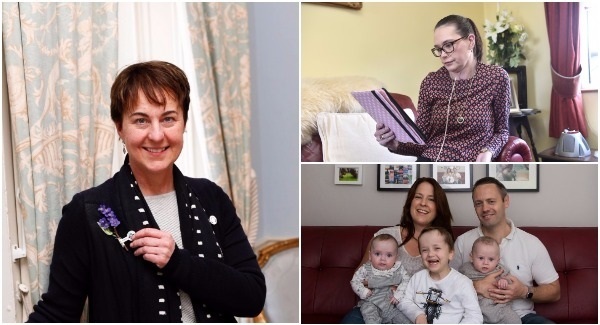
âWE ALL think if weâre on the donor register and we have the cards, weâre covered. In reality, we are more likely to need a transplant than to donate,â says Emma Corrigan, Organ Donation and Transplant Ireland co-ordinator.
In her role, Ms Corrigan meets with families who find themselves in intensive care units and emergency departments, unexpectedly facing the loss of a loved one.
âA lot of these situations are sudden and absolute tragedies. They didnât expect to sit in that room, they didnât expect to get that news.
âNobody knew this would happen to them.â
Last year, 233 transplantations were carried out here from 81 deceased donors, according to figures available from the Irish Kidney Association. Without the consent of the donorâs next of kin, these transplants would not have been possible.
Research from the UK suggests families are much more likely to give their consent to organ donation if they know their loved ones wishes, according to national projects manager with the Irish Kidney Association, Colin White.
âIn an intensive care unit after you have been declared brain stem dead, your next of kin will be approached. If you have had that chat, it makes it so much easier for them.â
Most organ donations are from donors who have been declared brain stem dead, according to the HSE.
Donations can also take place after a cardiac death and certain organs like kidneys can be donated through a live organ donation, usually involving a family member.
One donor can help several people, as a single donor can choose to give a number of organs like their kidney, liver, heart, lungs, small bowel and pancreas and tissues like corneas, bone, skin, heart valves, tendons and cartilage.
Families facing the loss of a loved one can feel totally powerless, says Mr White.
âA common feeling is âI wish I could do somethingâ. Itâs a great legacy to leave your family. I have known families who have lost a loved one, but the lives of two or three or four, even five people have been transformed,â he says, adding donor recipients are particularly grateful around celebrations.
âPeople are aware, this is another Christmas I get to enjoy with my loved ones because of the generosity of a complete stranger.â
And organ donation has a ripple effect, he said, with the lease of life given to the next generation when recipients go on to have children, and for the children get to spend more time with a parent after they receive a transplant.
âWhen you work with people who are chronically ill who are given a second chance and you witness that, itâs incredibly profound. So many inspiring stories, and equally heartbreaking ones, but the joy you hear when theyâre got the call, the joy they feel when theyâve been given that gift.â
Itâs a privilege to work with the families of organ donors, says Ms Corrigan.
âThey are sitting there and their lives have changed irreparably in just a day and while they are sitting there, they decide they can help strangers, completely altruistically â yet we canât help them with their loss. They change lives forever, in such a positive way. The families are phenomenal.
âParents dealing with losing their children â thereâs no words. They feel they want something positive to come out of it. Very quickly theyâll say things like, âHeâd a good heart, I want his heart to go to someoneâ.â
Next year, it will be 50 years since the first human heart transplant, according to Gerry Scully, secretary of the Irish Heart and Lung Transplant Association.
It can almost be like a raffle to get a match for those on transplant lists, Mr Scully said, adding that patients can have their expectations raised to go on to be bitterly disappointed.
âAs it is now, you can come up in an ambulance, with whistles and bells, to get there to be told youâre not suitable.â
In countries like Portugal, Belgium and Switzerland, an opt-out system is in place, where those who do not wish to donate their organs instead opt out of any potential procedures, he said.
âItâs grand having the organ donation card, but you need to have the conversation about your wishes with your family. At the end of the day, your family has the final say.â
However, organ donation is not right for every family, Ms Corrigan said.
âItâs an option, itâs putting that option to the family. For some people, a no is right for them and thatâs absolutely fine. Itâs about allowing people and families to make that decision themselves.â
But if you do wish to donate your organs after you pass away, having the conversation with your family is pivotal, Ms Corrigan says.
âPeople have to talk about it. It makes such a difference to a family in an acute tragedy.â
The Irish Kidney Association is encouraging families to talk about their wishes.
âOur core message is when families get together over the festive period, have the chat.â
âItâs finding a positive in such a horrific situationâ
âWhen I was 20 weeks pregnant, at the 21 week scan when youâre wondering if its a boy or a girl, thatâs when we were told we were in trouble.â
Clidhna Costello remembers when she was told her five-year-old son Tadhg McElroy wouldnât be viable with life. âWhen he was born and we heard him cry, we were shocked,â she says.
But it wasnât long before Clidhna and Tadhgâs father Terry McElroy were told their son was extremely ill.
âWe were told one of his kidneys had burst and the other one was on the way out.â
Their sonâs life was saved when a catheter was inserted when he was three days old. Tadhg then went on to start treatment for dialysis at six months old.
âWe spent so much time in the hospital, we knew the nurses and the taxi drivers who were bringing us there better than our own friends,â says Ms Costello.
When her son was one and a half, Ms Costello started looking into the screening process for live donor kidney transplants.
When she got the phonecall to tell her she was a viable match for her son, the nurse asked her if she would need to take some time to consider everything before proceeding.
She remembers laughing and telling them â ââI donât need to, can we just move on?â I just broke down in tears, I couldnât believe it.â However, she says her family had heard about others going through the process for over a year to be told they could no longer proceed as a match wouldnât be possible.
âWe were well aware it could be pulled out from under our feet,âshe says.
Leaving her son in Temple St before the procedure was the worst, she says, adding that the procedure was âvery scary, very sore but it workedâ.
âIf you saw Tadgh today, you wouldnât know he had been sick. Heâs started school and we didnât think heâd be able to start. If he didnât have that transplant, heâd be a different child.
âItâs a different world, like night and day for our family. We missed so many events, weddings because we couldnât make plans.â
After her operation, Ms Costello was âblessedâ with two new additions to their family, twins Donagh and Caoila. âTheyâre fabulous. I had worried if Iâd be able to go on to have children,â says Ms Costello.
Ms Costello says the family has a video of Tadgh aged two asking his mother for twins, like his friend has.
âIâm really glad I didnât disappoint âshe says adding that twins donât run in the family.
âWe just got lucky!â
Sadly, the family has been affected by kidney failure twice, as soon after Tadghâs transplant Mr McElroyâs mother Evelyn was told she needed a kidney transplant.
âJust as he was getting a transplant, she went into kidney failure,â says Mr McElroy.
âObviously we were very lucky that Clidhna was a match, because itâs not easy. Unfortunately none of my family are a match for my mother.â
After the familyâs experience with organ donation, they are stronger advocates for donor cards.
âWeâve seen the benefits and weâve seen a lot of other patients benefit from donor cards,â says Mr McElroy.
âIâve always carried a card, I canât encourage it enough.â
Ms Costello says: âThe problem is, if you donât speak to your family about your wishes, you might as well not have the card.
âItâs finding a positive in such a horrific situation. Itâs not something you think about but the difference it makes.â
âEverybody needs to consider itâ
In August 2015, mother of three teenagers Gina Lenehan suffered a massive heart attack completely âout of the blueâ.
âI was fit and healthy, it was just one of those things that can happen,â she says.
A coronary artery dissection, a tear in the wall of the artery, left her heart damaged beyond repair.
âI canât remember any of this, I remember being in the ambulance but I donât remember leaving it,âshe says.
After she was rushed to St Jamesâs Hospital, Ms Lenehan was put on life support in the hope it would help improve her situation. However, âthe prognosis wasnât goodâ, she says.
âIt was coming very close, my husband knew the conversation that was coming.â
Doctors told her family she needed a heart transplant to survive and while she was in hospital, a heart became available.
âThe timing was miraculous,â says Ms Lenehan.
âI was a match, I feel like one of the luckiest people alive, I genuinely feel like that.â
Ms Lenehan says she recovered very well after her transplant, although she suffered with muscle myopathy after the procedure and was only able to move her big toe at first.
She says she thanks her donor and their family every day.
âEveryday you think of them, everyday they are there with you. I couldnât imagine what that decision would be like. Itâs amazing a family considered it while they were grieving. I get upset when I think of the donorâs family and the decision they had to make.
âItâs such a selfless thing to do, itâs unbelievable.â
Ms Lenehan says it struck her recently when was signing her sonâs 14th birthday card.
âI wouldnât be writing that, if it wasnât for my donorâs family.â
As a pharmacist, Ms Lenehan says organ donation was something that was close to her in her line of work, both promoting it and working with people waiting on transplants.
However, after her transplant, she says she is even more aware of the importance of promoting organ donation.
âIâve everything to look forward to, thanks to my donor. You do look at life a little different, you do get annoyed by the same little things of course, but life is precious.
âEverybody needs to consider it.â
Isabel educates through social media
Isabel Terry has been waiting for a rare transplant surgery since 2009, as she requires both a heart and a double lung transplant.
The 41-year-old from Bishopstown, Cork, was born with pulmonary atresia, a congenital heart defect.
Between 1975 and 2001, Ms Terry had three open heart surgeries, before being sent to for a heart transplant assessment in 2003.
After being added to the transplant list, Ms Terry had five unsuccessful calls for surgery over the next five years.
After becoming ill in 2009, tests in the Mater Hospital showed that Ms Terry also required a lung transplant.
As the surgery had never been carried out in Ireland, she was sent to Newcastle, where further assessments showed she needed a double lung transplant as well as a heart.
Since being added to the list in Newcastle, Ms Terry has had one unsuccessful match.
Ms Terry started her Facebook page âLife on the Listâ using her own experience of her life waiting on the transplant list as a way of educating people about organ donation, without any âmorbid talkâ, she says.
Through the page, Ms Terry encourages her readers to take a selfie of themselves and their organ donor cards and post them to social media.
âThe page and the selfie makes it light hearted,âshe says, adding that it also helps to get people to talk about their wishes with their family as well as dispelling any myths about organ donation.
âA lot of people donât know even if you have the card, your next of kin can still say no. Or some people think if you are over a certain age you canât donate.â
Ms Terry says she requires oxygen 24 hours a day, which means she is limited in what she can do.
âI donât socialise much, itâs hard waiting for the phone to ring. Thatâs why I set up the page. I hope I get the call but itâs a rare surgery.
âIâll be happy if I can bring awareness to people about the importance of organ donor cards.
âIf anything, God forbid happened your next of kin at that time it must be horrific but knowing that conversation took place can make things easier.â
See Facebook: facebook.com/isabelslifeonthelist
âShe saved three menâs lives â my dad is just so proudâ

In 2006, Pauline Brierton on a train in Australia on her way to the cinema when she got the call that her mother Mary Gallagher was in hospital.
Pauline and her brother had only been in the country a few weeks when they were told their mother had suffered a brain haemorrhage and they would need to come home immediately.
âThere was really nothing anyone could do, the damage was too severe,â says Ms Brierton.
Her mother was only 53 years old.
âIt was such a blur. I donât remember anything from that trip home until we got to the airport, where my cousin was waiting to drive us to Letterkenny hospital,â says Ms Brierton.
After doctors and nurses approached her family in the hospital about the procedure, Ms Briertonâs family made the decision to donate Ms Gallagherâs organs.
Her liver and her kidneys were given to three men on the transplant waiting list.
âShe saved three menâs lives,â says Ms Brierton.
After the donation, the family received an anonymous letter from one of the men who received a kidney as a result of their familyâs decision.
âHe told us about his dialysis, how he couldnât play with his kids, I got the impression from his letter they were toddlers.
âHe couldnât thank us enough, from the bottom of his heart.
âHe said after his transplant he was fighting fit and had a whole new lease of life, to be with his wife and children.
âThe grief and shock we went through, it was so severe but this made is so much easier.
âAnd it was great for us, but it was amazing for my dad. He was so proud.
âAnytime anyone came into the house, my father would show them the letter and say âLook at what she did, look who she helpedâ He was just so proud.â
âShe passed away nearly 11 years now, I miss her everyday.
âYou never get over the loss, but the letter helped, and that she saved three menâs lives is just so lovely.â
âMore people need to have that chat [about organ donation], more people need to talk about it.â
DONORS
To become an organ donor, you can freetext the word DONOR to 50050 or download the Organ Donor app available on Android and iPhone.
To request a donor card visit www.ika.ie/card.
If you do decide to become an organ donor, remember to let your loved ones know your decision.