Voters will reject Brexit by the time the vote comes around
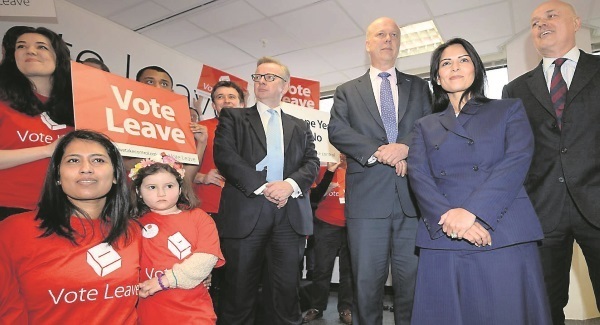
Among the multiple existential challenges facing the European Union this year — refugees, populist politics, German- inspired austerity, government bankruptcy in Greece and perhaps Portugal — one crisis is well on its way to resolution. Britain will not vote to leave the EU.
This confident prediction may seem to be contradicted by polls showing roughly 50% support for Brexit in the June referendum. And British public opinion may move even further in the ‘Out’ direction for a while longer, as eurosceptics ridicule the “new deal” for Britain agreed at the recent EU summit.
Nonetheless, it is probably time for the world to stop worrying. The politics and economics of the question virtually guarantee that British voters will back EU membership.
To understand the dynamics that strongly favour an ‘In’ vote, start with the politics. Until this month’s deal, Britain’s leaders were not seriously making the case against Brexit. After all, prime minister David Cameron and his government had to pretend they would contemplate a breakup if the EU rejected their demands.
Under these circumstances, it was impossible for either Labour politicians or business leaders to advocate an EU deal that Cameron himself was not yet ready to promote. The Out lobby, therefore, enjoyed a virtual monopoly of public attention.
This situation may briefly persist, even though the EU deal has now been agreed, because Cameron has no wish to antagonise his party’s implacable eurosceptics until it is absolutely necessary; but as the referendum approaches, this political imbalance will abruptly reverse.
One reason is Cameron’s decision to release his ministers from party discipline during the referendum campaign. Initially viewed as a sign of weakness, Cameron’s move has turned out to be a masterstroke. Having been offered the freedom to “vote your conscience” on the EU deal, many significant Conservative politician has come round to support Cameron.
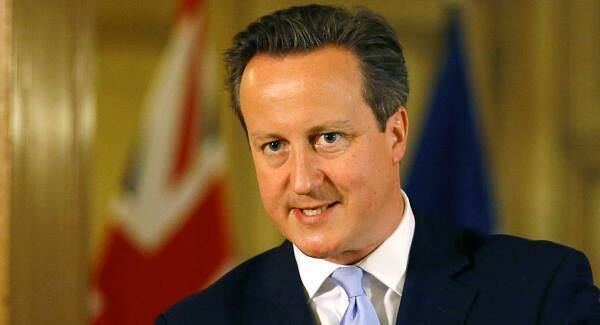
As the political tide turns, it can be confidently predicted that the British media and business opinion will follow, mainly because of direct financial interests. For example, Rupert Murdoch needs membership in the EU single market to consolidate his satellite TV businesses in Britain, Germany, and Italy.
Only when Britain starts seriously debating the costs and benefits of leaving the EU will voters realise that Brexit would mean huge economic costs for Britain and no political benefits whatsoever.
The Out campaign’s main economic argument — that Britain’s huge trade deficit is a secret weapon, because the EU would have more to lose than Britain from a breakdown in trade relations — is flatly wrong.
Britain would need to negotiate access to the European single market for its service industries, whereas EU manufacturers would automatically enjoy virtually unlimited rights to sell whatever they wanted in Britain under global World Trade Organisation rules.
Britain would therefore need an EU association agreement, similar to those negotiated with Switzerland or Norway.
To grant easier terms would immediately force matching concessions to Switzerland and Norway. Worse still, any special favours for Britain would set a precedent and tempt other lukewarm EU members to make exit threats and demand renegotiation.
Among the conditions accepted by Norway and Switzerland that the EU would surely regard as non-negotiable are four that completely negate the political objectives of Brexit.
UKEUFlagsBrexit_large.jpg[#embed2]
Norway and Switzerland must abide by all EU single market standards and regulations, without any say in their formulation. They agree to translate all relevant EU laws into their domestic legislation without consulting domestic voters. They contribute substantially to the EU budget. And they must accept unlimited EU immigration.
If Britain rejected these encroachments, its service industries would be locked out of the single market. The French, German, and Irish governments would be delighted to see UK-based banks and hedge funds shackled by EU regulations, and UK-based businesses involved in asset management, insurance, accountancy, law, and media forced to transfer their jobs and tax payments to Frankfurt or Dublin.
When confronted with this exodus of high-value service jobs and businesses, Britain would surely balk and accept the intrusive regulations entailed by Swiss and Norwegian-style EU association agreements. Ultimately, Brexit would not only force a disruptive renegotiation of economic relations; it would also lead to a loss of political sovereignty for Britain.
Or maybe just for England, given that Scotland would probably leave the UK and rejoin the EU, taking many of London’s service jobs to Edinburgh.
Once Britain’s political and business, start drawing attention to these hard facts of life after Brexit, we can be confident voters will decide to stay in the EU.
CONNECT WITH US TODAY



Be the first to know the latest news and updates