North in Crisis: A genuinely serious issue has been exploited by certain parties
From the off, there has been selective and slanted interpretation of emerging information and the conflation of two issues: paramilitary behaviour by the IRA and criminal behaviour by the IRA.
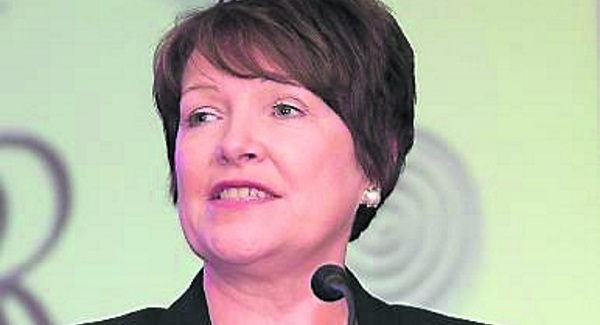
Thrown into the mix has been a campaign in certain quarters attacking Garda Commissioner Nóirín O’Sullivan.
What is a genuinely serious issue has been exploited by certain political parties, north and south of the border, and is at risk of endangering power-sharing in Stormont.
Let’s start with what the PSNI has said about the murder of Kevin McGuigan, a former IRA prisoner, on 12 August in Belfast.

Last Thursday, Det Supt Kevin Geddes, the lead investigator, put the cat among the pigeons when he said current members of the Provisional IRA were suspected.
Supt Geddes said a main line of inquiry was that a group called Action Against Drugs was behind the killing and that it was in revenge for the murder of Gerard “Jock” Davidson, a former IRA Belfast commander last May.
He said this group was comprised of criminals, dissident republicans, and former members of the PIRA. He said the group had a “criminal agenda” and was separate to the PIRA.
Supt Geddes said: “A major line of inquiry for this investigation is that members of the Provisional IRA were involved in this murder.” He said he had “no information at this stage” to determine if the killing was sanctioned at senior command level.

The press briefing understandably created political controversy north and south of the border, given that the IRA had announced an end to its armed struggle in 2005 and to putting its weapons beyond use. It committed members to peaceful political activity and said members “must not engage in any other activities whatsoever”.
That commitment was assessed and endorsed by the Independent Monitoring Commission.
Last Saturday, PSNI Chief Constable George Hamilton issued a very detailed — and nuanced — statement. A standout line said: “At this stage we assess that some Provisional IRA organisational infrastructure continues to exist.” But he added that the structure had “undergone significant change” since the Belfast Agreement in 1998 and that some elements had dissolved completely.
He said: “We assess that in the organisational sense the Provisional IRA does not exist for paramilitary purposes.” So, to use a Gerry Adams phrase, the IRA has not actually gone away, but what remains is not a paramilitary body.

The chief constable said the structure remaining is “radically changed” and “a primary focus of the Provisional IRA is now promoting a peaceful, political republican agenda”. He added: “It is our assessment that the Provisional IRA is committed to following a political path and is no longer engaged in terrorism.” But he said that “some current Provisional IRA and former members continue to engage in a range of criminal activity and occasional violence in the interest of personal gain or personal agendas”.
He said Action Against Drugs had a “criminal agenda” and was not part of, or a cover name for, the PIRA. Having said that, he said the investigation team was following a line of inquiry that had shown connections between this group and “a number of individuals who are members of the Provisional IRA”.
He said the PSNI was not in possession of information that indicated that “Provisional IRA involvement was sanctioned or directed at a senior level or organisational level within the Provisional IRA”.
Secretary of State Theresa Villiers followed that by saying the PSNI assessment that some IRA structures remained — but that there was no evidence it was involved in terrorism — was “no surprise” to the British Government.

In the meantime, south of the border, Ms O’Sullivan was being criticised, vehemently, and personally in some quarters over her statement on IRA activitylast February. The statement, sent to Sinn Féin in response to a question they asked, said the Garda Síochána held “no information or intelligence” that the PIRA maintained its military structures or was involved in fuel laundering, cigarette smuggling and counterfeiting. She cited a 2009 report by the Independent Monitoring Commission which said that military departments and other structures of the IRA had been disbanded and that some former members were engaged in crime for personal gain, but without sanction or support.
In her statement last night, the commissioner said: “The IMC has not indicated at any time that the Provisional IRA had ceased to exist; nor has An Garda Síochána.”
Some senior security sources have told the Irish Examiner that the commissioner should have stated that numerous Garda investigations, and prosecutions, have been conducted against high-profile members of the PIRA for organised crime, including smuggling and counterfeiting, as well as repeated investigations by the Criminal Assets Bureau. But Garda bosses may have taken their lead from successive governments, who, in the main, were slow to highlight the extent of the IRA criminality.

The commissioner also failed to mention the ongoing and long- running Garda investigation into the murder of Paul Quinn, aged 21, in Co Monaghan in October 2007 by suspected IRA men from South Armagh, with the suspected authorisation of senior IRA commanders.
Now, Ms Fitzgerald has requested a “fresh assessment” by the gardaí of the status of the IRA. But the Irish Examiner has been told that the assessment is not a broad examination of the IRA’s paramilitary and criminal activities south of the border. The Garda assessment hinges entirely on what the PSNI investigation into the McGuigan murder finds.
It will turn on whether or not the murder was sanctioned at an organisational level within the IRA — or was the work of individual members acting for personal, criminal gain. That will be a massive call for the PSNI, particularly if they suspect the former, and will have major implications down south.
With elections looming, police on both sides will be on slippery ground.