Cork council merger: Well-managed cities raise a nation’s GDP
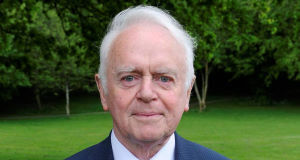
Arising from my 41 years as an elected Member of Cork City Council and my involvement in the essence of local government — mainly policies, people and places — I would have deep-seated concerns about any recommendation that might be made by the Cork Local Government Review Committee for the establishment of a super council for Cork city and county.
The Review Committee was established to advise the Minister for the Environment Alan Kelly on the most appropriate territorial basis for the delivery of local government services in the entire county of Cork.
Any changes advocating a single local authority for the most expansive county in the Republic or recognising an extended city as a subset of that local authority could constitute a major downgrading of the history of our city and would be a serious impediment to Cork City’s potential to be a driver of national competitiveness and of economic and social development.
With the rise of globalisation, cities around the world are becoming less concerned with national rankings of competitiveness and are focusing instead on improving their positions on a global league of cities.
Cities play an increasingly critical role in the development of national competitiveness in modern knowledge-based economies.
As people become more mobile and firms more selective about where they locate, competitive cities have emerged as magnets for talent and investment.
In a major review carried out by the OECD in 2006 on ‘Competitive Cities in the Global Economy’, it was discovered that 66 out of the 78 cities studies has a higher GDP per capita than their national average; hence they improve the economic performance of their country.
The GDP per capita of Dublin (the only Irish city of the scale required to be included) was more than 20% higher than the national average.
The corollary is that, without proper status, and management, cities can lower national economic growth rates. That is the essence of my anxieties concerning the future territorial base of Cork City and its management.
Cork must have a single independent city council operating under legislation enacted by central government and working in accordance with the global principles and rules laid down by the Department of the Environment and Local Government.
When the National Spatial Strategy in 2002 designated Cork as a National Gateway, we saw the potential of our city plus the adjoining Metropolitan area identified in the Cork Area Strategic Plan (CASP) becoming a counter-magnet to the pull of the ever extending Greater Dublin Area for investment and job creation.
We know from the 2011 census that the so-called Greater Dublin Area today extends from Dundalk to Gorey and as far inland as Athlone. This has resulted in a most uneven spread of national population.
Ireland has not been successful in developing cities of scale, as evidenced by the sprawl of low-density housing developments in the Dublin area and surrounding areas. This approach is not sustainable from energy, environmental or quality of life perspectives.
Cork City Council has a great record in looking to the future and planning its strategic development.
For example, the Land Use and Transportation Study transformed the appearance and facilities in the Cork area in the 1980s and 90s.
The city council’s commitment to the establishment and implementation of the ideals set out in the CASP is another confirmation of the authority’s focus on the future.
With a major extension to the current boundaries of the city — 50 years have passed since the last extension to the territorial base of the city — Cork would be a major player in achieving a more balanced regional development for our Republic.
The suggestion that a single local authority for the county of Cork would lead to savings in the cost of providing local government services is a myth.
There is a vast difference between the response to the needs of people in urban and rural areas. The city council must deal with an urban paradox such as the existence of an affluent urban neighbourhood alongside areas of high poverty and unemployment rates.
Cork City Council has engaged in strategies to enhance the performance of local business and social communities in disadvantaged area. Indeed, Cork City Council has been a partner of the European project, ‘Local Communities in the European Strategy for Social Inclusion’, the main focus of which is the sharing of experiences between local authorities that aim to combat social exclusion.
To deprive Cork City of its own city council or to permit to have an elected council which would be a subset of the local authority for the county of Cork would be to cast in the waste bin 800 years of civic life.
The city’s history and achievements deserve better than that.
Jim Corr served as Lord Mayor of Cork in 1979/80 and again 1996/97. He championed the merits of long-term strategic planning and presented the Cork Land Use and Transportation to the European Commission during his first term as Lord Mayor.