A blueprint for change across the health service
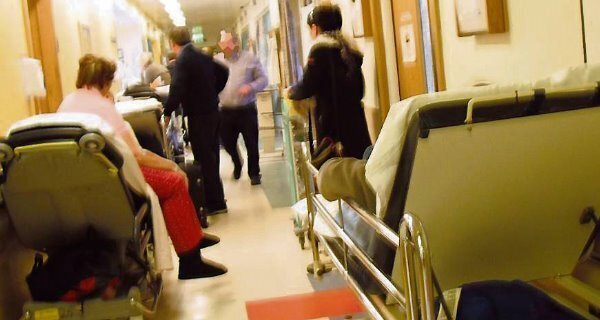
Cork University Hospital is showing that improvements to patient care and flow are possible through initiatives, investment and collective commitment, writes Tony McNamara

A blueprint for change across the health service

Is the challenge of eliminating trolleys in our hospitals and, in the process, immeasurably improving the experience of patients an impossible goal to achieve?

I don’t believe so and I hope to describe here the change programme that is being implemented in Cork University Hospital (CUH) in collaboration with many other partners with a shared sense of commitment and ownership.

The hospital is the busiest in the country with 30,000 emergency admissions and 17,000 planned admissions per year (including maternity services). In addition we treat 85,000 day cases and have 300,000 outpatient attendances each year. As a result of multiple change programmes over the past number of years the hospital now has the lowest average length of stay for any of the large teaching hospitals at less than five days.

This is in no small way a result of the implementation of HSE national care programmes but more importantly a result of the commitment of staff who have demonstrated a capacity to implement large-scale change despite reductions in pay over the past few years.

The context for these change programmes was one in which Ireland experienced the second-highest reduction in spending on health in developed nations (OECD Health at a Glance 2014) in which:

  • €3.5bn was taken out of the health system in six years (HSE Performance Report 2014).
  • Reduction of 12,000 health staff (Trinity Resilience paper March 2014).

It is worth recalling that emergency services in Cork have changed radically over the past four years with the closure of emergency departments in the South Infirmary, Mallow and Bantry Hospitals resulting in a significantly increased demand for emergency department services in Cork University Hospital (ED attendances up 25% to 65,000 per year over this period) and the Mercy University Hospital (ED attendances up 22% to 28,000 over this period).

The challenge now is to adapt to these increases in demand through a combination of changes in internal processes and critically through improved patient flow between these hospitals and the community. Furthermore the recommendations of various bodies such as Hiqa must be reflected in change programmes.

It is important to note that a very small number of our inpatients (4%) in Cork University Hospital occupy over 30% of inpatient bed days available each year. This equates to 88 acute medical beds, which suggests that a different mix of beds to include an increased number of lower acuity beds in community settings and increased numbers of rehabilitation beds are needed with a lesser number of acute beds where lengths of stay are in or around five days.

The provision of €75m by the Government this year, to address patients who are called delayed discharges, is obviously a necessary and welcome initiative to address the challenge of transferring patients out of some hospitals, but will not of itself significantly improve trolley numbers and by extension the patient experience. This will only be done when executive and clinical leaders of all professions both in hospitals and the community acknowledge that this is an extremely complex problem requiring collective commitment and ingenuity to implement change that the public want and deserve.

In response to these challenges, Cork University Hospital has implemented over 100 different change initiatives designed to incrementally improve patient care, safety and flow while reducing the time patients spend on trolleys in the emergency department (available on www.cuh.hse.ie).

The initiatives include:

  • Commencement of an acute medical assessment unit of 15 beds that provides GPs with an alternative option to obtain consultant opinion without referring patients to the emergency department. This service currently operates Monday to Friday and it is hoped to make this a seven-day service later this year with the appointment of additional consultant and support staff;
  • Application of Lean and Six Sigma techniques to identify capacity for improvements in patient flow.. In this regard it is worth noting that 66% of patients who present at ED do not require admission and that their experience can be improved by looking at processes such as providing rapid access to senior medical opinion within the department.
  • Provision of enhanced surgical facilities with the opening of a second orthopaedic theatre, a day of surgery admission unit and day beds for planned surgical activity;
  • Commencement of an orthogeriatrician service, to manage the care of elderly orthopaedic patients, that has saved 3,000 bed days in one year;
  • Implementation of the “Visual Hospital” that provides real time information on bed management and provides for greater transparency to aid the management of beds

Decisions have to be made to prioritise time for the implementation of these changes on a daily basis and to ensuring that they become embedded in the culture of the hospital.

In Cork University Hospital there are a number of new initiatives which if implemented this year will, we believe, significantly improve patient experience in our hospital and will lead to a reduction in the number of patients on trolleys from what is currently an average of 15 at 8am each day.

They include:

  • Appoint two additional acute medical physicians that will enable the Medical Assessment Unit to open at weekends thereby providing GPs with an alternative to the ED;
  • Recruit nursing staff to open 10 additional beds;
  • Decrease the ratio of patients who require admission (conversion rate) at weekends (currently can be as high as 40%) by increasing the seniority of medical staff making decisions. Each 1% reduction in the conversion rate creates the equivalent of nine beds and a reduction of 3% in this rate will create 27 beds and,
  • Put in place a Discharge Unit where patients who are being discharged can wait while discharge letters etc are being finalised, thereby creating beds for patients who require admission.

We recognise that we have more to achieve and we will continue to learn from other hospitals in Ireland and abroad but it is a measure of the importance that leadership in Cork University Hospital attaches to this challenge that it will advocate for funding of these initiatives as a priority in the interest of our patients. The recent ED Task Force emphasised the need to invest in hospitals that are performing well and we trust that our past performance will be recognised as we seek to continue to innovate and change in the interest of our patients and staff who are proud of and committed to the service they deliver.

Tony McNamara is chief executive of the Cork University Hospital Group

More in this section

Revoiced

Newsletter

Had a busy week? Sign up for some of the best reads from the week gone by. Selected just for you.

Cookie Policy Privacy Policy Brand Safety FAQ Help Contact Us Terms and Conditions

© Examiner Echo Group Limited