New Constitution needed for a new 21st century Ireland
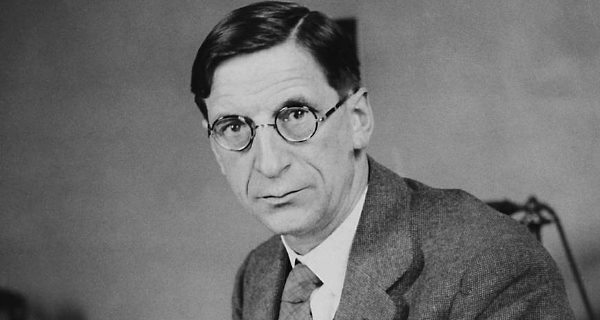
ALREADY we are seeing signs of some soul-searching as the centenary of the Easter Rising approaches, but the nation might be better served if the focus was not on the 1916 Proclamation but on the 1937 Constitution instead, and the need replace this with a document reflective of the very changed Ireland of the 21st century.
The Proclamation was never more than an inspirational and aspirational document, rich in rhetoric, some of it overblown, but bereft of any clauses approximating to a programme for socio-economic and socio-political change.
Yes, it contains – in keeping with its republican character – a declaration of the right of the Irish people to the ownership of Ireland, and to the unfettered control of Irish destinies, as well as a guarantee of religious and civil liberty, and equal rights and equal opportunities to all its citizens.
DISCOVER MORE CONTENT LIKE THIS
Of course, there is nothing at all new about such sentiments. Popular sovereignty and individual rights had been powerfully advocated by the American Declaration of Independence of 1776 and during the French Revolution, most particularly in the Declaration of the Rights of Man and of the Citizen in 1789.
In fact, as John A Murphy, Emeritus Professor of Irish History at UCC, has pointed out, people often confuse the 1916 Proclamation with the Democratic Programme of the First Dáil, published in 1919, some of whose socialist sentiments had even been watered down.
The Democratic Programme may have been a statement of intent, but it was for show only. As the late Professor Brian Farrell stressed in his essay From First Dail through Free State (for the book De Valera’s Constitution and Ours), while the Programme was “a statement of advanced social and economic policy often quoted as evidence of the revolutionary intentions of the First Dáil, it was in fact a Labour Party manifesto, which did not represent Sinn Féin ideology, had been accepted for essentially propagandist reasons, and was never implemented”.
Within three years, following on from the Anglo-Irish Treaty of December 1921, the Irish Free State Constitution had been enacted and came into force before the end of 1922.
This is a strikingly secular document. It had no preamble invoking the “Most Holy Trinity”, and Article 2, declaring that “all powers of government and all authority legislative, executive, and judicial in Ireland are derived from the people”, did not, unlike Article 6 (making the same declaration) in the 1937 Constitution, include the phrase “under God”.
Article 6 recognised freedom of conscience and the free profession of religion, but stated that “no law may be made either directly or indirectly to endow any religion”, and, unlike Article 44 of the 1937 Constitution, there is no acknowledgement of the “special position” of the Catholic Church (a section eventually deleted following a referendum in 1973).
The Free State Constitution did have a number of weaknesses, the most striking of which was Article 50, which provided that the Constitution could be amended by a simple act of the Oireachtas. “So, during the whole of its life, the Irish Free State Constitution could be changed as easily as any other law, without any direct reference to the people,” wrote Brian Farrell.
The result was that between 1923 and 1936, 25 Acts were passed, amending many provisions of the original text. “By this time, the original Irish Free State Constitution was a thing of shreds and tatters,” observed Farrell.
Might not the same not be said of Bunreacht na hÉireann today? It was introduced in 1937 in an Ireland very different from the Ireland of 2015. And with two more referendums to be decided on May 22, we’ll have a situation where if one or both are carried, the Constitution will have been amended at least 20 times. It is surely time for a new one.
Back in 1988 the (now defunct) Progressive Democrats recognised the need for a new constitution. In January of that year they published a document entitled Constitution for a New Republic.
“It was a complete reworking of Eamon de Valera’s 1937 Constitution, Bunreacht na hÉireann, and was designed to bring the original document into the modern age,” explained Stephen Collins in his book Breaking the Mould: How the PDs Changed Ireland. At their annual conference in Cork four months later, the PDs endorsed the draft.
Unfortunately, a subsequent controversy (that rumbled on for years) over the fact that there was no reference to God in the preamble to the PDs draft constitution meant the project was abandoned. In his recently published memoir, Conduct Unbecoming, Desmond O’Malley explained the rationale behind the PD proposal for a new constitution.
“I remain of the belief – as I argued as PD leader from 1986 onwards – that the 1937 Constitution has certain serious defects that must be addressed and remedied ... I believe that the Constitution has to be judged not only as the basic framework of citizens’ rights, but also as a plan by which our affairs are governed and as a framework within which change and growth can occur.
“For a start, the Constitution as enacted was a document of an explicitly Catholic ethos. It was not intended by the drafters as a minimalist document, which set out in bare republican form the framework of rights and institutions, which any republic should have: on the contrary, it embodied as the basic law of Ireland parts of contemporary Catholic social thinking.”
The case for a new Constitution is far stronger now than in 1988. A new Proclamation for 2016 would be little more than a form of window-dressing, given that it would remain unenforceable. A new Constitution, on the other hand, could serve as a blueprint for a new Ireland in the 21st century.
DISCOVER MORE CONTENT LIKE THIS