Milk Quota: ‘If you’re going into dairy, you’d want to love it’
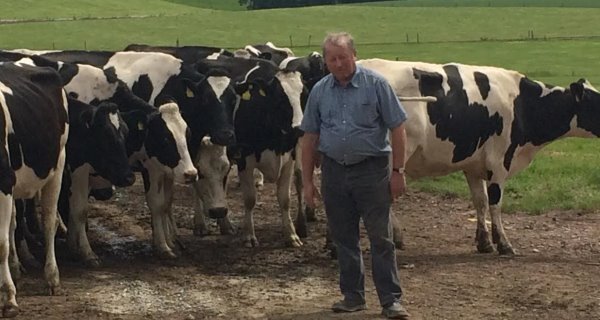
Every morning, at the crack of dawn or even before, milking begins on the Browne farm near Youghal in East Cork. All three hours of it.
The numbers of cattle here are mind-boggling. Some 850 cows are milked every morning, with another three-hour shift in the evening.
The Friesian cattle graze on more than 600 acres at the farm in Knocknagappagh, up the hill from Killeagh and Youghal, producing 4.2 million litres of milk a year. The cow sheds seem as big as the Aviva Stadium, the slurry pit is of Olympic swimming pool proportions. And the milk quota built up over more than a decade at Greenhills?
As of this morning, it’s gone.
Tom Browne and his 31-year-old son, Simon, are the men in charge at Greenhills and as one of the largest milk producers in the country, they have their own views about the banishing of the quota into the pages of history.
On the one hand, Tom believes the scrapping of the quota system will mean Europe can catch up on other mega-producing countries such as Australia and New Zealand, having given them a head start in the first place. On the other hand, Tom hopes that with the rush to expand, the new dawn doesn’t become a nightmare for younger farmers.
He likens the dropping of the quota, certainly in his case, to taxi deregulation: all of a sudden, the quota/ taxi plate that was worth a lot, essentially became worth very little. However, his own profit margin is unlikely to be affected by the changes introduced today.
For one thing, all his milk goes to Dairygold and is exported.
“For young people starting out this is a great opportunity,” he says, seated in his kitchen. “They have the freedom. But for the younger people I would put in a word of caution. There is a lot of hype out there that they are going to be able to sell this milk. We should think back to 2009 and the end of 2013. There was an oversupply, and that was during the quota regime,” he says.
That is the risk — that some people might overextend themselves at a time when banks seem more keen to lend finance to farmers than, by comparison, to people looking to get on the property ladder.
Tom says that land values are rising “at an alarming rate”, due in part to the Nitrates Directive, as well as beginner farmers and others wanting to expand.
In addition, he believes the possible increase in milk supply has been underestimated right across Europe. And as ever, there is the mystery of why farmers, who produce the product in the first place, get such a small amount of the price it retails for in the shop.
Yet, as he points out, it is now a global marketplace. Tom believes it could be a few years before the effect of scrapping milk quotas can be accurately gauged, but he says: “It’s like any business. You have to look at it over five, six years. They [young farmers] should not be discouraged by the vagaries of what is going down the road.”
He does have a word of warning, however: “If you’re going into it, you’d want to love it.”
He speaks from experience. His own father came from near Castletownshend, Co Cork, and had 15 cows. Over many years Tom grew his herds and his acreage, only to swap the lot for tillage for much of the 80s.
In 1989 he reverted to dairy and steadily increased his quota over the years, but there is no doubting him when he says it is labour intensive. It is worth bearing in mind that even with a modern, mechanised milking parlour, it still takes four people three hours to milk all the animals, leaving aside the other jobs required, from spreading slurry to feeding calves. In the calving season there is a full-time night-calver on duty and he could calve up to 25 cows in a night.
As he outlines it, expansion needs to be both necessary and meticulously planned, rather than a “vicious cycle” where you end up having to hire more people to get the work done and to allow you some time off.
On a macro level, he believes there should just be two co-operatives in the country, at a stroke removing a number of management teams, while he believes smaller farmers should be allowed to continue working where they live — just not necessarily being funded by the proceeds of more productive suppliers such as himself.
Simon has swapped a potential career as an accountant for working at home. It’s fair to say there is still quite an amount of number crunching required, so it’s easy to believe him when he says some of the production costs pitched at potential new entrants might be optimistically low. While costs of 22c or 23c per litre of milk produced have been bandied about, he believes once living expenses are taken into account, it is closer to 30c.
As ever, it is hard to know until we know. Tom says: “There could be a 15% to 16% increase in production the first year the quota is gone because a lot of people are holding back cows. We will get a big lift in the first year, but it could go back to 4% to 5% per year for the next few years.”
Maybe it will be the big producers getting bigger, rather than the new entrants, that will push up ’s milk production levels. High up in Knocknagappagh it is easy to believe everyone could be in clover.


CONNECT WITH US TODAY



Be the first to know the latest news and updates