COMMENT: IS preys on humanity’s basest instincts
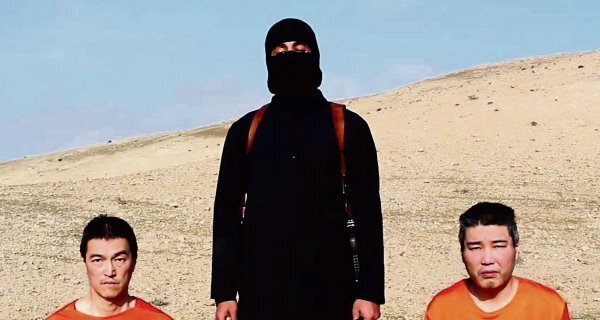
The grisly killing of Jordanian pilot Mouath al-Kasaesbeh by burning him alive sent shock waves across the globe and brought heaps of condemnation from political and religious leaders of all stripes against the new heights of macabre of which Islamic State proved capable.
Horror and disgust may represent enlightened persons’ natural reaction to this barbarity but, beyond the condemnation, it is important to understand its reasons and likely consequences in the tumultuous context in which the Islamic State phenomenon has been playing out. Several questions arise in this regard.
The first is whether Islamic State brutality represents the frenzied unleashing of sadism on the part of psychopathic leaders, or a deliberate strategy intended to boost its “larger than life” image and cast a terrifying shadow that makes adversaries tremble and its followers cheer.
The consistent manner in which Islamic State has been executing its “reign of terror” suggests the latter. The organisation issues pamphlets in which the rape of female captives is justified, routinely strews the heads of victims throughout the city of Raqqa, its “capital”, and engages in other activities attesting that for Islamic State, brutality is not a whim but a matter of core policy.
No less important is the question of whether the strategy works. Judging from Islamic State successes so far, the answer seems affirmative. Since September, as the US continued its campaign of air strikes against Islamic State, the group has nearly doubled its Syrian domain, and is increasingly active in Libya.
Admittedly, Islamic State’s triumphant march cannot be fully ascribed to its brutality and barbarism. Yet brutality and barbarism are part and parcel of its brand, whereby it sets itself apart from competing groups like al Qaeda. It is that special brand that excites thousands of foreign fighters (30,000 according to last estimates) and drives them to risk life and limb on Islamic State’s behalf. By this measure, atrocities that Islamic State perpetrates certainly contribute their share to its accomplishments.
So what is it about bizarre ways of killing and the cult of death that has such a magnetic appeal to so many? Sigmund Freud famously highlighted humans’ profound fascination with sadism and masochism by postulating a death instinct, a universal force that governs the dark side of our psyche.
The enigma of death and dying has mesmerised people from time immemorial, bringing thousands of cheering Romans to watch Christians being devoured by lions or gladiators being slaughtered by their victors. The lustre of death has hardly dimmed over the centuries. In the not-too-distant US past, lynchings in the South attracted large audiences, as state-sponsored beheadings and stonings in Saudi Arabia and other nations ruled by Sharia law do today. The proliferation and popularity of TV shows that feature cruel and bizarre ways of killing prove that fascination with death is not reserved for “another place”, and that morbid curiosity about grisly atrocities has a respected seat in the living rooms of ordinary Americans.
Watching, of course, is hardly the same as doing. One may abhor and be disgusted by what one sees while continuing to ogle it. There is in our psyche a battle between ‘good and evil’, and civilisation works by restraining our destructive impulses and allowing their expression in highly sublimated forms. It is OK to watch atrocities on TV and images of beheadings, but it is profoundly unacceptable to engage in any kind of authentic violence. This allows us to let off our (destructive) steam, which affords catharsis without pres-umably causing real damage to society.
The tranquility of the social order is upset, however, when the societal narrative is turned to sanction real violence. This often happens when a category of people is demonised, depicted as less-than-human, despicable vermin that merits no sympathy.
Destroying the scourge is reframed as the good, justifying all violence in its aid. In the case of Islamic State, their take on Islam provides such a justifying narrative, twisting the Koranic spirit to legitimise unrestrained mayhem against the alleged enemies of Allah.
Once unbounded from societal restraints, unmitigated violence holds multiple attractions to its practitioners. For one, it instills a primordial fear in the hearts of its enemies. The very idea of dying is profoundly scary to most people; the idea of dying in incredibly humiliating and painful circumstances multiplies the dread.
The dispensation of cruel and unusual punishment lends the perpetrator an aura of overriding force of godlike proportions. It creates a myth of potency that many, especially those disempowered and belittled, may find irresistible. Identification with an aggressor is a way to feel powerful and safe.
“I am the danger,” growls Walter White to his wife Skylar in a striking episode of the TV series Breaking Bad. He means to reassure her and allay her anxieties because the role of perpetrator is antithetical to that of victim, and there is psychological safety in being at the initiating (rather than receiving) end of violence.
Finally, though not of least importance, the readiness to go to extremes of cruelty by disregarding universal norms of humanity and compassion signals a depth of commitment to a cause — a total devotion and assurance in its justness and utter legitimacy.
Such confidence, too, is compelling and of particular appeal to people who are confused, uncertain, and perplexed. The untold violence that Islamic State practices attests to the depth of its ideological commitment. It thus provides a much desired sense of purpose and personal significance to those who join the group.
These strategic advantages notwithstanding, there is another crucial side to heinous violence that bodes ill for its perpetrators: The unleashing of evil mobilises a concerted effort to defeat it on behalf of the good. It unleashes one’s own powers of destruction to eradicate the plague.
The outrage and disgust that grisly cruelty evokes can create a powerful backlash; previously separate factions can unite behind a sacred purpose and feel empowered to put an end to the atrocity. Before the execution of al-Kasaesbeh, the Jordanian population was polarised in its attitudes toward Islamic State; it spoke in resolute unison afterward.
Other voices in the Middle East and elsewhere echoed the outrage and grim resolve of the Jordanians. Possibly then, this time Islamic State may have crossed a red line, and the advantages it used to reap from its unbounded violence may be offset by the storm of outrage that gathers against it.

CONNECT WITH US TODAY



Be the first to know the latest news and updates