Death made Jonathan a human being once more
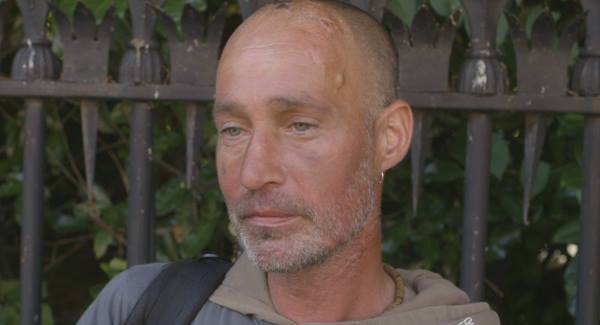
JONATHAN CORRIE was lucky in death in a manner that eluded him while he was alive. On Monday morning, a young woman by the name of Sophie Pigot discovered his body in the doorway where he died, in the shadow of Leinster House.
That was a lucky break for the dead manâs dignity. Ms Pigot thought she saw something wrong, investigated further and discovered he was dead.
After alerting a nearby garda, she went across the road to Buswellâs Hotel and obtained a sheet, to cover the deceasedâs face, in order to preserve his dignity.
How many people would have acted in such a thoughtful manner? How many would have noticed that this was not just another sleeping homeless man? How many would have instinctively averted their eyes once the figure of an apparent homeless person came upon their radar?
If it wasnât for Ms Pigot happening along the street at 8am, Mr Corrieâs body may have lain there for hours, taking on the character of a piece of the flotsam in a society that has forgotten its impulse for casual compassion.
The reaction to the death of this 43-year-old man was typically Irish. A body politic that had been convulsed with how we pay for water, and how to cut taxes, immediately set up a forum, which met yesterday.
Suddenly, an emergency that had been screaming for action was recognised as such when it manifested itself in tragedy in the environs of the seat of power.
Among the public, there was an outpouring of grief, the kind of public grief in which we now specialise.
Mr Corrieâs back story was quickly unearthed. References to him, in both the media and among the public, instanced his first name only, in a manner usually reserved for public figures in politics, sport and entertainment.
Jonathan had fallen on hard times. Jonathan was the victim of a heartless government.
Jonathanâs life was worth nothing to the powers who have directed an agenda of austerity.
The deceased man was remembered by those who knew him, the only people entitled to instance him by his first name. Most of the rest of the population would statistically have been as likely to hurry past him when he was alive. But now that he had died, any threat that he might have posed as an unkempt figure in a doorway was gone.
He could no longer extend a cup with the threat of imposing on your conscience. The thought that he might be out of his head and penniless, and therefore highly unpredictable was now gone.
His status as a non-stakeholder in society, a man with nothing to lose by his actions, was no longer a threat. Death rendered him a human being once more, a man who was once a child, who could have been somebody, before being claimed by the streets. Somebody for whom to mourn.
Beyond the emotional reaction, there has been much scrambling for the moral high ground.
That territory is really the sole domain of those who work the most vulnerable. People like Alice Leahy and Peter McVerry engage with homeless and damaged individuals on a daily basis, allying practical compassion to a sense of duty.
For the opposition parties, it was all about the Government. Richard Boyd Barrett said that Mr Corrieâs death âsymbolises in the most terrible way the failure of the Government to mount an emergency responseâ to the homeless crisis.
Agencies that work with the homeless were quick to point out that this Government is not the first to ignore the matter.
Within government, the reaction was to point at society. Enda Kenny and Alan Kelly both listed off the monies being spent in tackling homelessness. While this position has some merit, it ignores the fact that services for emergency accommodation have been severely depleted over the last six years.
Kelly referenced âŹ4m that has recently been allocated to Dublin City Council, but that will only go so far in meeting the shortfalls that have grown over the last six years.
The reality is that Mr Corrieâs death canât be placed at the door of government policy. He was in the vortex of addiction, where life is often reduced to an endless quest to ease pain.
Mr Corrie had been offered temporary shelter, and friends had attempted to persuade him to protect himself from the elements. Like others, he may have felt safer on the streets that in a hostel.
Issues of personal responsibility arise, but compassion must also feature, particularly in a country that has not faced up to the full horrors of addiction.
His lonely demise is more a reflection on society than governance.
What his death has illuminated for the wider population is the complex and multi-faceted nature of homelessness.
For instance, more accommodation will almost definitely be sourced in the short term following yesterdayâs forum.
But what about mental health facilities? The plans to devolve mental health care into the community has only had patchy success, with many posts still going unfilled. Agencies like the Simon Community have repeatedly pointed towards the importance of a proper mental health infrastructure as a block to the drift towards homelessness that has affected many now on the streets.
Social inclusion budgets have been greatly depleted. Addiction treatment facilities have also been whacked.
No elections are won by improving facilities, so when the knife had to be wielded, this was a corner where cuts were quietly applied. Addiction is a common theme on the streets and the availability of a roof alone will not come near to solving that problems.
Beyond chaotic lives, it is the new homeless who are swelling the numbers of those on the streets.
Weekly, stories leak into the media about individuals or families who have been evicted on foot of a repossession order against the landlord.
In one recent example, a group of men showed up and aggressively told a family to gather up their things and leave. Only luck ensured that the gardaĂ were contacted in time.
Surely, an emergency like this isnât beyond the legislature to enact emergency law around evictions on foot of repossession orders. Apart from that, spiralling rents will have to be tackled.
Property owners have unrivalled power in this jurisdiction, but the case for rent controls in now overwhelming, unless the Government can come up with an alternative that does now kowtow to the market.
Mr Corrieâs death has prompted instinctive response to the crisis.
But legions of families â including 800 children rendered homeless in the last year â are existing in a twilight world of emergency accommodation. Their plight is conveniently out of sight, but itâs high time that it was no longer out of mind.
A multi-layered problem will require a holistic approach, but it is almost beyond doubt that the current public hand-wringing will dissipate.
All that can be hoped for it that some spark of compassion will endure, enough if only to keep the pressure on government to its commitment to get rid of the blight by 2016.
After all, could any government be expected to care enough about eliminating homelessness if the electorate, and wider society, donât?