Teachers must also learn their way with cycle reforms
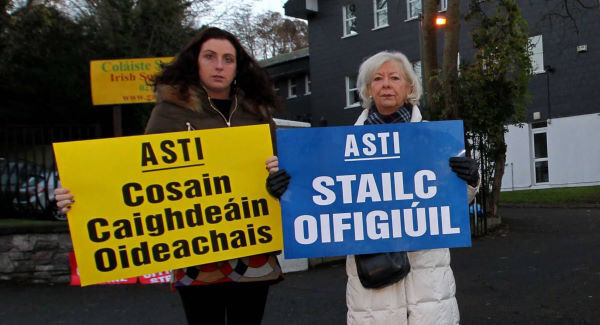
Why is it that the majority of stakeholders in education –from students to parents, to management, to principals – are in support of these reforms?
For me, as a second-level student and as president of the ISSU, I feel this argument has been very one-sided.
The ISSU is the recognised body for second-level student voices in Ireland. We consulted with hundreds of students on this topic and have reached the conclusion that the Junior Cycle Student Award (JCSA) reform is a positive move for second-level education.
I’ve heard teachers say that this strike is in the best interest of students. I disagree. Students have not only been involved in the planning of this reform, but students overall support its implementation. We are joined on this by the parents (NPC-PP) and the principals (NAPD).
And although a day off in the middle of the Christmas exams seems nice, it’s not going to do any wonders for our educational development and mind-sets. It is not going to fix the problems in second-level education.
What was fundamentally wrong with the old Junior Cert system was that in first year students were making decisions as to what levels to sit for each subject and ultimately suppressing their potential. In third year, the emphasis is taken off education and focus is put into preparation for the Junior Cert. This disengages students.
Teacher unions have said that the JCSA will not gain the same level of respect as the old Junior Cert, but times have changed and, yes, we must respect early school leavers and provide them with a solid education; the JCSA will do this.
We must also respect that the six-year cycle of second-level education shouldn’t just be continuous stepping stones towards the points race that is the Leaving Cert. This is assembly-line education and is wrong.
The JCSA should hopefully take away a lot of unnecessary pressure on students. The continuous assessment will begin in second year and make its way through to third year. Teacher unions have issues with marking their own students. That is what exists within the JCSA and how that is executed will be placed in the hands of our teachers. The JCSA facilitates a much more creative learning approach.
I think what’s going wrong here is a lack of communication, on all of our parts. I think there needs to be more training for teachers on this reform as it’s only the English teachers that have been fully informed of what’s going on in the reformation of their subject and its curriculum.
On the topic of marking their own students, I think teachers should be more mindful of the spot checks that the State Exams Commission will be rolling out to ensure that the same marking criteria are applied across the board and there is no favouritism in play.
If the school decides they wish to roll out anonymous examination numbers, that can be facilitated. It’s not necessary that teachers have to directly mark their students’ work as papers could also be swapped with other suitably qualified teachers within a school.
It’s easy to point blame at certain people. We have been involved in the consultation and discussion for the Junior Certificate reform since 2011. Our students should be at the heart of these reforms. Was this strike day in the best interest for students across the country?
The majority of students support the JCSA. We’ve obviously got some issues with it, particularly the fact that the proposed introduction of continuous assessment has now fallen to 40%, but you don’t see us not turning up for school on a Tuesday because of this decision. Let’s continue our conversations with all partners of education and sort this out.
I have Christmas exams to study for.
CONNECT WITH US TODAY



Be the first to know the latest news and updates