Government reform: A New Politics? Pull the other one
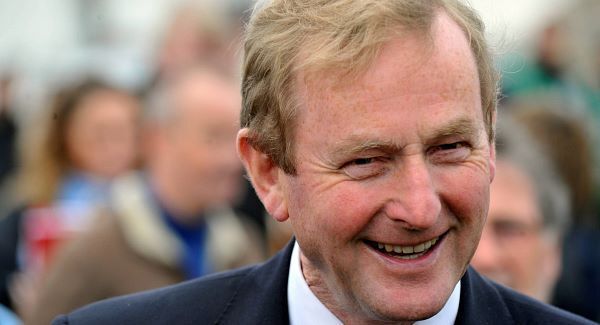
THESE boys were going to clean up Dodge.
On 22 March 2010, Fine Gael launched what it described as the “most ambitious proposals for political reform since the 1930s”. It was a high old time for reformers.
The Fianna Fáil-led governments that had landed the State onto the rocks of bankruptcy was seen to be morally degenerate.
Crony capitalism, hoarding power and a system of jobs for the boys and girls were regarded as integral to the governing of a state which had lost its way. Fine Gael was going to bring a stop to all that.
The document to save the universe was entitled New Politics. It would get rid of the prevailing system which included “a hugely centralised state with few real checks and balances” and “an over-powerful Executive that increasingly ignores the Dáil”.
The new politics would be delivered in four separate helpings, under the headings:
- A Single Chamber Oireachtas;
- A New Dáil;
- Open Government;
- Empowering the Citizen.
A perusal of the results of this laudatory approach to politics reveals much. Some of it was actually followed up on, and yielded some results. The real change though, and particularly the devolving of power from the Executive to the Oireachtas, has been quietly shelved.
Here are some of the results.
The centrepiece of this reform was the abolition of the Seanad. This, as we now know, was attempted but rejected by the electorate in a referendum on October 4 2013. While this was pushed as a central plank of reform on the part of the Government, many saw it as both a fob, which ultimately would see even more power vested in the Executive. Notably, there was little enthusiasm among the Labour element of government during the campaign. The electorate would appear to have decided that in the absence of real reform in the Lower House, it would be a bit premature to do away with the Seanad.
This was the biggie. New Politics pledged to reduce the number of TDs in the chamber by 20. Following a redrawing of boundaries, it was recommended that the compliment of the Dáil be reduced by just eight members.
- A greater role for TDs: Among the proposals here were to allow greater scrutiny of government by TDs in the chamber. By general consensus, the divide of power between the chamber and the Executive had changed very little, and if anything, it was probably more imbalanced now than it was under previous governments;
- A powerful committee system: A whole raft of proposals, starting with a referendum on the Abbeylara judgment, were proposed here. As we now know, the electorate rejected the referendum on Abbeylara, but apart from that, very little extra powers have been devolved to committees.
The failure of the referendum was followed by legislation which will cater for the upcoming banking inquiry. The current Dáil has also seen the Public Accounts Committee flex its muscles, although this is probably as attributable to its chairman and some strong members, and is actually regarded with some trepidation in government circles. Nothing in the area of the committees has ensured that they have acquired more power vis-à-vis the Executive, which again is the outstanding problem;
- A new budget process: Again, not much progress. A pledge to provide access for opposition parties to the Department of Finance figures has been implemented, although in a limited form. A pledge to “establish a parliamentary budget office supported by an Independent Advisory Council” has seen life as the Fiscal Advisory Council. In the last few weeks, a succession of ministers have made it known that the Government intends to ignore the advice of the council in the forthcoming budget;
- Holding Public Bodies to Account: Two of the main pledges under this heading were to: “Introduce a Public Appointments Transparency Bill that will require relevant Dáil committees to vet all ministerial appointments made to state boards, agencies and regulators.” This has been quietly shelved, as seen most recently by the appointment of John McNulty to the board of Imma. A further pledge to open up all appointments to the general public has also been seen to be redundant, as less than a quarter of appointments to state boards have been advertised.
This section bucks the trend, with some serious achievements, relatively speaking anyway.
- Significantly, Strenghtening of Freedom of Information: A new bill has reversed some of the draconian roadblocks put up under Fianna Fáil to curtail the availability of information under the act. The abolition of upfront fees as proposed by Brendan Howlin is one of the more welcome aspects, but it remains to be seen whether the capacity of vested interests to block the flow of information will endure;
- Establishing a Whistleblowers Charter: This has also been achieved, with the passing of legislation earlier this year. However, the major controversies that arose over the whistleblowers within the gardaí suggests that the law is all very well, but a certain unwillingness to listen to whistleblowers continues in the corridors of power;
- Registering all lobbyists: Another notable piece of legislation to be enacted;
- Creating a new electoral commission: This proposed body was designed to oversee, among other things, political funding ,which would suggest it was to take the Standards In Public Office Commission under its wing, and act with greater powers than afforded to that body. There has been a ban on corporate donations, but that it largely cosmetic.
As of yet, the Government has been unwilling to establish a powerful body such as that proposed in New Politics.
There were two main sections to this heading.
- Local Government Reform: There has been reform with the abolition of town councils and the reconfiguring of local authority areas. The jury is still out on whether these changes will mean more power devolved locally or not. Reform was also pledged in the area of planning. According to New Politics “the developer-led planning system has played a key role in the fragmentation of our communities led by excessive housing construction which resulted in a property boom and crash. We are all paying in some shape or form for this failed planning system.” If anything, the current administration has rowed back on sensible reforms in this area brought in by the previous Minister for the Environment, John Gormley. The other major plank to local government reform was a promise to have a directly-elected mayor for Dublin.
Still waiting.
- A Strong Civil Society: Among the main planks here were to automatically register all 18-year-olds to vote, and extend the franchise for presidential elections to elements of the so-called Diaspora. No progress there, so. However, the advent of the Constitutional Convention has proved to be a positive development. A number of proposals for constitutional reform originating with the convention are being acted on, most notably a referendum on gay marriage.
Credit must be given where it is due. There have been some reforms, but many of those could have been expected in the wake of the unprecedented upheaval that followed the economic crash. The glaring reality is that the Government has studiously avoided any changes that see the devolution of real power.
Look at the main objectives laid out in the preamble to New Politics, which included: “A significantly strengthened Dáil committee system that holds government to account; a fundamentally reformed legislative process that gives TDs real influence over the drafting of legislation; and a completely modernised budget system that will prevent a future government from behaving recklessly with the State’s finances.”
Has any of that, the real meat of reform, been achieved? Precious little.
The Executive continues to act with, more or less, a free hand. Checks and balances are sorely lacking.
The Dáil is still largely redundant. There is still minimum scrutiny of public appointments. As far as proper reform is concerned, it’s as you were, bar the addition of a few nice bells and whistles.
CONNECT WITH US TODAY



Be the first to know the latest news and updates