Pension system unfairly penalises women
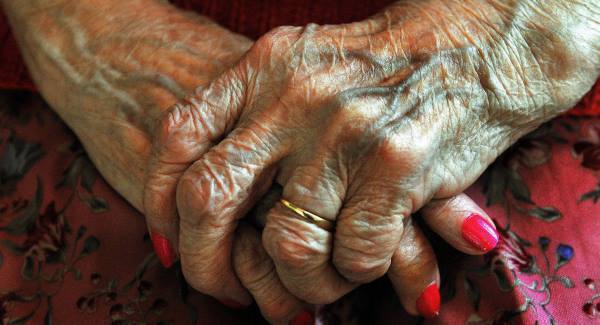
Pension system must value the contribution of women and ensure they are not confined to poverty, says Alice Mary Higgins.

Pension system unfairly penalises women

A RISE in contributory requirements hits those with a lower level of contributions hardest.

For a number of reasons, both historical and current, women have had, and continue to have, less contributions then men.

There is no doubt that the recent increase in the number of contributions needed to access a full or partial pension disproportionately impacts on women. The National Women’s Council of Ireland is increasingly being contacted by women who are concerned about this issue, many of them already deeply affected by the ongoing inequalities in our pension system.

We know (through parliamentary questions in 2010) that as of June 2010, 54,001 women were on a reduced pension, far more than the 37,997 women on a full pension. By contrast, a majority, 100,272, of men were on full pension, with 75,741 on a reduced pension.

These figures confirmed what we knew from the direct testimony of many women surviving on a severely reduced pension, including some of those included in our 2008 publication Forgotten Women.

However, these figures predate the April 2012 changes and it is to be expected that since the number of contributions needed for a full pension rose from 260 to 520, far more women will have fallen into the “reduced” category.

It is our intention to request up-to-date figures in relation to this and it would be good to place those alongside the research of the Irish Examiner.

NWCI welcome that research and the breakdown which clearly demonstrates that women are now experiencing a disproportionate reduction in contributory pension and associated weekly income.

Two thirds of those in the bottom two bands of contribution are women and they have experienced losses of over €1,100 a year on pensions which were already very low.

To put this in context, we know (via the same 2010 parliamentary questions) that in December 2009, 9% of those on a contributory pension were receiving less than €60 a week.

This is an income which is hit very hard by a loss like €1,180 and we know that the vast majority of those affected will be women.

By contrast, women make up just one third of those in the second- highest band, who suffered a smaller loss of just under €1,000 and only 16% of those who have full contributions and will suffer no income loss.

One of the most important roles of our pension and social security system is to lift people out of the risk of poverty and older women have consistently been shown to be among those most at risk in this regard. It is a matter of concern if the changes to contribution requirements add to, rather than relieve this situation, and leave a majority of older women with less income and greater vulnerability.

The danger of a disproportionate impact on women was clearly signalled by the NWCI and others in advance of the introduction of the changes to the contributory state pension scheme in April 2012.

The department was aware of this concern. However, they still introduced the changes.

There was some suggestion that the impact of the rise in contributory requirements might be softened by changes to the homemakers scheme. This referred specifically to a move from a homemakers disregard — whereby years spent outside paid employment looking after children in the home were disregarded in the calculation of a woman’s years of contributions towards her pension — to a homemakers credit.

However, although promised, this has yet to be implemented.

There are a number of problems with the scheme as it currently stands — including the fact that it is limited to a certain duration and allows for only one break in employment rather than the multiple breaks which may be the reality for many women.

Crucially, the homemakers scheme only applies post 1994 and so does not benefit many women who are reaching pension age now and are directly impacted by a higher contributory requirement and lower pension entitlement.

In our comprehensive 2008 report Pensions: What Women Want the NWCI made a number of practical proposals and recommendations.

Among these were a call for the introduction of a homemakers credit and a strong recommendation that the scheme should apply from 1974 and therefore be of some benefit to many of the women retiring now.

Other recommendations relate to the averaging of contributions which has unjustly impacted on women, who may have made more than the number of contributions required for a full pension but who lose out badly when those contributions are averaged across a longer period that includes years given over to childcare.

It is important to recognise that these are not just legacy issues. Women are still at a disadvantage when it comes to building up contributions.

In 2011, 36% of women were in part-time work, often casual or insecure, making it difficult to build up consistent contributions.

In the absence of a comprehensive homemakers credit, women with more than one break in their career due to care responsibilities are also losing out on contributions.

There are further serious concerns about obstacles for those who wish to make voluntary contributions.

There is also a real danger that, in the absence of individualised social welfare payments, many qualified adults will continue to fall out of the system.

It is important that we address these issues to ensure that inequality is not embedded within our pension system into the future.

* Alice Mary Higgins is policy officer with the National Women’s Council of Ireland.

x

More in this section

Revoiced

Newsletter

Sign up to the best reads of the week from irishexaminer.com selected just for you.

Cookie Policy Privacy Policy Brand Safety FAQ Help Contact Us Terms and Conditions

© Examiner Echo Group Limited