The death metal mines spawned by smartphone hunger
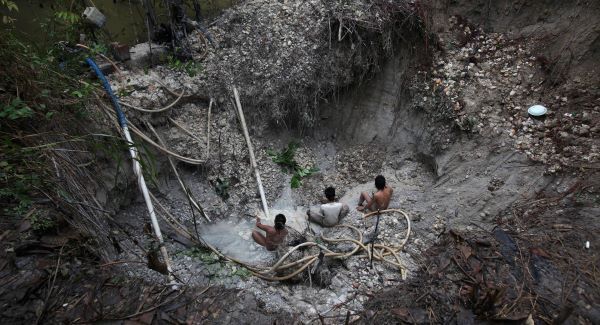
BANGKA Island — it’s 8am in Rebo, a fishing village on the eastern coast of this Indonesian island and like any other day, dozens of ragtag, casually-dressed young men are gathering around the small harbour, equipped only with a jerrycan of fuel and a meagre lunch.
Scorched by the white, tropical sun seeping through the morning haze, they gaze silently at the horizon, each of them absorbed in his own thoughts, patiently waiting for the small fishing boat that will lead them to a series of wooden pontoons, a few hundred meters into the sea.
Although this floating platform might look like a fishing stage at first sight, fish is not what these men are after.
Something much more precious lies at the bottom of the sea here, something they are ready to die for: one of the most valuable metals in the world.
Slightly bigger than Cyprus, Bangka is an island of one million people off the coast of Sumatra which provides around 30% of the world’s tin, a metal used in items as disparate as cars components, cans and plates. But its greatest use is as a solder, vitally holding together the circuit boards and components of the millions of smartphones, laptops and tablets.
With shipments of smartphone and tablets surpassing one billion and 184 million units respectively in 2013 (a 40% and 53.4% year to year growth according to the International Data Corporation) the price of tin has skyrocketed, climbing from $5 to more than $23 per kg in the past 10 years. Many of the world top electronic producers such as Samsung, Apple, Blackberry, LG Electronics, Motorola Mobility, Nokia and Sony Mobile have acknowledged the use of Bangkanese tin in their supply chain, but this might be just the tip of the iceberg.
According to Monique Lempers, the senior program manager for electronics for the Dutch organisation Sustainable Trade Initiative (IDH), which is currently conducting a study on tin mining in Bangka, “as Indonesia is the biggest supplier of tin worldwide, there is a high chance that tin from Indonesia is sourced by suppliers from all major electronics companies”.
But while Bangka is feeding the global hunger for electronic products, tin is rapidly turning this paradise island into a hell on earth.
With global demand constantly exceeding production, Bangka has become a gigantic mining site, both offshore and onshore.
Its once-pristine tropical forests are now scarred with thousands of moon-like craters contaminated with acidic water and heavy metals, the results of 13 years of indiscriminate mining. After the industry was liberalised in 2001 and the local government gave mining and smelting licences to local entrepreneurs, the market was swamped with tens of thousands of “informal miners”, a term that can refer to anybody from pensioners to housewives, from former fishermen to young kids.
According to the Mining and Energy Department of the local Provincial Government, 30% to 40% of Bangka population is active in mining.
Some of the miners operate in private, licensed concession, but the vast majority work in illegal areas stretching as far as the eye can see, often in the middle of protected forests.
Here, child labour is rife, as well as injuries and fatal accidents, for which the workers obviously receive no compensation. After reaching the platforms, the men, all illegal miners, start working feverishly. Encircled by a makeshift pool created by the floating pontoons, three of them dive into the brown, muddy water, in stark contrast with the turquoise colour of the sea all around.
Every 30 minutes, the trio emerges for a 10-minute-break, before diving eight meters below the surface again. Just like a huge vacuum-cleaner, divers suck tin ore from the seabed through a big, plastic tube connected to a diesel-propelled pump.
Another plastic hose connected to a funnel on the surface and powered by the same engine allows them to breathe by channelling down the outside air. Meanwhile, suckers operate other suction pipes directly from the decks, constantly pounding the seabed with long and heavy bamboo sticks to stir the sand and expose the ore.
Once pumped up the pontoons, the heavier tin ore deposits on the bottom of the wooden platform, while the sand is washed back into the sea.
At the end of the day, each pontoon can collect 15kg of ore, roughly worth $100. Depending on the tin global price, each miner can earn around $15 a day, double the average pay of a farm labourer. But this bonanza comes with a hefty price, especially for those who mine offshore.
“Divers are the ones who risk most,” screams 31-year-old Huwei Liong, struggling to make himself heard amid the rhythmic, deafening bangs of the pumps which propel the suction pipes and the air pipes. The heat is unbearable and rendered worse by blasts of throat-itching exhaust smokes.
Thin but extremely fit, some as young as 14, after just 30 minutes of work the men on the pontoons are already soaked in sweat, sea water and mud, but they don’t seem bothered by the harsh conditions.
The pits created by drawing ore from the seabed are deep and can easily collapse, burying the divers under meters of sand, as Liong knows all too well. Now a pontoon owner, he survived several, almost fatal landslides when he was a diver.
“You get buried suddenly, there’s no way to prevent it” he recounts. “Sometimes it takes 30 minutes or one hour for your mates to bring you to the surface.” Many were not as lucky as he was: according to Walhi, a local environmental association, 53 miners died in Bangka last year, almost one per week.
Illegal miners often play a dangerous hide-and-seek game with the police, just like 33-year-old Malasari Amirudin and her daughter Novi Akher, 15, who at the time of the visit were spending the morning in their barren house in Batako, together with two other women miners.
The previous evening, police had raided the onshore mine they were working in, shutting it down. “We have no choice but to wait until a new one will open. It generally doesn’t take more than one week,” explains Amirudin, who have been mining tin since she was 10.
Once they excavate a pit, often with basic tools like shovels and pickaxes, miners shower the ground with big water pipes. The mud is then pumped through plastic hoses up the washing lines, simple wooden basins constantly irrorated with water, where the ore follows the same cleaning process as in the offshore pontoons.
Amirudin and her daughter have just come from Pangkalpinang, the capital of Bangka, to collect tin scraps falling from washing lines, a job that can make them around $20 per day. Like most of the other miners, they have no idea what tin is used for. When showed an iPhone, they scream in awe.
“Those things are expensive. We should definitely ask for more money for our tin,” Amirudin jokes. While the tropical forest is quickly receding to give way to new mining pits, most of the depleted ones are left abandoned. It is not clear who will have to reclaim the pits opened by illegal miners, but authorities require licensed mining companies to clean up the land they mined, by covering up the holes and planting new vegetation.
Practically, though, a mere drive around the island exposes enormous chunks of mined land which have clearly been left without any reclamation, the only exception being few areas converted into palm plantations. The state-run tin company PT Timah, claims that many informal miners re-enter areas already reclaimed by the company.
While this is partly true, Dr Ismed Inonu, vice-rector of Bangka Belitung University and expert on environment and agriculture, blames the companies as well. “One of the cause of environmental destruction here is the postponement of reclamation” he says. “It should have been done by the companies, and the government should have given sanctions [to the ones who don’t comply]”.
The environmental situation in the sea is even worse. Hundreds of makeshift pontoons operate alongside a fleet of 52 dredgers and sucking ships from PT Timah and other companies, constantly drawing tin ore off the seabed and throwing the sand tailing, or residual waste, back into the water.
“Bangka has changed a lot since I was a kid. Ten years ago, the place where we are now was all sea,” reveals Liong, the pontoon owner, sitting beside a Confucian temple built on the shore and surrounded by a small wood.
Once open sea, the coastline in Rebo has now been shaped into a never ending series of small gulfs, all created by the sand dumped by dredgers throughout the years, locals say. According to a recent study by the University of Bangka Belitung, sand tailing has killed from 30% to 60% of the local coral reef, forcing fish to move far away from the coast and harming the tourism industry.
The local government has no provision for any sea reclamation, despite the fact that mining companies are focusing more and more on offshore mining to get rid of illegal miners (who, lacking proper equipment, can only operate close to the coastline). According to Dr Inonu, it will take at least 20 years for the coral to reconstitute itself, provided it is not further damaged.
Local fishermen are the ones suffering the most from sea pollution, as 41-year-old Tsung Ling Xiao reveals. “Fourteen years ago I could fish within four miles from the coast,” he complains, sitting on the porch of his two-storey-house in Rebo. “Now, I have to throw my nets as far as 17 miles.”
Apart from the environment devastation, Xiao has another reason to dislike mining: six year ago, his 32-year-old brother Tsung Ling Fang died, buried by a landslide while he was working in a mine pit he had opened just 300 meters away from Xiao’s house.
When the mine collapsed, Fang and two other miners were buried by a pile of rubble. The other two survived, but Fang couldn’t make it. Although the land was sold shortly thereafter, the memories of what happened will always haunt his brother.
The relationship between Bangka and tin dates back to the 17th century colonialists who imported Chinese labourers to extract tin. Today, their descendants inhabit many of the villages scattered around theisland.
“Every Chinese village you see in Bangka used to be a mining area,” reveals 36-year-old Bambang Yusman, a local businessman whose ancestors arrived in Bangka from China roughly 300 years ago. Today, Yusman personifies the contradictions this land is entangled in: the owner of a tourist beach resort near the town of Sungai Liat, he is also one of the biggest onshore concessionaire for PT Timah.
While he extensively campaigned against the environmental destruction caused by offshore mining, he doesn’t seem too concerned about the thousands of open pits dotting the island. “People here are crazy for mining. Some families destroy their houses just to search for tin below them,” he says. “You can’t separate tin from Bangka. It’s part of the culture, and locals have this faith that nature will somehow heal itself.”
In fact, Bangkanese seem trapped in a cruel irony. Tin mining has certainly brought economic development to the island by providing a livelihood for thousands of families and attracting investors to set up side businesses like shops, hotels and restaurants.
Many of the nicest houses in Bangka have been built through tin mining, but that same activity is also destroying the future of the island. “Mining is harmful for our environment,” complains Xiao, the fisherman. “It has destroyed coral reefs, fishing breeds and mangroves.”
While authorities are periodically cracking down on illegal mining, allegations of armed forces profiteering from the trade are rife: during this report, police and navy officers were frequently spotted at sundown in Rebo, near the tin-weighing area where the miners bring the ore collected during the day.
Many of the interviewed miners said officers were there to collect bribes. Asram Somat is even more open about it. A friendly 30-year-old man from the village of Pemali and father of two kids, Somat is one of several middlemen buying tin from illegal miners through an array of private collectors.
Somat processes and sells around three tons of tin concentrate per week to some of the independent smelters, at an average price of $16 per kilo. While his business is regularly licensed, Somat pays 1,000,000 IDR (around $100) per month to the police to avoid problems.
“Sometimes officers visit me and ask for something more, aside of the monthly pay,” he adds, sitting in his poshly-furnished living room, whose opulence indicates the state of his business.
With more than 40 smelting companies operating in Bangka, the island produces 90% of the Indonesian tin. Ninety-five per cent of it is sold abroad, be it to China, Europe or Asia. Tracing its origin is virtually impossible.
PT Timah accuses independent smelters of buying tin from illegal miners: according to the company data, despite holding more than 90% of tin mining concessions in Indonesia, the company was able to produce only around 28,000 tons of tin in 2012.
However, other private companies reached 70,000 tons amid allegations of using illegally mined tin from the independent smelters.
“Some companies don’t even have mining areas at all, but they can export tin. This is totally illegal,” laments Agung Nugroho, PT Timah Head of Corporate Secretary.
Private companies allege that PT Timah buys illegal tin as well and that the distinction between legal and illegal makes little sense. “When 40% of the population is involved in mining, how can you say that tin is illegal?” says an independent smelter, who asked to remain anonymous.
In an attempt to rein in a wild market, the Indonesian government has implemented a new regulation: since August, smelting companies are not able to sell their tin directly to clients abroad, but will have to go through a centralised stock exchange in the capital Jakarta.
The move, which is supposed to stabilise tin market prices and stop companies from exporting tin whose origin has not been certified, has been fiercely contested by most of the independent companies, which accused the government and PT Timah of trying to monopolise the market by cutting competitors out.
The new regulation has so far forced half of the smelting companies operating in Bangka to stop working, but not everyone is convinced about its efficacy.
Just like in the past centuries, locals might respond to the new regulation by increasing smuggling to neighbouring countries, a plague that, according to PT Timah, already deprives Indonesia of tens of thousands tons of tin every year.
In 2012 the environmental group Friends of the Earth (FoE) launched a campaign to ask the top mobile phone manufacturers to take responsibility for the environmental situation in Bangka and spearhead a campaign to improve transparency in the tin supply chain.
Something easier said than done, because, as a Nokia spokesperson stated, companies “are usually four to eight supply chain actor-layers removed from any mining activities. This makes traceability efforts very challenging, and the farther away you are from the source, the tougher it is to exert influence”.
However, after months of intense campaign by FoE, in 2013 six companies (Blackberry, LG Electronics, Motorola Mobility, Nokia, Samsung and Sony Mobile) acknowledged the use of Bangkanese tin in their supply chain, followed in February 2014 by Apple.
Apple also initiated a working group to assess tin production on the island within the Electronic Industry Citizenship Coalition (EICC), an organisation whose aim is to improve social and environmental responsibility in the global supply chain.
The other participating companies are Blackberry, LG Electronics, Philips, Samsung and Sony. Convened by the IDH, the Indonesia Tin Working Group also includes FoE, together with ITRI, the International Tin Research Institute which represents the tin industry.
The Working Group is actually assessing the situation of the tin sector in Bangka through a study, the purpose of which is “to inform the IDH Tin Working group on how to best move forward, in terms of finding an appropriate, meaningful industry response to sustainability challenges in tin mining in Bangka”, as stated by Lempers.
WHILE the creation of the working group is certainly a step in the right direction, serious reasons for concern remain, first of all the fact that its findings might not be made public.
Given the EICC is a voluntary organisation, the companies involved will not be compelled to follow any of the findings or recommendations the working group might issue. Moreover, the effectiveness of such initiative would be significantly hampered, should not all the companies who source tin from Bangka participate.
Back on the island, local authorities openly admit that illegal mining will be a difficult plague to eradicate. “It will be impossible to stop it in the short period, we have to be realistic. We first need to create employment for the people, so that they can feed their children,” explains Yan Megawandi, Head of Planning Department in the Provincial Government.
Strained by a low budget, he admits it will be also difficult to address the environmental damage caused by mining in recent years, before launching an appeal to the smartphone companies. “We need assistance. I think it is fair to ask it of those who have benefited from our tin”, he continues.
“We don’t ask necessarily for money, but for technology, training and assistance to make our society more environmentally-friendly. We have limited resources.”
Dr Inonu issues an even gloomier warning for the future of the island. “The impact of the destruction we are seeing now will last decades, if not centuries,” he predicts.
“Some species of fauna are already disappearing, as well as some high quality wood forest plants. If action is not taken now, something really bad will happen to this land.”
At sundown, the young pontoon workers come back to Rebo, crammed in the same wooden boat. Exhausted but satisfied, they carry small buckets full of the grey, grainy mineral that has become the reason of their life.
Once weighed, the tin is quickly brought away by a collector, while the miners walk back to their villages, a series of bamboo- thatched-roof houses few hundred meters away, stuck between the shore and the forest.
Here, they will bide their time playing cards, drinking or chatting with their wives and kids until the next morning, when the sunrise will bring them towards the harbour once again. Although the atmosphere is relaxed, Liong has a worried look in his eyes.
“Unlike most of the other guys here, I am concerned about the environment here in Bangka,” he admits, after a long silence.
“But I will have to mine for the rest of my life. I don’t have any other skill,” he says, almost ashamed, before taking off in a small motorbike laden with tin.
nMatteo Fagotto is a freelance journalist focusing on African and Middle Eastern issues.

CONNECT WITH US TODAY



Be the first to know the latest news and updates