Maximum public benefit key to picking Cork convention centre site
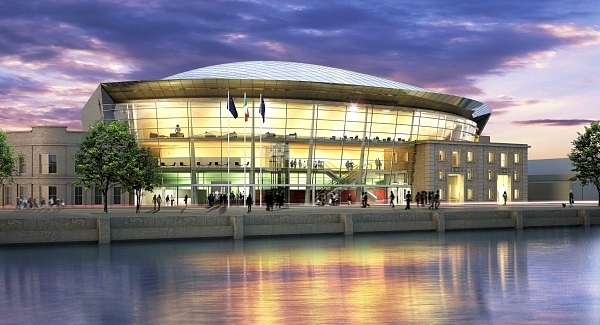
With a substantial public subvention now promised, we know that one of these proposals can ultimately be delivered as a viable and successful venture.
The question now should be to determine which one delivers more for the city as a whole.
It is encouraging to hear business and other interests in the city expressing their positions recently in the media, and it is entirely appropriate that there is a robust discussion in public about this project.
These multi-purpose facilities are large and expensive development projects, which make them difficult to deliver as standalone schemes, especially in a challenging economic climate.
The incentive of what is understood to be €16m public subsidy (€10m from central government and €6m from Cork City Council) will ensure that Cork will finally have a high quality dedicated concert/conference venue, which will have huge benefits for the commercial, retail, and entertainment sectors in the city.
The city council’s proactive role in this instance demonstrates an admirable commitment to an important project and represents exactly the type of public-private partnership approach we require to secure a vibrant and dynamic city economy.
One of our research interests here in UCC’s Centre for Planning Education and Research relates to understanding how cities can retain and enhance their viability as successful locations as the economic, social, and cultural hubs of their respective hinterlands.
Successful cities have generally tended to adapt a two-pronged approach to reviving their city centres — diversify and develop.
Diversification means broadening the city centre’s function — recognising that city centres will succeed when they have a strong mix of shopping, employment, living, commerce, culture, recreational, and educational activities.
The second approach, development, is based on improving the quality of the city centre environment in their city’s core by investing in urban renewal, streetscape, public realm, pedestrianisation, traffic calming, and urban landscape projects, all of which combine to improve the appearance, atmosphere, and image of these places.
Studies show that, in many cities nowadays, in addition to the quality of its shopping, the most important factor influencing people’s decision to visit city centres is their performance as destinations — the availability of a high quality urban environment, attractive streets, and public spaces, dining/culture/entertainment/art.
The ‘unique selling point’ of centres such as Cork’s is their intrinsic urban-ness, their specific character and atmosphere, their distinctiveness, vibrancy, and land use mix, the variety of leisure, cultural, artistic and social attractions, and the availability of a diverse and quality range of dining and entertainment activities — this is what gives our city centres a competitive edge — this sense of place and authenticity.
Cork city’s urban qualities are well-recognised — and its unique mix of heritage, built form, culture, topography, and character contributes to a strong and interesting urban identity.
Adding a major destination activity such as an events/convention centre into its centre will complement these urban qualities and further improve its attractiveness as an urban destination.
Cork City Council’s decision on which site to allocate public funding will be extremely important for the city centre and it is essential that the process includes careful assessment of the wider regeneration impacts.
There are now two main contenders for the event/convention centre — the former Beamish and Crawford site in the city centre and the Navigation House site on Albert Quay, and both developers have shown admirable foresight and commitment in advancing their respective projects to this stage.
I heard the news of the city council’s announcement while in the north of England recently as part of a study visit with some of our postgraduate planning students.
We were looking at the various ways cities such as Liverpool and Leeds were attempting to rejuvenate their urban cores and were struck by the impact of the new Leeds Arena, a new concert and events facility opened in July 2013, right in the heart of the city.
This is a facility twice the size of the larger of the two Cork projects, and despite pressures for non-city centre alternatives, Leeds City Council insisted on a central location.
This has lessons for Cork, and the Leeds example shows the instant ripple effect in terms of city centre spin-off, follow-up private sector investment, new development projects, pedestrian activity, and an overall uplift in the fortunes of the city centre.
Although it is not yet clear what specific criteria will be used to compare the two locations, I would be very surprised if the terms of reference do not include references to the impacts of the project on the city centre as a whole in economic and urban regeneration terms and how each project would support the city council’s own policies and objectives for the city centre.
Obviously, the nominated assessment panel will need to assess each proposer’s business case and project viability, but it should also consider value for money — based on the premise that the project which secures the maximum public benefit is the one that the public’s money should be directed towards.
For example, this should include assessing the nature and mix of the uses being proposed on site, its proximity to other complementary cultural/entertainment/tourism facilities, its connectivity and interaction with the city core, and the potential to help address long term planning and regeneration objectives.
It is important that the assessment process includes a review of the likely impact of the various proposals in terms of promoting activity levels, tourism spin-off, pedestrian footfall, day and night-time uses, and retail/commercial vitality. The general aim should be to identify which project ticks more of the regeneration boxes and supports the city council’s own planning policies and objectives.
We know that the city council are concerned about the performance of the city centre, with some worrying pockets of vacancy and dereliction emerging in key locations, and their appointment earlier this year of Colliers International to prepare a City Centre Strategy signals a clear commitment to directing economic activity back in to the city centre area.
One would imagine that an event/convention centre project would constitute a major part of any strategy to revive the city centre.
Cork is fortunate to have this decision to make, which provides a chance to develop a much stronger national and international profile, and we should applaud the foresight and vision of both the planners and the developers who have ensured that there are now two possible from which to choose.
This is also a decision of civic importance, where Cork’s public interest needs to be considered.
Good planning (and good development) is about doing the right thing, at the right time, in the right place. This is a chance to do the right thing, and this is the right time to do it. The last question remains — where is the right place?
* Will Brady is a town planner and lecturer based at UCC’s Centre for Planning Education and Research. He is involved in research and teaching on UCC’s Masters Programme in Planning and Sustainable Development, and in the MA in Landscape, Built Heritage, and Design.
CONNECT WITH US TODAY



Be the first to know the latest news and updates