‘We are relentless’ says Criminal Assets Bureau boss.
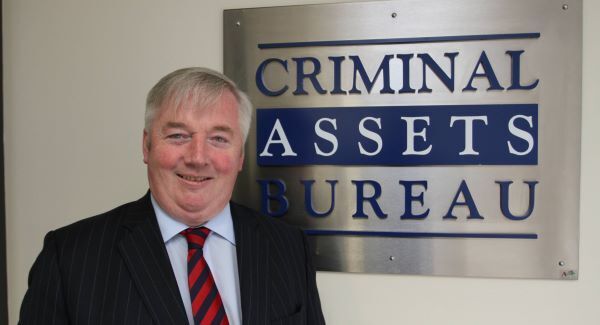
"WE ARE relentless." So says the head of the Criminal Assets Bureau, Eugene Corcoran.

‘We are relentless’ says Criminal Assets Bureau boss.

His words sum up, perhaps more than all the assets and monies his unit has seized, the legacy of murdered journalist Veronica Guerin.

Fittingly, his description of CAB’s work was in reference to the 16-year-old legal battle the agency has had with the man whose gang gunned down the Sunday Independent journalist on the Naas road on Jun 26, 1996.

If Ms Guerin’s death was the main catalyst for an overhaul of Ireland’s laws on organised crime — spearheaded by landmark powers to seize criminal assets and monies and the establishment of CAB — John Gilligan has been the waving red flag for the agency.

Gilligan has book-ended the agency’s life to date. CAB went to the courts in 1997 to seize his assets, including the sprawling Jessbrook Equestrian Centre in Kildare, bought from Gilligan’s criminal profits estimated to have been in the region of €18m.

Last November, CAB overcame the final legal roadblock erected by the crime boss and secured orders from the Supreme Court to seize the facility, including the house occupied by Gilligan’s wife, Geraldine.

“That judgment reflected a huge amount of work,” says Det Chief Supt Corcoran. “It is a major success for everyone involved and, no doubt, a vindication for everyone — from people who put the legislation in place to those who operate it.”

He said there was hardly any aspect of the laws underpinning CAB that hadn’t been closely examined during all the Gilligan cases.

“If we hadn’t succeeded, it would have put a very different complexion on the legislation.”

The laws were proposed by Fianna Fáil — then in opposition — within a week of Ms Guerin’s murder and just a month after the shooting dead by the IRA of Det Garda Jerry McCabe in Adare, Co Limerick, on Jun 7.

The murders were against the backdrop of working-class communities across Dublin marching on the streets demanding the State address a heroin-epidemic that was devastating their communities and the barons behind it.

Proposing his bill, John O’Donoghue said: “Organised criminals exist in order to acquire illicit assets. This bill is designed to deprive them of the use of those assets. It is specifically directed at the criminal gangs which have become bloated on the profits of drug dealing and the proceeds of audacious robberies. It permits the Garda Síochána, which is frequently unable to gather admissible conventional evidence against criminal godfathers, to strike at the heart of their criminal empires.”

An initially reluctant Fine Gael-led government backed the enactment of the laws. Under the Proceeds of Crime Act 1996, the State could apply to the courts to seize and ultimately dispose of assets suspected of being the proceeds of crime as well as issue tax demands on criminal income. The burden of proof was civil (balance of probabilities) and not criminal (beyond all reasonable doubt) and the onus was on the defendant to prove the asset was legitimate.

Between 1996 and 2011, CAB secured final asset confiscation orders worth €54m and tax payments of €137m. In addition, social welfare savings of over €6m have been achieved from serious criminals claiming welfare.

The organised crime map has changed since the late 1990s. Where drug trafficking predominated the scene back then, it is now more mixed, also incorporating fuel and cigarette laundering, where the profits are vast and the penalties far weaker. Robbery and burglary gangs are still a feature, as are white-collar fraudsters.

The drugs trade is now more international, with many of the main Irish players based abroad, in Spain or the Netherlands, and their assets andincome too. This led to changes in the law in 2005, allowing CAB to go after assets abroad.

Det Chief Supt Corcoran says the move of criminal targets abroad has made the agency’s job “more complex and difficult”, but rejected the idea that any of the assets were “untouchable”.

“From an investigation point of view it’s more cumbersome, but the key thing is co-operation [between the police forces] and sharing of intelligence.”

He says Operation Shovel was a good example of this co-operation, when a massive European-wide operation targeted Irish drug baron Christy Kinihan’s network in Spain in May 2010. CAB assisted in this operation, which was the brainchild of the Garda National Drugs Unit.

“Shovel shows that those who are in Spain are still within our reach.”

He says the agency has used the 2005 amendment to hit such criminal enterprises. He predicted similar operations against other Irish targets abroad to follow.

He says organised crime has become more sophisticated in hiding assets and income. “It might have been easier 17 years ago to find criminal means, because criminals were less sophisticated in some ways and didn’t feel a need to disguise it. It’s now quite a complicated process.”

He says gangs increasingly use people “unconnected to them” to purchase properties and to funnel their money through.

“The most valuable thing to a criminal can often be their bank account.”

Det Chief Supt Corcoran says these can be business people with a small, cash-based operation, who are tempted to allow their accounts to be used for quick, monetary gain.

He says tighter regulations on money laundering has forced gangs to find new ways to launder.

“Very often business people who are under some sort of pressure or otherwise be attracted to a transaction or willing to take a chance. Maybe they see it as a way out of a particular difficulty they are in and see a very quick return.”

He says the agency comes across this in its investigations into fuel laundering and the vast profits being made by criminal gangs and dissident republicans.

The CAB boss says organised crime also operates through the use of a “small minority” of professionals, such as solicitors, accountants, and tax advisers, who advise in the purchase of property or laundering cash through accounts here and abroad.

He says specialist forensic accountants and analysts in CAB have the difficult job of reconstructing the financial records of targets and analyse what income in a business is from criminal proceeds.

In relation to repeated calls over the years from drug projects for CAB money to be reinvested into the affected communities, Det Chief Supt Corcoran says that “as a matter of principle we wouldn’t have the slightest difficulty” with that, but that it was a Government matter.

On similar calls for mini-CABs in local communities, he said the majority of their 350 cases involve local criminals. He says the agency has also trained 158 divisional profilers in Garda divisions, who identify local targets involved in serious crime and with unexplained wealth.

CAB has also been active in the last two years targeting organised gangs involved in burglaries and have successfully hit a number of them.

CAB’s success and its multi-agency composition (incorporating revenue and social welfare officials) has attracted attention and praise from Europe and abroad.

Touching on their success, Det Chief Supt Corcoran refers back to the Gilligan case, which he said had a much wider, and deeper, significance.

“One message I would say on the back of that is that we are relentless. The time aspect is something we’re not particularly concerned with, it’s the relentless pursuit of criminal assets that we’re concerned about. Our main focus is never deflected, we will pursue cases from beginning to end.”

Paying dividends

Don Bullman

Last March, CAB secured a High Court judgment for over €600,000 against convicted IRA man Don Bullman as a result of tax debts to Revenue. Bullman was arrested in Feb 2005 at Heuston Station, Dublin, by gardaí acting on intelligence that the Provisional IRA in Cork were moving some of the proceeds of the Northern Bank robbery in Belfast in Dec 2004, when £26.5m (€39m) was stolen. He was caught with €94,000 in a Daz washing powder box.

‘Pale Miley’ Connors gang

Last January, CAB seized almost €1m from this gang suspected of carrying out burglaries across the State. CAB officers uncovered a network of bank accounts with a total balance of €950,000, including €310,000 claimed from social welfare. Six members of the Traveller gang, based in Tallaght, west Dublin, were investigated. CAB also has a €1m tax demand against members of the gang.

Sean Dunne

Also in January, profits totalling €2.6m were handed over by CAB to the exchequer from the sale of a large property portfolio owned by drug trafficker Sean Dunne. The north Dublin man is thought to have been killed in Alicante, Spain, eight years ago.

John Gilligan

After a mammoth 16-year court battle, CAB received a Supreme Court order last November to dispose of Jessbrook Equestrian Centre, owned by convicted drug dealer John Gilligan. The complex in Mucklon, Co Kildare, includes indoor and outdoor arenas, stables, a house, offices and 40 acres of land. A further case is before the Supreme Court regarding possession of the house in Jessbrook, where Gilligan’s wife Geraldine lives.

Earlier this month, CAB put on the market a house owned by John Gilligan and his son Darren in Lucan, Co Dublin, valued at €25,000.

Patrick Irwin

The luxurious home of convicted Sligo drug dealer Patrick Irwin in Dromahair, Co Leitrim, estimated to have cost €400,000, was seized by CAB following a High Court order in Mar 2012. Irwin’s wife Avril Boland fought to keep the house, but only managed to get €10,000 compensation. In a separate judgment in 2011, CAB secured orders for the seizure of about €146,000 from Patrick and brother Hughie.

Cock Wall gang

CAB seized over €275,000 in 2010 from two members of Traveller gang involved in burglaries and robberies.

The High Court ordered the seizure of a house in Newbridge, Co Kildare, valued at €240,000 and owned by Andrew Wall and wife Ellen. CAB confiscated an 18-carat diamond cluster ring valued at €6,100 and a receipt for €8,000 for cosmetic surgery of Ms Wall’s nose. The court heard that just under €600,000 emanated from the couple’s records over three years.

Dundon gang

CAB seized two bullet-proof BMW cars, purchased for over €350,000, from the notorious Dundon criminal gang in Limerick in 2009.

Lee Cullen

Dublin car dealer Lee Cullen paid over €2.5m in a settlement with CAB in 2006. He pleaded guilty in Dec 2012 to seven charges of failing to pay VRT.

Tom McFeeley

The former IRA prisoner and developer behind the notorious Priory Hall complex in north Dublin paid almost €9m to CAB in 2006.

Matt Kelly

Dublin property developer Matt Kelly agreed a settlement of €4m in 2002 with CAB in tax owed.

Noel Duggan

Cigarette smuggler Noel Duggan and colleague Christy Dunne handed over a set of properties, valued at €4m, in 2002 to CAB in a settlement.

Dylan Creaven

In one of the biggest single seizures, CAB seized assets and monies worth €22m from Clare businessman Dylan Creaven in 2002 as a result of a complicated Vat fraud scam.

Gerry Hutch

The Dublin crime boss, known as “The Monk”, paid almost €2m in a settlement with CAB in 2001.

More in this section

Revoiced

Newsletter

Sign up to the best reads of the week from irishexaminer.com selected just for you.

Cookie Policy Privacy Policy Brand Safety FAQ Help Contact Us Terms and Conditions

© Examiner Echo Group Limited