Apple of our eye?

APPLE always seemed like the perfect company.

Apple of our eye?

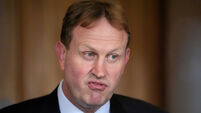
Not so fast. When chief executive Tim Cook testified before the US Congress, he didn’t come to talk about Apple’s latest amazing gadget or the need to grant more visas to computer programmers.

Rather, in his maiden voyage to Capitol Hill as Steve Jobs’s successor, Cook had to defend the company’s tax-avoidance efforts. What should have been a triumph for Cook was instead an awkward encounter.

The senate permanent sub-committee on investigations documented the ways in which Apple avoided billions of dollars in US taxes by funnelling activities through subsidiaries in Ireland, where it was claimed it had negotiated a special 2% tax rate — however this has been denied by Apple and the Irish Government.

Other Apple subsidiaries appearing to be the business equivalent of duty-free zones — residents of no country and, hence, immune to taxation.

So Cook was left defending the company by waving around its progressive bona fides. “We believe in President Kennedy’s phrase ‘To whom much is given, much is required’.”

By turns humble and combative, he noted that Apple paid about $6bn in US taxes in 2012. “We expect to pay even more this year,” the 52-year-old said. “We pay all the taxes we owe.”

But the Apple fanboys and fangirls in the world’s greatest deliberative body weren’t buying his protestations that the company doesn’t use too-shrewd tax tricks. In fact, senators on both sides of the aisle pointed out that Apple has a superior tax-planning department that is a source of profits no less important than the beautiful, simple interface of the iPad.

Senator John McCain, in particular, sounded indignant. “For years, Apple has opted to forego fully contributing to the US treasury and to American society by shifting profits and circumventing US taxes,” he said.

Corporate America has never been more profitable or had more cash. It dominates labour, bosses around the political system, and manipulates the tax code the way Yo-Yo Ma plays the cello. Corporate profits have soared from $1.1 trillion in 2008 to $1.95 trillion in 2012 — up 77%. The amount of cash on companies’ books has risen from $1.39 trillion in 2008 to $1.79 trillion in the fourth quarter of 2012 — also a record. The stock market has more than doubled since Mar 2009.

And yet this spring, a set of seemingly unconnected events — the unmasking of America’s most admired company as a serial tax avoider, the collapse of a factory in Bangladesh, empty aisles, and falling profits at America’s largest retailer, the relentless prosecutorial pursuit of hedge-fund titan Steven Cohen — shows that businesspeople can, and often do, take things too far. In other words, it seems that corporate America may be in danger of becoming too brutally efficient for its own good.

The story of Cook’s testimony on the Hill crystallises the ways in which that single-minded pursuit might endanger even a strong brand such as Apple, which otherwise epitomises the socially progressive Silicon Valley ethos. (Cook has let it be known that he has a picture of Martin Luther King Jr on his wall.) But then Apple also epitomises the profit-at-all-costs mentality that drives technology leaders today.

Karen Brenner, executive director of law and business initiatives at New York University’s Stern School of Business, notes that law tends to lag business practice, leaving wide loopholes. “When that’s the case, companies are left to their own decision-making processes on what is right, compared with what is legal,” she said. And as the Cook hearing showed, what is technically legal might not pass the smell test.

It’s not just Apple. Today’s corporate culture is one in which the smart, well-connected, and wealthy seemingly can’t resist taking that extra step to squeeze a few more pennies out of the system, even when they already have so much.

This habit has morphed into pathology. Drive 30% of your revenues through an offshore tax shelter this year, and why not push half of all your business through the next? Pay a 15% tax rate on your vast income in 2011, and the temptation is to lower your rate to 14%. Find workers in China willing to assemble garments for $114 a month this year, and switch production next year to Bangladesh, where workers will do the job for $38 a month.

In his new book, The Fracturing of the American Corporate Elite, sociologist Mark Mizruchi argues that the corporate brakes on unethical behaviour are gone. Unions are becoming irrelevant, corporate boards are somnolent, and regulators and politicians — when they’re not abetting corporations — are mostly catatonic.

Meanwhile, hordes of highly paid lawyers, accountants, and consultants of all stripes are standing by to help drive profit ever further, ever wider. Not only does our culture celebrate and laud those who make obscene amounts of money, the market demands this type of behaviour, with investors stomping their feet for higher share prices and bigger hedge-fund returns. And they don’t really care how those objectives are achieved.

A series of reports found that many companies — HP, Microsoft, Google — engage in similar tax-avoidance activities. Facing the threat of consumer boycotts in Britain over tax-reduction strategies that left it with no liabilities, Starbucks last December volunteered to pay £10m in taxes.

If there are loopholes wide enough to drive one cash-filled Brink’s truck through, corporate accounting departments will drive 10 trucks through. So long as it’s legal, what’s the problem? The defenders of corporate tax avoidance respond to the reports with what amounts to a shrug. Don’t hate the player, hate the game.

That’s capitalism. And there’s something very American about this. Latch on to a profitable idea and make it huge, whether it’s a burger chain or a smart tax-avoidance strategy.

TODAY, US companies are keeping a total of $1.9 trillion in profits offshore where they can’t be taxed, an increase of 70% in the past five years, according to Audit Analytics. But we may have hit a breaking point. Corporate profits as a percentage of gross domestic product are at a record high, while corporate income taxes as a percentage of GDP continue to fall.

It all works well until you have to explain and justify what you’re doing to an unsympathetic audience, as Cook had to do.

Former presidential candidate Mitt Romney, who famously argued that corporations are people, personifies how legal-but-dodgy can harm one’s reputation and ability to produce results. The phenomenally wealthy financier owed his nine-figure fortune in large part to a wrinkle in the tax code that gives hedge funds and private-equity firms a preferential 15% rate.

Romney’s high-priced accountants scoured the tax code for ways to reduce his liabilities further and to turn small contributions into an IRA worth more than $100 million. For the private Romney, these moves were genius. For the public Romney, they were disastrous.

The candidate’s accountants had to reverse-engineer Romney’s 2011 tax return so that it jibed with an emphatic promise that he had never paid an effective tax rate of less than 13% of his income. Romney’s campaign may have been a lost cause due to demographics alone. But if he hadn’t been so successful at avoiding taxes, his “47%” remarks might not have been so damaging.

There’s no earthly reason that a guy worth over $250m needed to put money offshore or engage in legal behaviour that would put his presidential aspirations in jeopardy. But today’s corporate hotshots can’t help themselves.

They skirt up to the edge of the law, and occasionally go over it. And the reach for those last few basis points of return can prove damaging to reputations and careers.

Billionaire hedge-fund manager Steve Cohen and his firm, SAC Capital, have racked up stunning annual returns — 30% or more — for the past several years. Cohen’s relentless push for higher returns has made him phenomenally wealthy (No 40 on the Forbes 400) and a force to be reckoned with when it comes to support of modern art and philanthropy. (Among other things, he has given large sums to the Robin Hood Foundation and has endowed a children’s hospital on his native Long Island.)

But long-running insider-trading investigations of SAC, its affiliates, and current and former employees have taken a toll on the company. The cumulative evidence suggests that the pursuit of that next $10m, or $100 million, in trading profits by people in and around SAC may result in the sacrifice of profits, reputations, and, in a few instances, freedom.

In March SAC paid a record $600m fine to settle federal charges over insider trading, which, even in Greenwich, Connecticut, is real money. In the first quarter of 2013, according to Bloomberg, outside investors told SAC they wanted to take out about one-quarter of the funds they had invested with the firm.

In May, Reuters reported that the US attorney is considering using the anti-mafia Rico laws to pursue SAC, and Blackstone told SAC it plans to take out a big chunk of the $550m it has invested. For hedge funds, fewer funds under management lead to lower profits.

Aside from negotiating the cost of services or products, companies also have to reckon with the long-term cost of such behaviour because the too-successful search for low costs and high profits can be bad for brands and individual companies.

As wages in China have risen, garment manufacturers have looked to Cambodia, to Laos, to Sri Lanka, and finally to the dark satanic mills of Rana Plaza in Bangladesh, where 1,123 workers earning as little as $38 a month paid with their lives.

Retailers like the Children’s Place and JCPenney, who saved a few pennies per garment because their contractors and subcontractors sourced products in Bangladesh, suffered black eyes.

Apple was able to rack up huge profits on its devices because it outsourced manufacturing and assembly to China.

But when press reports detailed tough working conditions at one of its main contractors, Foxconn, Apple’s brand was bruised.

And the costs incurred in such cases are often greater than the costs they hope to avoid, notes Michael Gordon, chief executive of crisis-communications firm Group Gordon. “Companies that would otherwise have a halo on them are getting tagged with these things that are hurting them reputationally for the long term.”

There are also macroeconomic effects to this ruthless drive for squeezing out more and more profits. Since the recession, companies have realised that if they freeze, or even cut, wages, workers will still show up and toil just as productively.

The equipment manufacturing company Caterpillar, where profits soared from $895m in 2009 to a record $5.68bn in 2012, last year settled a strike with union workers. The deal included a six-year wage freeze.

This isn’t unusual. With each passing year, in fact, corporations are keeping more of the pie for themselves. The chart showing wages as a percentage of GDP against corporate profits over the last several years looks like the gaping maw of a hippopotamus. Wages were 43.5% of GDP in 2012, down from 49% in 2001, and a modern-day low. US median family income has actually fallen since 2009.

But the strategy of beggaring workers for the sake of short-term profits may have reached its limits at America’s biggest retailer. “Where are all the customers?” read a plaintive email from a Walmart executive that leaked in early February. “And where is all their money?”

Once the epitome of hyperfunctioning America, Walmart is an increasingly sad, dysfunctional place, plagued by empty aisles, empty shelves, and falling sales.

The problem for Walmart, and for many other retailers, is that wages simply aren’t growing much in the US According to the Bureau of Labour Statistics, average hourly earnings are up just 1.9% in the past 12 months. And that’s partially because America’s largest private-sector employer has been too effective at keeping domestic labour costs down.

Walmart notes that it employs 1.4m people in the US. The company says the average wage for its associates is about $13 an hour. Because it is so big — Walmart accounts for about 1.23% of all private-sector jobs in the US, and about 9.3% of all retail and trade service workers in the country — it sets the standard for retail and service wages.

“Today we are really seeing the limits of the ultra-low-wage model that Walmart pioneered. Workers are consumers, and when they aren’t paid enough to buy goods, the economy can’t grow,” said Amy Traub, senior policy analyst at the think tank Demos.

The company has become so obsessed with keeping labour costs to a minimum that, as Bloomberg reported, it is having difficulty keeping the thousands of items stocked on its shelves, which further alienates customers and tamps down sales. Notes Traub: “We end up trapped in a vicious cycle of low growth, and companies that persist in trying to cut labour costs further only make matters worse for themselves.”

Companies have become incredibly successful at shucking historical, profit-reducing obligations — paying decent wages, paying taxes, providing benefits. But in pursuing tax avoidance and cost-cutting strategies to their logical conclusions, companies often lose sight of a basic truth.

Paying taxes, generally sharing the wealth, and living up to social responsibilities aren’t a matter of public relations or “optics”, to use a favoured business term. They’re matters of legitimacy. And the offensive actions cause companies to lose legitimacy and social license.

When Cook and his Apple colleagues testified, senators were respectful of Apple as a corporate force and an innovator but derisive of its claims. Even Cook seemed to acknowledge that his company had taken it too far, and signalled to the public that its future tax bill was likely to be higher.

“Apple has always believed in the simple, not the complex,” Cook said. “It is in this spirit that we recommend a dramatic simplification of the corporate tax code. We make this recommendation with our eyes wide open, fully recognising that this would likely result in an increase in Apple’s US taxes.”

Apple’s tax bill has shrunk so low Cook seemed to be saying, that the only place for it to go is up. The same is likely true for the thousands of companies that view Apple as an example to emulate.

* Daniel Gross is a columnist and global business editor at Newsweek /Daily Beast.

More in this section

Revoiced

Newsletter

Had a busy week? Sign up for some of the best reads from the week gone by. Selected just for you.

Cookie Policy Privacy Policy Brand Safety FAQ Help Contact Us Terms and Conditions

© Examiner Echo Group Limited