Off their trolley?

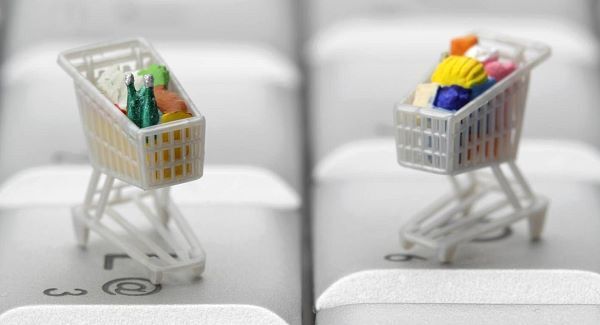
It remains to be seen if Amazon will succeed where others failed in trying to make selling groceries online profitable, writes Alistair Barr.

Off their trolley?

AMAZON is planning a major roll-out of an online grocery business that it has been quietly developing for years, targeting one of the largest retail sectors yet to be upended by e-commerce, according to two people familiar with the situation.

While food is a low-margin business, Amazon could outperform similar online grocery services by delivering orders for higher-margin items like electronics at the same time.

One of the people familiar with AmazonFresh’s expansion plans said new warehouses will have refrigerated areas for food, but also space nearby to store up to 1m general merchandise products, in some cases.

The company has been testing AmazonFresh in its hometown of Seattle for at least five years, delivering fresh produce such as eggs, strawberries, and meat with its own fleet of trucks.

Amazon is now planning to expand its grocery business outside Seattle for the first time, starting with Los Angeles, as early as this week and the San Francisco Bay area later this year, according to the two people who were not authorised to speak publicly.

If those new locations go well, the company may launch AmazonFresh in 20 other urban areas in 2014, including some outside the US.

Bill Bishop, a prominent supermarket analyst and consultant, said the company was targeting up to 40 markets, without divulging how he knew of Amazon’s plans. An Amazon spokeswoman did not respond to a request for comment on Tuesday.

Amazon is searching for new, large markets to enter as the company tries to maintain a growth rate that has fuelled a 220% surge in its shares over the past five years. The grocery business in the US, which generated $568bn (€434bn) in retail sales last year, may be a ripe target.

Amazon’s expansion plans are a potential threat to grocery chains such as Kroger Co, Safeway Inc, and Whole Foods Market, as well as general merchandise retailers Wal-Mart Stores Inc and Target Corp, which also sell a lot of groceries.

“Amazon has been testing this for years and now it’s time for them to harvest what they’ve learned by expanding outside Seattle,” said Bishop, chief architect at Brick Meets Click, a consulting firm focused on retail technology.

“The fear is that grocery is a loss leader and Amazon will make a profit on sales of other products ordered online at the same time. That’s an awesomely scary prospect for the grocery business.”

Kroger, Whole Foods, Supervalu (a US company not related to the Irish supermarket), and Safeway did not respond to requests for comment on Tuesday. Target declined to comment.

A successful foray into groceries could also help underwrite the development of a broad-based delivery service employing Amazon trucks to deliver directly to homes, which could have implications for UPS, FedEx, and other package delivery companies that currently ship Amazon goods.

Still, groceries have proven to be one of the most difficult sectors for online retailers to crack. One of the most richly funded start-ups of the dot-com era, Webvan, was a spectacular failure as the cost of developing the warehouse and delivery infrastructure proved overwhelming.

Roger Davidson, a former grocery executive at retail supergiant Wal-Mart, said Amazon will struggle to make money from AmazonFresh because fresh produce can go out of date in warehouses and get damaged during delivery — something known as “shrink” in the business.

“Will it work? I would bet against it. The reasons these businesses have failed in the past have not gone away.”

Still, Amazon is not alone in wanting to expand in the online grocery business.

Wal-Mart is testing same-day and next-day delivery of online grocery and general merchandise orders in the San Francisco Bay area and operates a grocery delivery business in Britain.

“We are ready and able to expand grocery delivery in the US as the market demands,” said Wal-Mart spokesman Dan Toporek.

FreshDirect delivers food to homes and offices in some parts of New York City and its trying to expand its service into the Bronx.

PEAPOD, owned by international food giant Royal Ahold NV, says on its website that it is the largest internet grocer in the US, delivering more than 23m orders across 24 markets.

Davidson, who worked with Peapod for several years during a stint at Ahold USA, said Peapod struggled to make money for most of its existence. But he believes it now turns a small profit due to supply chain efficiencies, population density in Chicago and its connection to bricks and mortar stores on the east coast.

Davidson favours a strategy he called “click and connect” which is being used by Harris Teeter, a food and pharmacy chain on the east coast of the US. Customers order food online and choose a time to pick up the produce from designated areas outside the company’s stores. There is a $4.95 service fee for this.

“Traditional grocery retailers will likely fight back against Amazon with click and connect.”

It is not clear whether AmazonFresh in Seattle is profitable because Amazon does not disclose results from the business.

Amazon chief executive Jeff Bezos was asked about the business during the company’s annual shareholder meeting last month and he said that the team had “made progress on the economics over the last year”.

“They’ve been doing a lot of experiments and trying to get the right mixture of customer experience and economics.”

If online orders also include higher-margin general merchandise such as digital cameras, then AmazonFresh has a chance at profitability, said Manfred Bluemel of Zeitgeist Research, who was head of market research worldwide at Amazon until late 2010.

“Grocery is a frequency business. If Amazon can deliver to consumers’ homes two or three times a week, they can up-sell other items.”

Bluemel said AmazonFresh’s expansion will likely focus on areas where Amazon already offers same-day delivery, or will do so soon.

Amazon offers same-day delivery in several US cities including New York, Washington DC, and Chicago, and since last year the company has been building new distribution warehouses on the outskirts of the Los Angeles and San Francisco Bay areas.

A window onto the mobile shopping world

EBay’s ‘shoppable windows’ aim to help retailers generate more sales, says Alistair Barr.

EBay is launching virtual stores called “shoppable windows” this month that the e-commerce company hopes will help retailers generate more sales from their existing physical store networks.

The first four of these screens will open from Jun 8 to Jul 7 in busy parts of New York City. They will sell 30 items from Kate Spade Saturday, a new fashion brand launched this year by apparel retailer Fifth & Pacific Companies Inc.

EBay set up a window display in New York in late 2011, but those storefronts did not let shoppers order products on the screen.

The new screens measure about 9ft across and 2ft high and will appear on the front windows of closed stores. Shoppers will be able to touch the screens to order and have products delivered to them within an hour via courier. Payment will be accepted by the couriers through PayPal Here, a mobile payment service developed by eBay.

This is the latest effort by eBay to work more closely with large retailers that are looking to reach more online and mobile shoppers. The company has attracted some large retailers, such as Target Corp, to its online marketplace, while developing mobile shopping technology for other retailers such as Macy’s.

EBay’s “shoppable windows” are an extension of the shift to mobile shopping, according to Steve Yankovich, head of the company’s innovation and new ventures group, which developed the technology.

“This extends the boundary of the store. Suddenly the physical store, by virtue of online technology, extends to any space that’s interesting to use,” he said.

For Fifth & Pacific, the windows will help launch its new Kate Spade Saturday brand without opening new physical stores, at least initially, according to chief executive William McComb.

However, the company also plans to use the technology in existing stores of its other brands, such as Juicy Couture and Kate Spade New York, he said.

“This gives us the ability to produce more from our retail space. My nickname for it is the ‘wall as a mall’.”

McComb said he is considering putting shoppable windows in small Juicy Couture stores that will offer about 200 different shoes to buy.

The company may also use the windows in Kate Spade New York stores to sell home furnishings, bedding, linens and towels.

“We would never be able to fit all those products in a store in the traditional way,” said McComb. “These things would typically require an extra 10,000sq ft of space. But through partnerships like this eBay one we could do this through stores that are 2,000sq ft.”

x

More in this section

Revoiced

Newsletter

Sign up to the best reads of the week from irishexaminer.com selected just for you.

Cookie Policy Privacy Policy Brand Safety FAQ Help Contact Us Terms and Conditions

© Examiner Echo Group Limited