Youth will lead the charge for justice in 2013
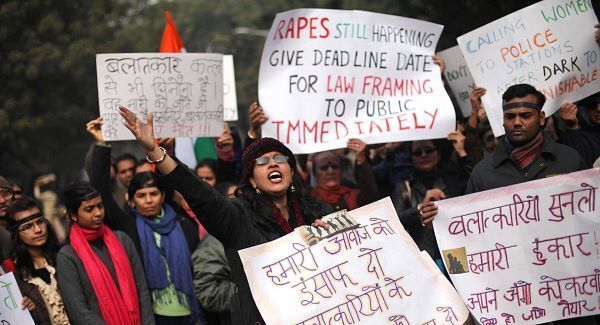
In the last week, it was young Indians, shocked by the murder of a medical student, who dominated the street rallies that are demanding proper protection for women against rape.
Before that, it was thousands of young Pakistanis who responded to the shooting of 14-year-old Malala Yousafzai, forming the majority in the mass protests calling for an end to the discrimination that locks girls out of school.
Defying doom-laden forecasts that social progress is not possible in today’s fragile world economy, this year is likely to be marked by a rising number of demonstrations for young people and by young people, demanding that their rights be taken seriously.
For these recent assertions of their rights by young people in Pakistan and India are not isolated incidents but part of a new wave of change.
In Bangladesh, would-be teenage brides and teenage boys are now, for the first time, leading campaigns to declare their communities “child marriage-free zones”.
Even before the Indian rape, Nepal had been witnessing widespread demonstrations condemning violence against women. In Burma, a campaign against child trafficking brought 200,000 young people to that country’s first open-air pop concert of modern times. And again in India, a march against child labour was led by 100 boys and girls who, at ages as young as 8, 9, and 10, had been rescued from bonded labour.
Of course, the outrages we have witnessed in India and Pakistan would certainly have evoked an angry response at any time — but, left to adults alone, the protests would almost certainly have come and gone.
What is new is that today’s generation of young people have themselves become far more assertive in demanding that their rights be upheld than the adults who are responsible for watching over them.
After decades of adult complacency dominated by a false assumption that progress to end child exploitation — whether it be child labour, forced marriage, or discrimination against girls — was only a matter of time and somehow inexorable, it is the victims of the world’s inaction who are forcing the world to wake up to the reality that change will only happen if it is made to happen.
And, fortunately, there is no sign of this demand for change abating in 2013. Late last year, more than 2m signed petitions calling for free universal education in Pakistan, not least because of the campaigning genius and technology of the activist group Avaaz, which rallied the international community in response to Malala’s shooting.
But in the first few days of 2013, 1m Pakistani girls and boys who have themselves been denied education have been signing an updated petition demanding urgent action on their behalf to deliver basic schooling.
An anti-child labour petition, also supported by Avaaz, calling on India to end child slavery has already attracted 600,000 signatures — mainly from young people themselves. The organisations V-Day and One Billion Rising have called for young women in Africa and Asia to rise up on Feb 14 and be part of what they call “a catalytic moment” to demand an end to violence against females.
Young women in Africa, from Kenya to Somalia to Ghana, are planning what, for thousands, will be their first ever major demonstration against rape and violence.
Next month, the Indian parliament will be under pressure to vote to outlaw, for the first time, all child labour for children under 14.
Following a decision last month by the Burmese government — prompted by a great philanthropist, Andrew Forrest, and the anti-slavery organisation Walk Free — to sign a historic agreement to outlaw all forms of slavery, a host of other countries are being pressed into change. And the world’s 27 largest multinational businesses are now also under pressure from Walk Free and young people who are demanding that, by April this year, they pledge to remove slave labour from every part of their supply chains — or face criticism and, potentially, boycotts or direct action.
So why, in these austere financial times, is a movement for basic rights that might have expected to do better in times of affluence starting to flourish? The answer lies in the very nature of the changes wrought by globalisation itself. Today’s globalisation is characterised by two massively transformative forces: First, the free flow of capital and, second, the global sourcing of goods and services, both of which play a key role in opening up the world.
And, in their wake, globalisation is being defined by a third force: Our capacity to communicate instantaneously with anyone, anywhere in the world. Of course, there is a huge and as yet inconclusive debate about the difference new media made to the Arab Spring, but what is undeniable is that, with the internet, mobile phones, Twitter, Facebook, and YouTube unlocking an infinite set of opportunities for people on one continent to talk to people on another, we can never return to the times of a decade ago when, in many countries, sentries stood over fax machines to prevent outside influences from infiltrating their nation.
AND it is this, our ability to know, share, and compare knowledge and experience across old barriers and all frontiers, that is now showing it has the potential to radicalise a new generation. In places where, for centuries, your rights were only what your rulers decreed, and your status and wealth what someone else ascribed to you, young people are asking questions.
In countries where, for centuries, it was accepted that if your grandparents and parents were poor you must be poor too — and if you were born without the chance to flourish, so too must your children and your children’s children be — young people are saying this is not the way they see it.
In continents where, if you were a girl, you were inevitably trapped in the circumstances of your birth, all your life’s choices dictated by centuries-old patriarchal assumptions, young people are starting to defy the ancient ruling orthodoxies and to assert that, irrespective of gender, race, or religion, every single person has basic rights, that power derives from the people, and that the duty of the state is to meet your needs, uphold your rights, and advance your opportunities.
And as young people find out more about what is happening to other young people, their aspirations rise and they start to discover the emptiness of some of the central claims we have made about the benefits of globalisation. As they compare their experiences with others across the globe, they are discovering that the vast inequalities in their material circumstances are not so much to do with how intelligent they are, how much merit they have, or how little or hard they work, but where they were born and to whom they were born.
That is why ,at the heart of protests from the Arab Spring to the Global March Against Child Labour in India to the campaign for child marriage-free zones in Bangladesh, is a rejection of the view that one’s status at birth is a permanent condition. Instead, we are starting to see an assertion of the truth that what should matter is not where you come from but where you are going, and that, even if we cannot shape our original circumstances, we can at least shape our response to that fate. It is a demand for opportunity founded on a desire to be treated with dignity — regardless of where or to whom you are born.
If we are not careful, it will unlock a generational battle between an older generation who will try to hold on to their social security, health, and pension benefits, irrespective of what is happening to the young, who will feel pushed out of the free education and employment opportunities that previous Western generations of young people had as a right.
This growing global consciousness poses some difficult questions for the richest countries, too. We will be asked why, when we know that as much as 80% of global inequality is due to birth and background. and that education is the one real driver of equality of opportunity, there is still so little international support for investment in education.
We will have to explain why our patterns of educational spending compound rather than correct or compensate for these inequalities — why, for example, we invest just €350 on the education of the typical African child from birth to 16 compared with €80,000 for a Western child; why a paltry €10 is the total amount of all annual international aid supporting that African child; why London, with a population of 8m, has almost 20,000 girls in the final year of secondary education and South Sudan, with a population of 10m, has just 400.
You do not need to subscribe to the politics of envy to agree that bridging the gap between what young people are and what they have within themselves to become is what Condoleezza Rice has called “the civil rights issue of our generation”, and that mobilising the talent of their young through better schools and higher teaching standards is the only sure way of unlocking the potential of the poorest countries in the world.
An April summit in Washington led by UN secretary-general Ban Ki-moon and World Bank president Jim Kim will require concrete action from off-track countries to move children from the exploitation that is leading to today’s protests to the education that is now denied but can help correct this.
A century ago, in his younger, more radical days, Winston Churchill talked of the gap between the excesses of accumulated wealth and what he called “the gaping sorrows of the left-out millions”. We will hear more of this in 2013 — and it will come from the voices of youth.
Former British prime minister Gordon Brown is co-convenor of the high level panel for education and the UN special envoy for global education. The anti-child-labour petition referred to in this piece can be found at www.aworldatschool.org
(c) 2013 Newsweek/Daily Beast Company LLC. All rights reserved.

CONNECT WITH US TODAY



Be the first to know the latest news and updates