If you want to feel what it’s really like to be European, go to Bosnia

Sarajevo. What does the name conjure up in your mind? Aerial bombardments in the 1990s are one possibility; the assassination of Archduke Franz Ferdinand by Gavrilo Princip, triggering the First World War, is another.

If you want to feel what it’s really like to be European, go to Bosnia

I have fonder recollections. I remember as a young schoolboy being engrossed by the 1984 Winter Olympics on television and begging my mother to let me go skiing for the first time.

Today, Sarajevo is the capital of Bosnia-Herzegovina, a state with roughly the same size population as the Irish Republic and one of Europe’s unlikelier winter sports destinations.

Last weekend we found no snow there — only rain — but as a consequence we learned a lot more about Bosnia, or Republika Srpska to be specific. So, you might ask, is Bosnia the next Croatia or Slovenia, a holiday destination and property market just waiting for direct flights from Ireland?

The small tourist bureau promotes Bosnia as ‘the heart-shaped land’ although, to my mind, on the map it looks much more like a skewed isosceles triangle than a heart — but that’s just me. Any country that has suffered that much is entitled to some leeway in its promotional material, I guess.

Moreover, any country so close, yet so difficult to get to, needs to work hard to attract travellers’ euro. There aren’t any direct flights, even from London, so you are looking at a connecting flight from Vienna or Budapest. Crossing the Croatian border by car from Dubrovnik is another time-consuming possibility.

Language, too, is a barrier. Bosnian, Croatian and Serbian are much of a muchness — we called it Serbo-Croat once — but all are equally unintelligible, the main difference being that the Serbs use the Cyrillic alphabet. English is not very widely spoken so unless you have German — I don’t — you will be reduced to hand signals or groping in the back of your guidebook for a few words.

While we’re on the downsides, Bosnia has no coastline to speak of — just a few miles squeezed between slabs of Croatian Dalmatia. And did I mention that travelling around is a complete pain in the neck on account of the mountainous terrain and the shocking roads?

For all the minuses, and if only for all the wrong reasons, Bosnia is a fascinating country to visit. Or should I say countries? The division between Bosnia proper and Herzegovina is a very rough geographical one with no political connotations so far as I understand. The real division is between the Muslim-Croat Federation (FBiH), 51% of the territory in the west and centre, and Republika Srpska (RS), the north and east of the country.

One small port, Brcko, belongs to both entities. As in Northern Ireland, the tribes are not physically distinguishable; only names and the odd religious symbol worn around someone’s neck tend to give the game away.

The two entities each have their own parliaments with wide powers, but over the course of the last decade the central government has prised some away. It represents the three constituent peoples but is so complex in its make-up as to make Stormont look like a model of efficiency.

Later this year, the Office of the High Representative, a sort of colonial governor appointed by the international community to keep all the locals in line, will finally be abolished. Whether that means the Irish and EU forces currently deployed will no longer be required is another matter entirely, one suspects.

Although Bosnia has been a definable part of the Balkan landscape for 1,000 years, there is precious little by way of a Bosnian identity outside the Muslim community which, significantly, claims the term Bosniak for itself. Although the largest ethnic group, they do not represent a majority but, understandably, they are anxious to promote ‘one Bosnia’. Someone calling themselves a Bosnian Serb, by contrast, is using ‘Bosnian’ to describe where they are from, not how they feel.

The real hatreds, though, stem from World War II when the Nazis invaded Bosnia, which by then had changed first from Ottoman to Austro-Hungarian hands and then found itself a buffer between Serbs and Croats in the Kingdom of Yugoslavia. Bosnia was ceded to the fascist so-called Independent State of Croatia and, in the course of four years, upwards of one million Serbs were murdered.

ALTHOUGH initially royalist, a socialist, Serb-dominated Yugoslavia under Tito (himself a Croat) appealed to many Serbs who had good reason to want Croatian nationalism sublimated into a wider southern Slav identity.

In the Tito years, Bosnia became a political backwater but prospered economically as the centre of the Yugoslav arms industry, a very mixed blessing when Yugoslav began fighting Yugoslav as the binding communist ideology fell apart following the fall of the Berlin Wall and local nationalisms once more reared their ugly heads.

Most of the weaponry was in Serb hands so after a disputed independence referendum which they boycotted, the Bosnian Serb forces soon established their military superiority. At one point, 70% of Bosnia was under their control. The Croats and Muslims, faced by a common enemy, put aside their own differences and appealed, eventually successfully, for international assistance.

With only fellow Orthodox Russians as allies and perceived to have something approaching a monopoly over war crimes — most notably at Srebrenica where 8,000 Muslim civilians were cut down as they were chased through the woods — the Serbs were in no position to resist NATO bombardments.

Grumpily, Slobodan Milosevic signed on their behalf the Dayton Accords that gave them less territory but very considerable autonomy. Serbs maintain their ‘crimes’ were small by historical Balkan standards.

Today, Bosnian politics revolves around federation demands for the abolition of Republika Srpska and Serb counter-demands for independence, Montenegro or Kosovo-style, a notion the international community will not entertain despite the fact that Republika Srpska has far more of the characteristics of statehood than many other regions deemed worthy of exercising self-determination. Frankly, it’s hard to see the Bosnian Serb statelet resisting the lure of Serbian EU membership.

In the meantime, despite enviably low tax rates, there is still a massive amount of reconstruction required before Bosnia becomes part of the European playground. It is worth recalling that during the short period of the war, half the population was either killed or forcibly displaced.

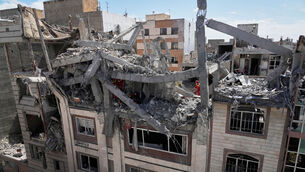
Bomb and arson damage is still very evident. So too are the little shrines everywhere to murdered children or relatives who disappeared never to be found, suggesting there is a lot of emotional reconstruction still required.

Banja Luka, the de facto capital of Republika Srpska, where I stayed, is an unremarkable enough city about the size of Cork. Its population swelled as Serb refugees flocked there a decade ago and many have stayed. It has a certain charm and some raucous nightlife, but it gives the impression of being cut off from the rest of the continent.

It’s not another Prague, but it seems to me that a true appreciation of what it is to be European is not possible without visiting, or at least understanding, Bosnia.

I still can’t pretend to after just a short visit. But heading to Bosnia truly is travel that expands the mind. Just don’t expect sun, sand and sangria — or snow necessarily, for that matter.

More in this section

Revoiced

Newsletter

Sign up to the best reads of the week from irishexaminer.com selected just for you.

Cookie Policy Privacy Policy Brand Safety FAQ Help Contact Us Terms and Conditions

© Examiner Echo Group Limited