Colin Sheridan: Detained Palestinian doctor Hussam Abu Safiya must be charged or released
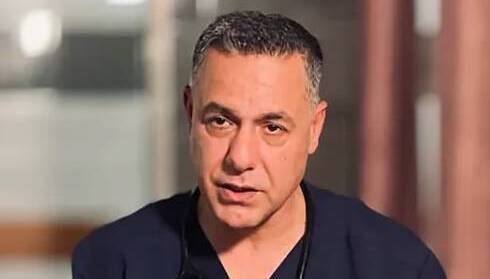
Dr Hussam Abu Safiya: One of the most recognisable medical figures to have emerged from Gaza’s destroyed health system.
Dr Hussam Abu Safiya has been held captive by Israel for 561 days.
There are many ways to describe him.
He is a Palestinian paediatrician, the former director of Kamal Adwan Hospital in northern Gaza.
He is a father.
He is one of the most recognisable medical figures to have emerged from Gaza’s destroyed health system.
He is also, as of this morning, a man reportedly fighting for breath and consciousness inside an Israeli prison.
Read More
The facts of his case should be repeated plainly, because repetition is sometimes all that stands between outrage and disappearance.
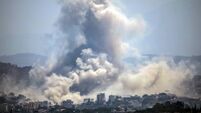
Abu Safiya was imprisoned without charge by Israeli forces on December 27, 2024, after a raid on Kamal Adwan Hospital.
On the same day, his 15-year-old son Ibrahim was killed in a drone strike on the hospital's entrance. The facility had been one of the last functioning medical facilities in northern Gaza.
He had stayed there through siege, bombardment, and collapse, continuing to treat patients in conditions no doctor should ever have to describe, never mind endure.
Of course, Israel has accused him of links to Hamas. Those allegations have not been tested in open court and no charges have been brought. No public evidence has ever been produced.
His captivity has instead continued under Israel’s “unlawful combatants” law, a mechanism which allows people — many of them children — to be held without the ordinary protections of due process.
In June, Israel’s Supreme Court rejected an appeal for his release, reportedly relying on confidential material not shared with either Abu Safiya or his lawyer.
This week, the case became still more urgent. His lawyer, Nasser Odeh, who visited him in custody, said Abu Safiya was in critical condition. Physicians for Human Rights Israel reported visible injuries, severe deterioration, difficulty breathing, and repeated loss of consciousness.
Amnesty International has warned that his life is in grave danger. The UN Working Group on Arbitrary Detention has called for his immediate release.
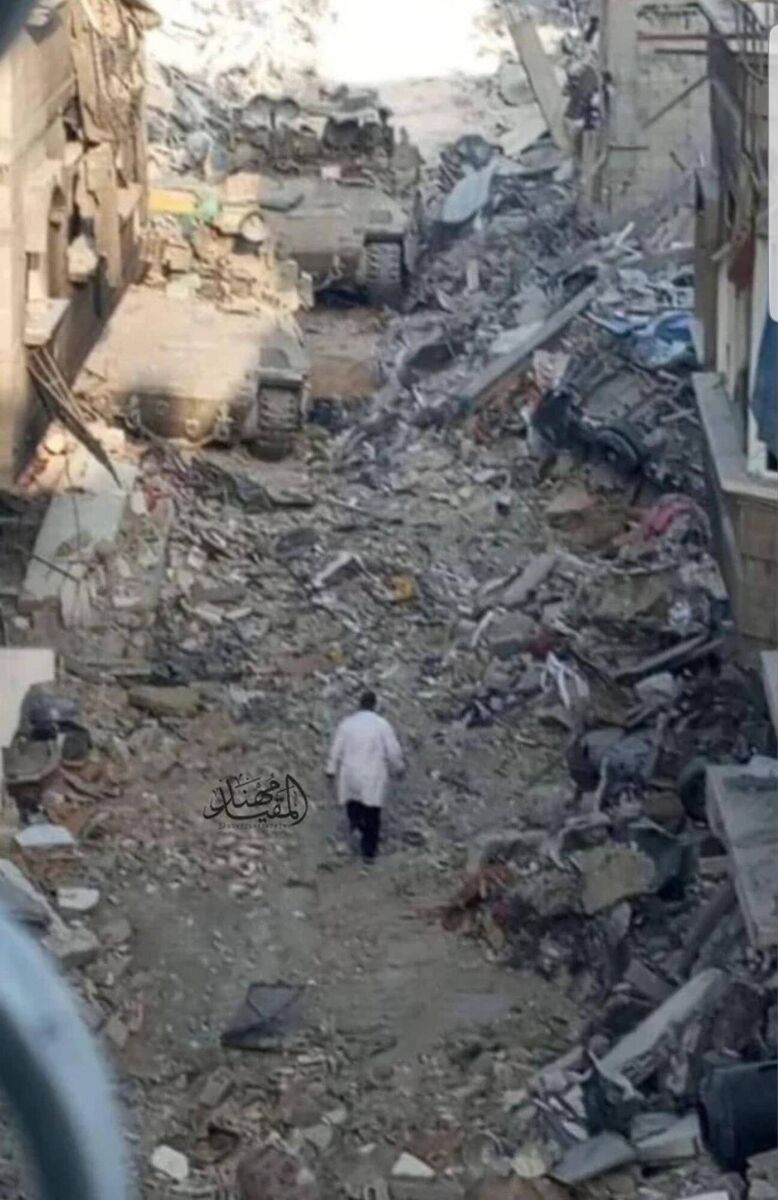
Israel’s prison authorities deny mistreatment. But denial is not due process. Denial is not a medical examination. Denial is not a charge sheet. Denial is not an answer to 561 days' imprisonment.
There is, of course, a danger in making Abu Safiya’s case sound exceptional.
It is exceptional in its visibility, perhaps, but not in its moral architecture. He is one of many Palestinian healthcare workers detained, killed, displaced, starved, exhausted, or forced to work inside the ruins of hospitals that should have been protected under every humanitarian principle we claim to value.
Still, perhaps we should linger on his profession for a moment. Not because a doctor’s life is worth more than anyone else’s. Not because Palestinians must first be useful, educated, gentle, professional, or recognisable to western eyes before their suffering becomes legible. That trap is part of the problem.
But even on the narrowest terms available to western conscience, what more must a person be?
Abu Safiya is a medical doctor. He ran a hospital. He treated children. He stayed with patients when leaving might have saved him. He belonged to that profession we applauded from windows during covid, praised as heroic, described as sacred, invoked whenever we wanted to remind ourselves that civilisation still had a pulse.
And yet where is the great professional revolt? Where are the hospital corridors lined in protest? Where are the medical colleges, the ministers, the university presidents, the trade unions, the Irish political class speaking with the urgency this case demands?
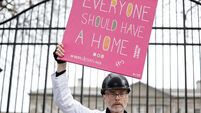
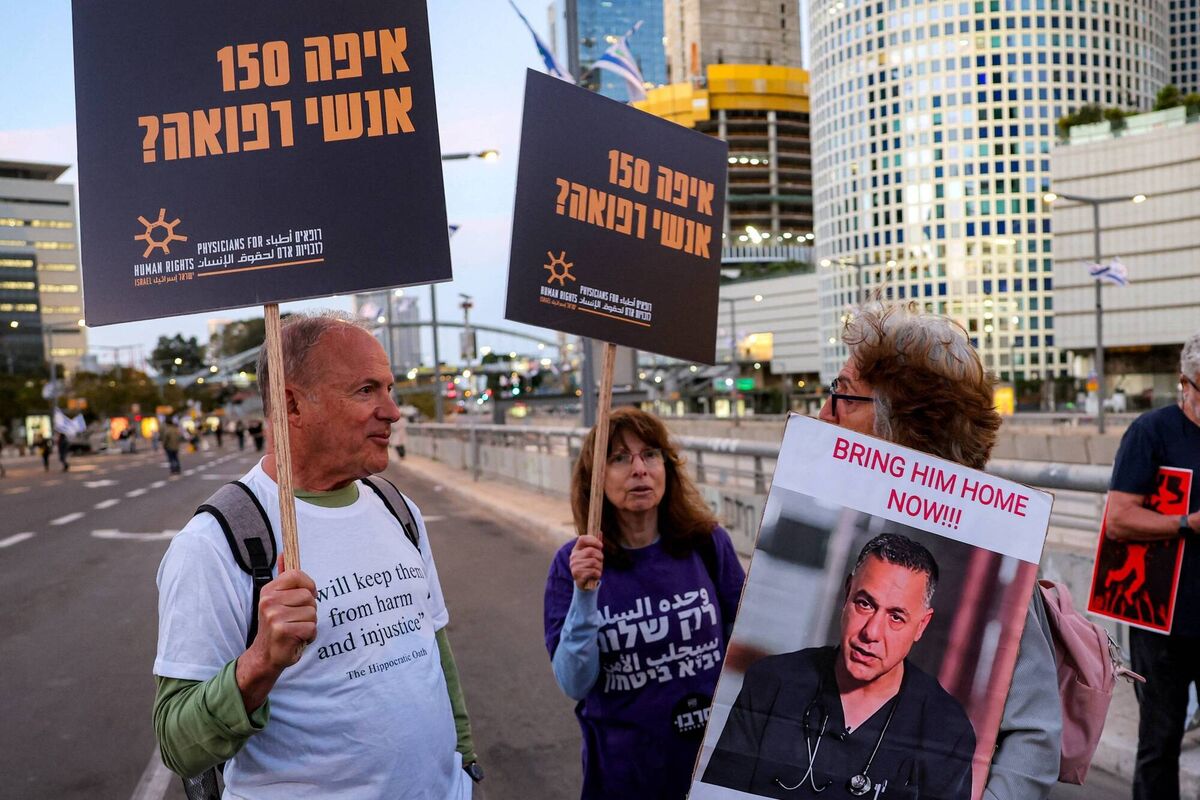
Yes, there have been very worthy protests. The collective Irish Healthcare Workers for Palestine have been among the most vocal and consistent solidarity groups on this island.
Alongside them, ordinary citizens, families, students, and pensioners gather outside hospitals, marching through Dublin and Cork, walking promenades in places like Salthill, organising fundraisers and vigils and cake sales and small acts of stubborn witness.
But that is precisely the indictment. The moral labour has again been outsourced to ordinary people.
A Palestinian doctor can be held without charge for more than a year and a half, reportedly tortured, reportedly denied proper care, reportedly reduced to a condition where his lawyer fears he may die, and still the machinery of western politics barely shudders.
What, then, is our threshold for horror?
Is it the destruction of hospitals? We passed that.
Is it the killing of medical workers and journalists? We passed that too.
Is it children without anaesthetic, premature babies without incubators, surgeons operating by phone light, doctors digging colleagues from rubble, patients burned in tents, aid queues turned into killing grounds? We passed all of it, somehow, and kept moving.
This is not a call for performative purity. It is not written from some imagined place of moral cleanliness.
Most of us are compromised by distance, exhaustion, helplessness, fear of saying the wrong thing, fear of being accused of saying too much.
But there is a point at which helplessness becomes a habit. There is a point at which complexity becomes cover. There is a point at which “what can we do?” becomes less a question than an alibi.
In Ireland, we know Palestinian doctors. They work in our hospitals. They live in our towns. They treat our parents, our children, our neighbours.
Abu Safiya is their peer. He is the peer of every consultant, registrar, nurse, paramedic, and healthcare assistant in the country. The fact that he is Palestinian should not make his suffering easier to file away. It should make our silence harder to bear.
Because this is not only about one man, though one man would be enough.
It is about whether the language we use about human rights, medical neutrality, and international law has any meaning when tested against power. It is about whether a hospital director can vanish into indefinite detention and the world can still congratulate itself for being civilised.
Dr Hussam Abu Safiya should be released. Failing that, he should be charged or freed, examined independently, given proper medical care, allowed full legal access and protected from abuse.
That is not radical. It is not inflammatory. It is the bare minimum.
And if the bare minimum now sounds extreme, that tells us less about Gaza than it does about ourselves.
CONNECT WITH US TODAY



Be the first to know the latest news and updates