Michael Moynihan: The emotive issue of parking can drive us all around the bend
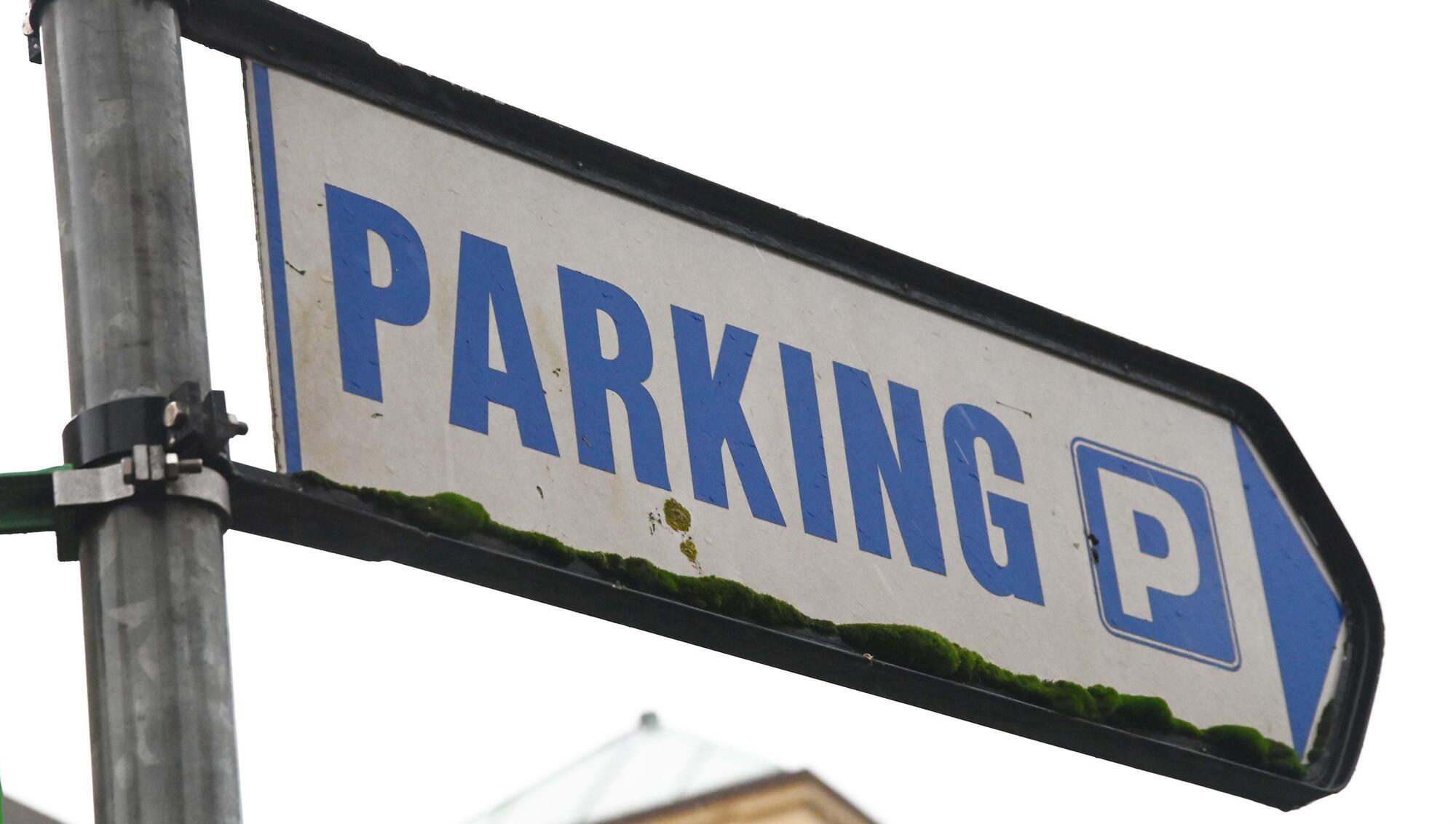
Paying for car parking is often cited by people as a particular disincentive for people thinking about going to Cork city centre. File picture: Denis Minihane

A true story.
A few years ago, when writing a book about Cork in the 80s (please, please, the statute of limitations — ed.) I was chatting to a businessman who had been working in the city for many years, and who could therefore offer a perspective generated by decades of experience.
Among his comments was a throwaway line about working in town: During the 70s, he said, it would have been unthinkable to spin in for a nine o’clock meeting in the South Mall, say, and not get parking right outside the building where the appointment was taking place.
As Flann O’Brien said, now seemingly things have changed.
Parking is an unusually emotive subject. Take the current trend for building apartment blocks without assigned parking spaces, which seems based on the premise that not giving residents a parking space will encourage them to cycle or use public transport.
That premise crumbles on its first encounter with reality, of course, because residents in such apartments bring their cars when they move in, which leads to more parking issues than ever before. Those vehicles need to be put somewhere.
Then there’s the financial aspect. Paying for car parking is often cited by people as a particular disincentive for people thinking about going to Cork city centre, for instance.
Read More
It’s persuasive when you consider how competitive parking costs are at out-of-town shopping centres, though competitive might be an overstatement when comparing the latter (absolutely free in most cases) and Cork city centre car park prices (absolutely astonishing in some cases: I forked out over €4.50 last week for a 20-minute stay).
In other jurisdictions this is also a challenge. Readers may recall a column I wrote a couple of years ago in which I mentioned Chicago, where in 2008 the local authority sold its 36,000 parking meters for a lease term of 75 years to a consortium of investors and got $1.1bn in return.
The only downside was that six months after the deal was signed, a report found that the real value of parking in the city over 75 years was between $2bn and $3bn, and the consortium that bought the rights earned its money back within 15 years. Those matters arose when I spoke to the great Henry Grabar about his book, .
While sharing nuggets about how to spot someone who’s walking back to their (parked) car so you can take their place (watch out for the clenched fist holding the keys) to the guesswork about the number of parking spots in the United States (unknown but probably well north of one billion), I asked Grabar one particular question about his own.
“I’m a moderately skilled parker,” he told me. “Our family car now is a Fiat 500, it’s very easy to park. If I drove a bigger car, I might have written a completely different book.” In retrospect, I admire Henry’s candour but I have regrets.
He expanded to say he’d grown up in New York, where parking spaces are at a premium — but I realise now I missed a trick. Not so much my own parking skills, of which more anon, but the lost opportunity here, one summed up by a couple of simple questions.
Can you park your car properly? Could you be the best car parker in Cork, in fact?
I have a very specific reason for asking, not as part of a general discussion of the concept, but because of an idea which came winging across the Atlantic courtesy of a pal who forwarded a piece in (online as phillymag) which carried this arresting intro.
“Are you a fantastic parallel parker? Can you squeeze your car into a tiny spot while stoop-sitters stare and the guy in the truck behind you screams a string of profanities? Oh! And here comes a dude on an e-bike in the middle of it all.
“If you’ve answered yes to these questions, you might be the ideal candidate for the first-ever, just-announced Philadelphia Parallel Parking Championship, which, yes, is a real thing, happening in South Philly this fall.”
The magazine spoke to Adam Wodka, who came up with the idea: “The way that the PPPA (Philadelphia Parallel Parking Association) views this is that all Philadelphians benefit by people in the city parking more efficiently so that we have more spots available on the streets for everybody, and being good at parallel parking so that they do it quickly and the cars can move through on one-way streets, and everybody’s happier.
“So the PPPA in general is, 'Hey, let’s provide resources and celebrate good parking' and then the PPPA Championship is about, 'Hey, who’s the best out there?' I want to know.” Wodka and his colleagues set up an online form, asking people to submit a short video or audio file making their case as the best parallel parker in the city and as someone who should compete in the contest proper.
They were hoping to get 10 to 20 entries but had 40 entries just two days after setting up the entry form.
The format? Competitors are judged on three different parking categories — one-shot, where you have one chance to park; the tight squeeze, where competitors try to slide into a spot with 12 inches’ clearance at either end; and under duress, when trash-talking by other competitors is “encouraged”, as Wodka put it.
This is intriguing to me first of all in the broadest sense: How parking feeds into our interactions in public, and how courtesy dictates those interactions (or lack of same), the unspoken rules of parking etiquette, what that reveals about our society.
But it’s far more intriguing in the narrower sense. Am I a better parker than you?
I’m not talking here about the people who beach their cars with impunity, as they’ll come to the fore when they reach their particular circle of hell. Near me every morning I see cars parked across double yellow lines across the brow of a hill outside a primary school, but that’s just . . . terrible parking.
Neither am I referring to what I like to call the Van Derogation, as in, I have a van and can park it anywhere because it’s a van.
No, I mean the hero who can slip a car into a tight spot halfway up a steep slope even though someone in shades and a baseball cap is inching an SUV past them even while they are reversing uphill.
I mean those who can take on a car park slot when the BMW in the next slot has its wheels over the dividing line. I refer to those who nestle their cars in designated spots rather than footpaths, gardens, public parks, or school entrances.
If that sounds like you, and you think you’re a better parker than me, get in touch and prove it. I promise not to trash talk while you put the car in reverse.
Unless I need to.

BLACK FRIDAY
Already a subscriber? Sign in

CONNECT WITH US TODAY



Be the first to know the latest news and updates