Michael Moynihan: Stewing in Cork City traffic leaves me longing for a ferry service
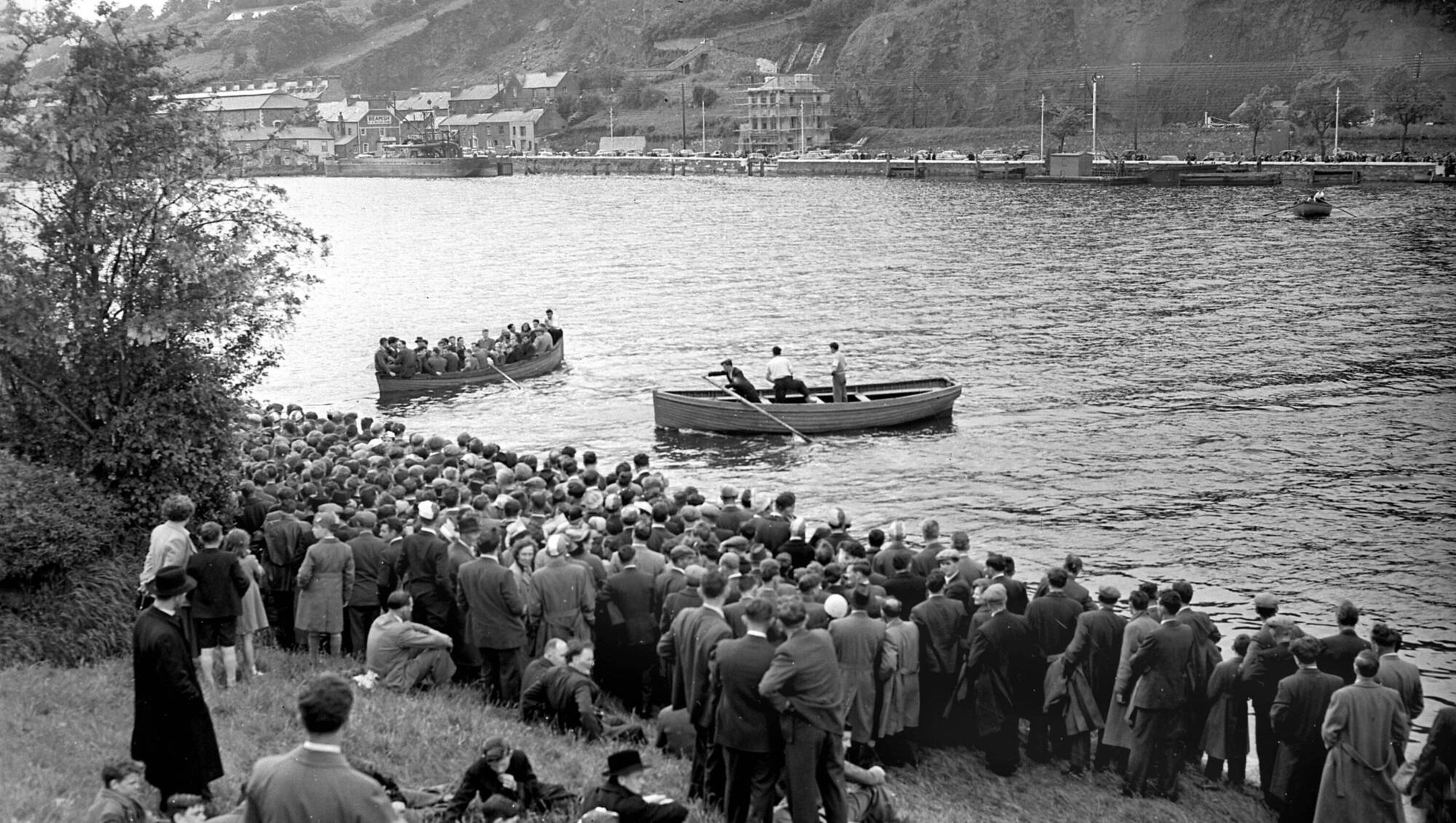
Crowds wait for the crossriver ferry at the Marina in Cork City in 1959. Kieran McCarthy wrote that this ferry service, which ran for decades, was at its peak during Cork’s tram era.

If you’re coming in the Lower Glanmire Road and you glance across the river at Pairc Ui Chaoimh — careful, that cycle lane pops up fast — it’s easy to mourn the absence of a bridge.
Your level of mourning may be directly related to the traffic you’re in, because that sector gets busy fast. At present a member of our household is prepping for French oral exams, and ways to éviter les embouteillages are being discussed at some length.
This proved unexpectedly relevant to a jaunt I took along the Lower Glanmire Road recently, because les embouteillages proved impossible to éviter. Hence the sad-eyed gazing across the river, though perhaps the river itself should have been my focus.
The North and South Channels of the Lee should surely have passenger ferries surging up and down their lengths at all hours of the day and night, no? I note with some interest that many a watery burg around the world is utilising its river and coastline to good effect, and there seems be a particular weapon of choice preferred by those cities.
Some of the new ferry services on offer favour electric vessels which use a hydrofoil, a kind of underwater wing which lifts the hull off the water surface once the vessel gathers speed. Take the Vessev VS-9, an electric battery-powered 10-passenger boat sailing the Potomac as it carries commuters around Washington DC.
“Don’t think of this as a ferry,” Vessev CEO and co-founder Eric Laakmann told media recently. “Think of it as a new mode of water transportation.” Is he right?
Read More
The hydrofoil means it doesn’t bounce up and down in the waves, which is good news for hungover commuters dreading the trip to work. The electric motor ensures there’s none of the rattling — or smoke, or odour — that you would expect from a diesel engine. Another plus.
Also, because the hull doesn’t plough through the water there’s little wake generated by the ferry. This is a more significant advantage than you might imagine. There are serious concerns in many cities around the world about the potential for erosion and damage to river frontage by the waves and wakes generated by large vessels.
The downsides? There’s one obvious issue with a hydrofoil: its vulnerability to floating debris, an ongoing challenge in Canadian waterways, for instance, given the prevalence of logging there.
The Vessey ferry model mentioned above only carries 10 people, which has led some people to describe it as more like a ride-share than a traditional ferry, though the company is working on a version which can carry 30 passengers.
Still, the rising price of diesel makes the electric option more and more attractive. The traditional ferry operating model — shortish hops across water from one landing spot to another — lends itself to ongoing charging.
The acid test is whether or not the ferry is a viable alternative to the traffic-choked roads of the cities which have embraced it. In that context it’s worth considering the experience in Stockholm.
One of its key ferry services is a 30-minute trip on the river which is very attractive when set alongside the equivalent car or bus, which takes an hour: most departures on the service are fully booked, unsurprisingly.
New York, another city with a central island surrounded by water, has gone back to the future with its ferry system. Its newest river service connects Staten Island to Brooklyn by boat for the first time since the mid-60s, when Verrazzano-Narrows Bridge opened and the 69th Street Ferry ceased operations as a consequence.
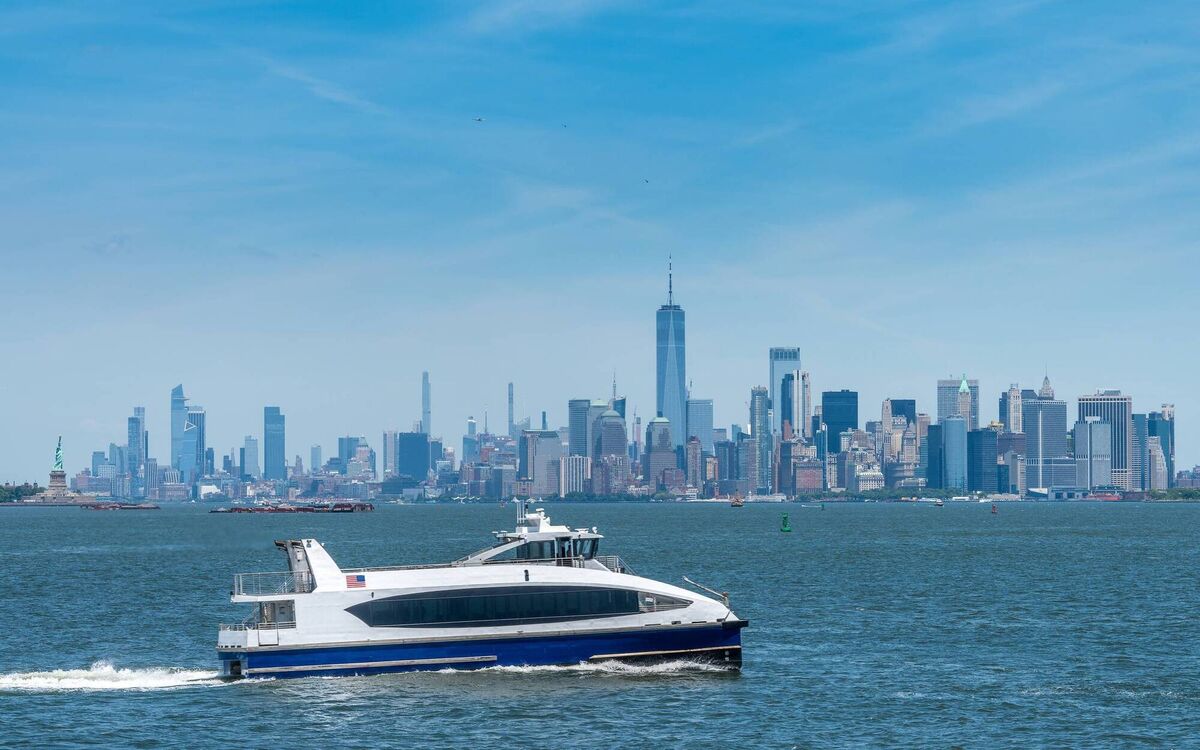
The New York ferry is clearly popular, with 25 landings and some 7.4 million boardings last year (it’s not clear if that number includes the IKEA free ferry service from Red Hook to Manhattan, mind).
It’s also subsidised by the city of New York. Should we encourage the same here?
Not in the immediate future, it seems. As reported earlier this year by Donal O’Keeffe: “An €80m zero-emissions passenger ferry service planned for Cork Harbour is — for now — dead in the water, the man who floated the idea one year ago has confirmed.
"Aidan Coffey, the chief executive of Portus Greenway Ltd, trading as Harbour Link, said that the decision to halt the proposed all-electric ferry was caused by Cork City Council’s decision to commission a study into river usage in the city.
“Mr Coffey also cited Cork City Council’s plan for the construction of three new bridges across the River Lee as a complicating factor.”
Clearly it would make no sense to grant permission for a ferry service without evaluating the pros and cons, but this seems a missed opportunity. It’s also a little different to how the local authority used to work with river services.
Thanks to the fantastic work done by Kieran McCarthy over the years we know that there was a time when Cork used the North and South Channels of the Lee for transport. Over 100 years ago there were several ferries operating in the city, including services from Sunday’s Well over to Ferry Walk, from St Patrick’s Quay to Anderson’s Quay, and from Penrose Quay to Victoria Quay.
There was another ferry, in fact, which had the official approval of what was then Cork Corporation, established by the O’Shea family in 1844, and which carried passengers from the Lower Glanmire Road across to the Marina.
Kieran wrote that this ferry service, which ran for decades, was at its peak during Cork’s tram era, which lasted to 1931. At first glance this sounds almost counter-intuitive, that one transport system would benefit a completely different system, but the Cork public embraced both enthusiastically. Almost every tram which went to Tivoli had passengers who would then cross the river via ferry to the Marina.
Though the ferry service was often associated with big GAA games in the old Athletic Grounds, the service was also used by people in the locality — from Lover’s Walk up to Dillon’s Cross and beyond, until it stopped operating in 1961 due to rising costs, with insurance a particular headache.
For the poor souls stranded on the old tram route along the Lower Glanmire Road in bumper-to-bumper traffic these days this must sound like science fiction, an unimaginable feat of engineering.
It’s difficult to know whether to admire those who put that system into operation or just stew in our own envy as we await today’s equivalent developments. I refer to the Cork light rail project (no laughing at the back), the Bus Connects plan (seriously, settle down), and the Cork North Ring Road (what’s the point, knock yourselves out). As for the three bridges mooted for the river...
It’s startling to consider that over 100 years ago — in the 19th century, in fact — Cork had an integrated transport system which incorporated travel by land and over water. At this rate it’ll be the end of the 21st century before we see anything similar.

CONNECT WITH US TODAY



Be the first to know the latest news and updates