Sarah Harte: Boys need as many allies as they can get — for all our sakes
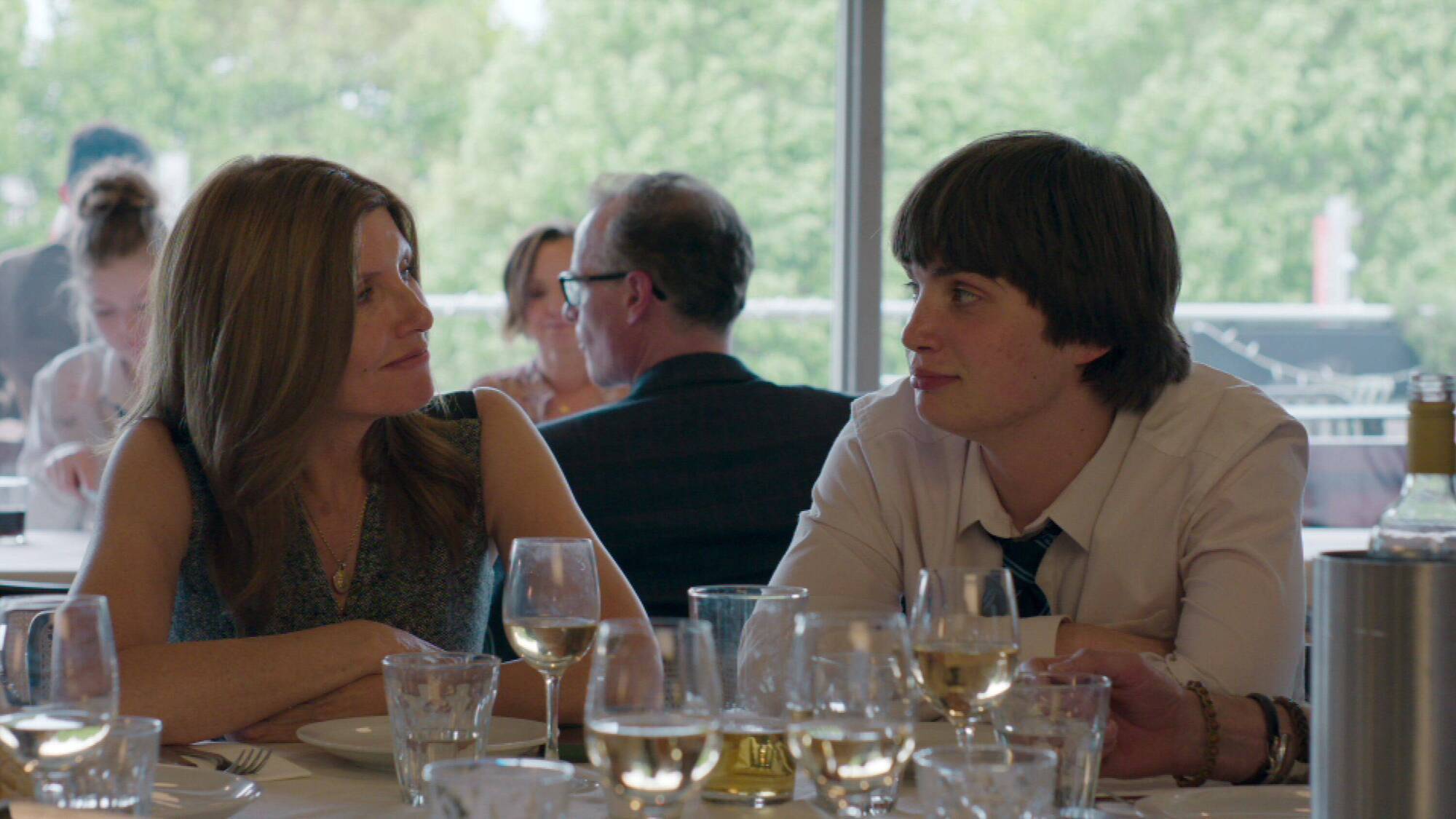
Sharon Horgan and Aran Murphy in 'Youth' which has looked at ideas of masculinity and how young men cast about looking for an identity. Photo: Colin Hutton/HBO

Mothers and sons famously often have a close relationship. I’m biased because I don’t have daughters, but some mothers who love their daughters and sons equally will say that there’s something special about having the hot, heavy, trusting arm of a small son around your neck.
Hopefully, you’re not imagining a Norman Bates scenario or a mother who views her son as a crypto-surrogate partner or who favours sons because of some internalised misogyny.
However, that bond between mother and son can shift at times, particularly during adolescence. There’s a point in the mid-teens when delivering life lessons to sons as a mother, particularly if you mention the word feminism, means you end up on the receiving end of a ‘make it stop’ face.
Teenage boys may love their mothers and yet think: "Mum’s a good egg. She makes my dinner, washes my gear, makes me do my lessons, which I hate but which might benefit me in the long run, but how much does she know about life? I turn off the volume in my head when she drones on about that feminism stuff because it’s incredibly boring and has nothing to do with me. I wish that she would stick to Mum stuff."
This is why boys need male mentors during adolescence. Perhaps now more than ever. The unpalatable truth is that raising boys is more complicated thanks to the ubiquity of social media and the proliferation of readily accessible porn.
You’re no longer simply up against what the male testosterone-fuelled pack says on the edge of a pitch or while necking beers in the bushes. Bad actors are clamouring for your son’s attention.
Read More
Over the lifespan of this column, I’ve been accused of being a feminazi or a man-hater. Nothing could be further from the truth.
I feel incredibly sorry for boys living in a confusing world of impossible masculinity with high-profile male "pussy-grabbing" bad actors modelling a horrible version of maleness.
They contend with malign male influencers trying to cash in on their youthful vulnerability, selling false promises under the self-help and motivation banner, including tips on how to get wealthy and looksmaxxing.
There’s something sad about contemplating young male minds being corrupted by cynical, deeply inadequate, cash-hungry males who hock their pathetic brand of misogyny.
The messages of these dangerous fools are laughable if you’re a rational adult, but not necessarily so when, as a teenager, you try and figure out who you are, and where you might find a tribe.
On International Men’s Day, the report was released by The White Ribbon Campaign. The study was conducted on behalf of the Men’s Development Movement, which does pioneering work, including with the GAA to challenge harmful norms.
There were positives in the report. It found that 70% of respondents agreed that gender equality benefits both men and women, while 93% believed partners should share caring responsibilities equally. The sample was small, comprising 1,011 respondents, but you must take the wins where you get them.
However, as reported in the Irish Examiner, the report revealed that 40% of people believe the digital world, meaning primarily social media (28%) and online personalities (12%), is the most dominant influence on young men aged 18 to 34, ahead of friends, family, schools and clubs, which is obviously a cause for concern.
It also points to how the pressures associated with traditional ideas of masculinity are rife. The theme recently cropped up in Sharon Horgan’s drama, ‘Youth’, about a mother and her teenage son. The boy is a good lad but, casting about for an identity to hang his hat on, looks to male influencers. His own father is largely absent.
One thing that stood out was that when the report was released, Sean Cooke, CEO of the Men’s Development Network, said that men had a lot to contribute to the conversation on equality but needed reassurance that their contribution was welcome.
It’s easy to imagine that they would. Let’s say you’re a boy growing up, and you perceive that men are being stereotyped as violent potential rapists and toxic misogynists; then your back is automatically up.
Boys should be allowed to be boys; traditional masculinity in some of its iterations is not necessarily toxic masculinity; actually the opposite. And we can help boys question and reshape more harmful beliefs without making them into girls. Boys, as is evident in the teen years, are often built differently.
At a conference, Dr Kenny Doyle, also of the Men’s Development Network, spoke in Waterford about engaging men and boys in being part of the solution to prevent gender-based violence.
He used a powerful phrase: "invite, not indict", which, as he acknowledged, American activist Jackson Katz uses. Katz is known in particular circles as somebody who tries to engage or encourage men and boys to become part of the solution to gender-based violence and to avoid making them feel collectively blamed for the problem.
Katz, in turn, credits the American campaigner Esta Soler with coining the phrase. It doesn’t matter who coined the phrase. The point is that we walk a tightrope in challenging harmful attitudes and behaviours without making boys feel their identity is under attack.
I’m not sure we’ve been good at that. If we fail at celebrating men for their authentic selves, we risk losing them to male influencers.
All of this raises the question of investigating what boys need from us. And by us, I mean parents, the broader culture, and society.
I hesitate to say teachers, although they’re part of the picture, but my fellow columnist Jennifer Horgan has made the point that schools and teachers are being asked to do too much. And she’s right.
Solutions-wise, I think Sean Cooke is right when he says frank conversations start at the kitchen table as well as in other settings. We must have the difficult conversations as parents, including probing who they might be listening to so we can deconstruct those narratives.
It’s tricky work. Ralph Waldo Emerson, the American intellectual, once wrote: "Men are what their mothers made them". To a point, yes. But sometimes, men must deliver the messages to boys about what it means to be a man.
Gender-based violence and sexism are rooted in a particular type of male culture. This can’t be reversed without men lending their voices to the fray.
And it’s not just about countering sexism for girls’ sake. It’s about figuring out what works for boys as fully rounded human beings who positively contribute to society and enjoy their lives.
The good news is that committed men already act as positive role models, pulling boys back from the brink and speaking the language of community, meaning men and women, boys and girls, not a them-versus-us mentality.
Hopefully, more men will join their ranks because boys need as many allies as they can get. It can only benefit us all.

BLACK FRIDAY
Already a subscriber? Sign in

CONNECT WITH US TODAY



Be the first to know the latest news and updates