Jennifer Horgan: Ireland must step up on HIV and right the wrongs of the past
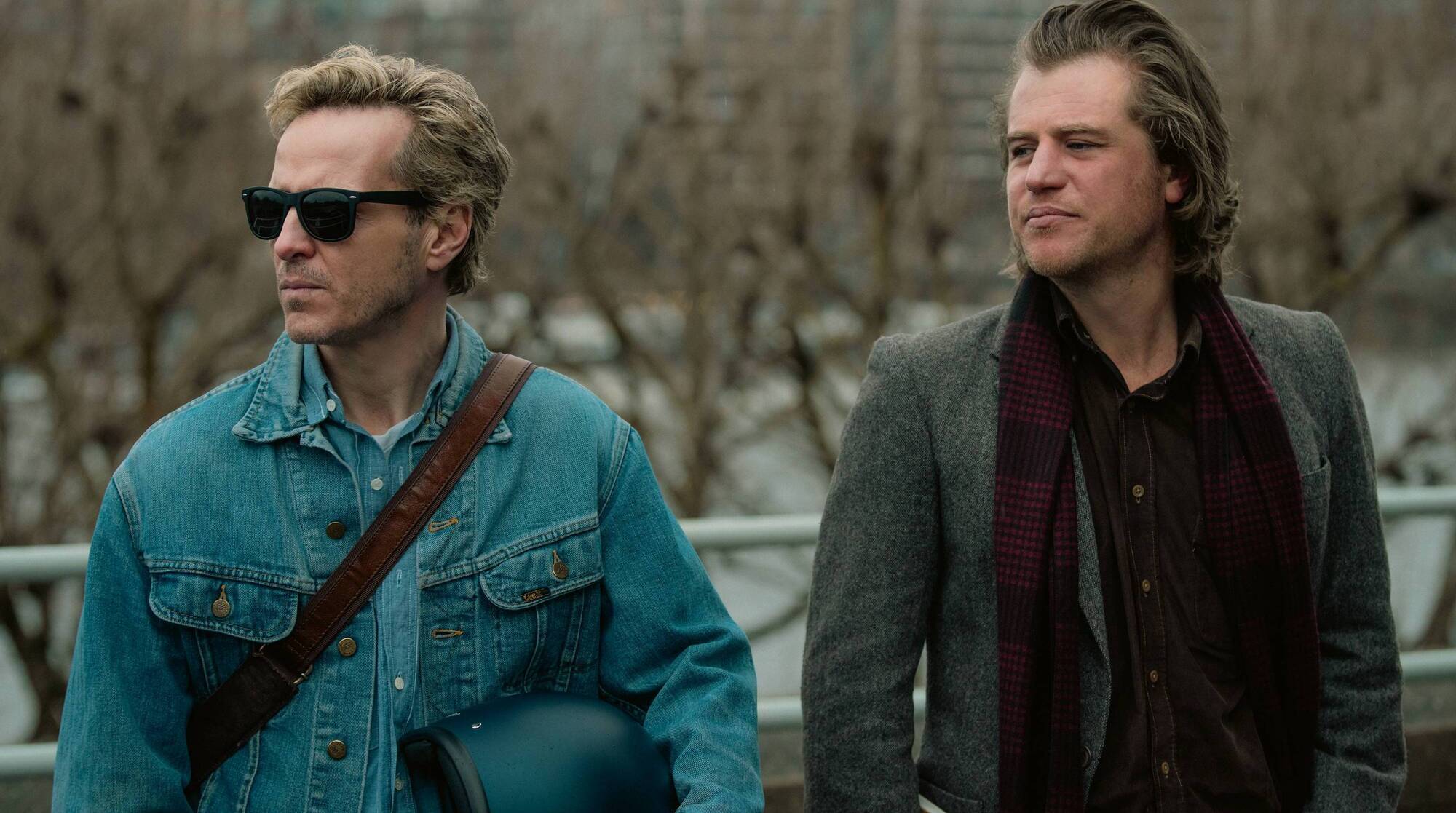
Andrew Scott (left) as Ian Charleson and Johnny Flynn as Richard Eyre in 'Elsinore'. A person in Ireland in 1990 could not have hoped for the same care we see Ian Charleson receiving in Elsinore. Photo: Anthony Dickenson / Focus Features / STUDIOCANAL

I’m thrilled for Andrew Scott. His presence at awards season (the Dubliner is tipped to win an Oscar for ) is much needed within an increasingly heteronormative industry.
Scott is more than an actor; he is an activist questioning why people still refer to actors as "openly gay". With enviable charm, he pushes against the establishment, and that is worth more than the weight of any potential gong — even the bronzed fella!
It’s also significant that Andrew Scott is an Irish actor playing a man dying from AIDS. According to former Catholic priest, Bernárd Lynch, who I spoke with this week, many of the people who died, alongside Ian Charleson in London’s AIDS wards, were Irish.
Lynch deserves his own film, by the way, but in summary he was the man once known as the "gay priest", or the "AIDS" priest, famously appearing on in 1987 to inform the Irish public about his experiences caring for AIDS patients in New York City.
His descriptions were stark. He described searching for volunteers to hold babies born with HIV. He described Irish mothers arriving in America to find out their children were gay and dying in hospital wards there.
“Are you a homosexual, Father?” Gay Byrne asked him. Lynch’s reply: “No.” “I had to ask that in the context of what we are talking about,” added the presenter.
Read More
Their exchange is recorded in , a play by Philip McMahon that explores the tragedy of a young Irish man’s death from AIDS in Paris. It was this play, and my excitement over the release of , that led me to interview Bernárd Lynch.
In 1987, Lynch was "openly gay", at least to his family, but he lied to Gay Byrne.
Lynch explains:
Lynch believes that HIV is still the only virus in the world without compassion.
“This is still the only sickness you can get and be hated for who you are, and loved for who you are not. It is still shrouded in shame and guilt. Even now, decades later, there are Irish people who simply won’t talk about the loved ones they lost.” And often those loved ones died abroad.
“They all left Ireland, gay men and women, because there was no room, no love, no compassion for them at home. They came to London for healthcare. They even opened a ward in Holyhead just for the sick Irish coming off the boat.”
Lynch is correct that healthcare arrived far too late here, far later than in England, where homosexuality had been decriminalised earlier too. A person in Ireland in 1990 could not have hoped for the same care we see Ian Charleson receiving in , Olivia Coleman playing his compassionate doctor.
This was largely down to the influence of the Catholic Church, says Lynch, and the fight for compassion is far from being over.
“December 1st is International AIDS day and last December was the very first time the Irish Embassy in London had an outreach for people living with HIV, an event to also commemorate the many Irish lives lost here.”
The statistics back Lynch’s assertion that Irish people still struggle to be transparent about the virus. HIV Ireland committed to ending new transmissions of HIV by 2030 but reports last summer warn they’re at risk of not meeting their target.
There are rising cases of HIV in certain demographics, with unacceptable levels of late diagnosis. People seeking pre-exposure prophylaxis (PrEP) are waiting up to a year. People are looking to protect themselves and they are being told to get in line for months.
The stigma lingers, and the silence, and so healthy people today will contract the virus tomorrow. Ireland is clearly in need of a national action plan for HIV; we still don’t have one.
Lynch lays the blame at the door of the Catholic Church, the institution that sacked him in the 80s for educating people about safe sex. “They still believe it is disordered. They still believe homosexuals are doing evil.”
Lynch’s comments are interesting given the votes cast at the National Synodal Assembly that met last weekend to consider 35 proposals to guide the future of the Catholic Church in Ireland.
Proposal Two reads as follows: This Assembly recommends that the Church in Ireland would ask the universal Church to develop a more respectful and life-giving vocabulary when speaking about LGBTQ+ people.
26% voted that the proposal required further discernment. 13% voted against it.
Close to 40% of the people gathered failed to support a motion to recognise the inherent human worth of members of the LGBT+ community. 42% of those assembled also voted against women taking on roles currently monopolised by men.
Bernárd Lynch sees link between the two proposals.
He continues: “What is the worst thing a little boy can be? A sissy! And what is the worst thing a man can do when having sex — be as passive as a woman.” In fact, it was not his own sexuality but his disgust at the institution’s heinous treatment of women that first made him question his role as a Catholic priest.
“I was only 24, working as a priest in Knock and I was hearing confessions. Women came to confession far more often than men, and again and again I was hearing women asking for forgiveness because they couldn’t bear the thought of another child.
"They told me about their husbands coming in the door drunk at night, demanding sex. I thought it was pure madness, how the Church was telling these women to keep on having children. It made no sense to me. I thought to myself, if there is a god who believes in this, that god should be hated.”
A lot has changed since 1987, and since those women lined up for confession, and perhaps people in Ireland simply weren’t ready to hear what Bernárd Lynch was telling them 40 years ago. Are we ready now? And if we are not, why not?
Is our failure to care for gay people, and for all people suffering from HIV, linked to misogyny, as Lynch suggests? Ireland’s overall HIV rate (18.8 per 100,000) was the second‑highest in Europe in 2024. Numbers remain high. Hundreds of people are stuck on waiting lists.
Given the lonely deaths suffered by Irish people all those decades ago, away from home, from family and love, given all that, shouldn’t we be doing better with the virus now? Bernárd Lynch believes that time is on love’s side — Is Ireland?
I hope Andrew Scott’s portrayal of Ian Charleson in achieves more than an Oscar win. I hope it compels the Irish government to right the wrongs of a terrible past.

CONNECT WITH US TODAY



Be the first to know the latest news and updates