Fergus Finlay: Hard lessons of the past mean there's no room for radical budget

Then finance minister Charlie McCreevy gets ready for the budget celebration in November 1999. Picture: Charlie Collins

Heavens above, it’s Budget Day today. It’s the day when a government that has more money than any government in our entire history is going to be recorded as presiding over an anti-climactic event that pleases almost no one.
It might well be written in historic tomes of the future that “never, in the history of human endeavour, has a government with so much money disappointed so many of its people”.
At the end of today, the entire cabinet is going to go to bed tonight wondering what the hell is wrong with us, and how did we become such an ungrateful lot.
They have no one to blame but themselves. Virtually every jot and tittle of the budget has been leaked in advance. Back in my day, revealing even a scintilla of the budget before the minister took to his feet in the Dáil chamber was a capital offence, which cost the jobs of at least a couple of junior ministers. Nowadays, leaks appear to be mandatory.
The leaks have been used for most of the summer by the two parties in Government to stoke up expectations and score points off each other. It got so bad as the summer went on that we’ve even ended up with some stories about relationships breaking down and political instability beginning to emerge.
Read More
I listened to the normally unflappable (about this stuff, anyway) Brendan O’Connor telling his panel on the radio on Sunday that we’re used to argy-bargy in the run-up to the budget, but this looked more serious. And the panel agreed.
Lookit. One of the iron rules about politics is that no government is ever as stable, or as unstable, as it looks from the outside. When everything looks tickety-boo, you can be certain there’s a time-bomb (probably that no-one has spotted yet) ticking away somewhere in the undergrowth.
But when it looks like ministers are at each other’s throats, you can be equally certain there is someone working really hard to ensure petulance doesn’t become distrust.
But governments don’t fall apart because people detest each other. It’s only when trust breaks down between parties or leaders that a deadly iron enters the soul of a government.
Micheál Martin has been there in the past and probably owns a few tee shirts. He’s the last person to allow his Government to fall apart because of pre-budget skirmishes. Especially when they’re about nothing at all in real terms.
Both parties in Government are trying to claim territory — rolling the pitch they call it in British politics, so both can claim ownership of the budget if it’s popular. And, of course, can surreptitiously blame the other crowd if it bombs.
But today’s budget will neither bomb nor excite. That’s because, when all is said and done, it has essentially been written by the civil service. Yes, ministers (especially in Health) have had to fight battles to protect their budgets, but the civil service has been concerned with solidity and stability.
They (just like the politicians) can’t predict the future when it comes to corporate taxation, so they’re not going to allow anyone to go mad if they can help it.
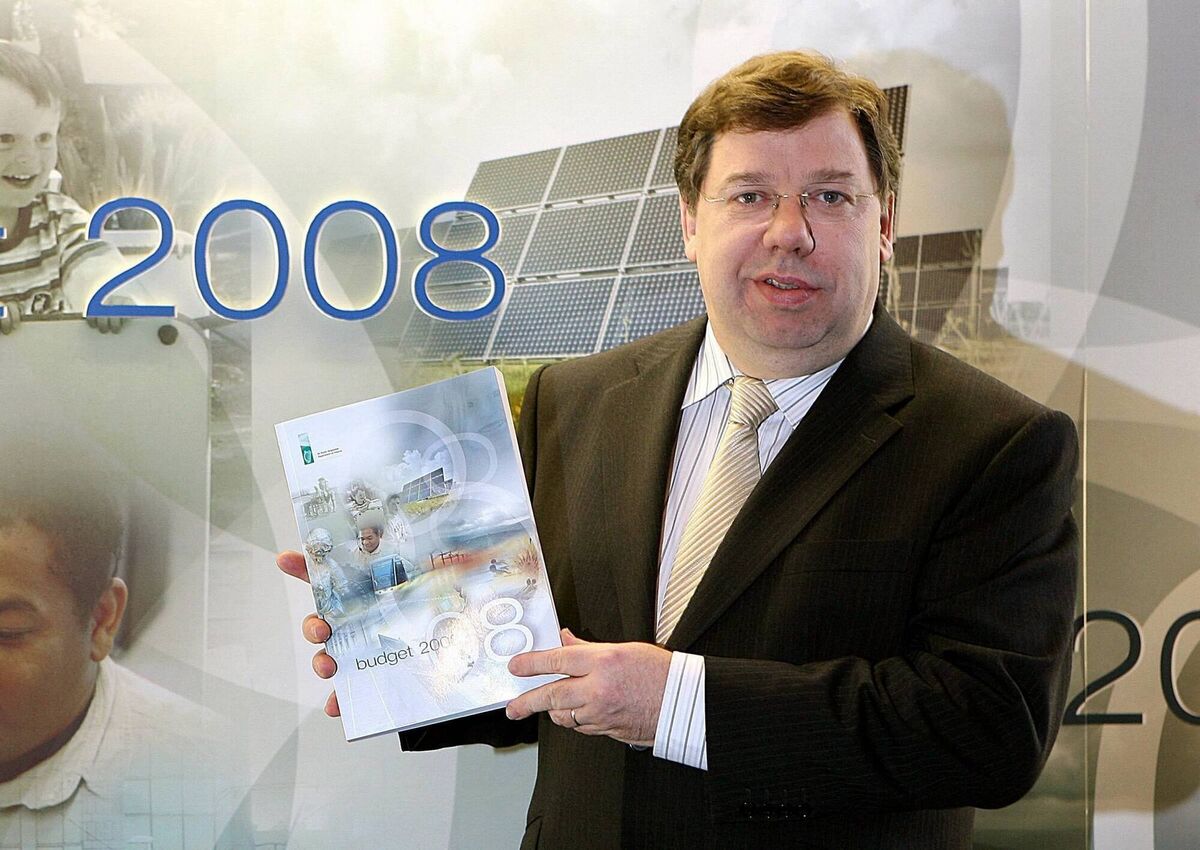
It’s actually been many a year since we had a purely political budget, which is to say a budget remembered because of the personality or ideology of the minister for finance. I’m old enough (just about) to remember when Charlie Haughey introduced free travel for old age pensioners. It was so wildly popular he repeated the act a year or two later with the tax exemption for works of art and literature.
Since then, radical ministers have been thin on the ground, and popular radical Fine Gael ministers a lot less so. We had Richie Ryan in the 70s, Alan Dukes and John Bruton in the 80s, no FG finance minister in the 90s, and Michael Noonan after the crash.
Fianna Fáil ministers for finance (with the obvious exception of Ray MacSharry) were always much better at combining whatever taste for radicalism they had with the hunt for popularity. In their days, Bertie Ahern, Charlie McCreevy and Brian Cowen had all the popularity of a spendthrift and tipsy uncle, always ready to be parted from his cash (sorry, our cash) at the drop of a hat.
They gave us the good times, and they promised us the good times would never end. Cuts in corporation tax and the higher personal tax rates were accompanied by incentives for builders to build anything anywhere.
Most of the better-off people in the country were made better-off still by the famous SSIAs, and the lower orders were bought off with social welfare increases and massive increases in child benefit (which were nearly always paid out within days of the next general election.)
On and on it went. Throughout that entire period, as Bertie once said, the boom times got boomier. And then the combined efforts of a suite of radical, and radically popular, Fianna Fáil ministers all landed in the lap of the unfortunate Brian Lenihan.
In one unforgettable budget speech, which he described as a call to patriotism, he undid every single one of the radical and popular measures of all his predecessors, and launched a decade of austerity, the real legacy of all the other madly popular budgets.
So, whether the radicals want to build popularity or just to dish out hard medicine, their radical budgets, sooner or later, end in disaster. Which is why this afternoon’s budget will be a damp squib.
Ever since the days when we used to party, the system will allow ministers to offer us things that might look radical but are actually just shiny. No government I can imagine in the near future will be allowed to gamble with the wider economy.
At one level, that’s a tragedy. There is enough money available to really focus on one thing. A real childcare budget, for instance, that invested a couple of billion in the development of community based creche facilities, could make a lasting and deep difference. That would require planning and preparation of course, but it would also need imagination.
But the hard lessons of the past, especially the fairly recent past, mean no room for radical change now. A little bit of this, a little bit of that. Never enough to leave anyone properly satisfied. Always something to irritate and exasperate us. And then it will be over.
In a week or so, none of us will remember what was in this budget or how we should really describe it. The Department of Finance will heave a sigh of relief because nobody went mad on their watch. And after we’ve digested it all, the rest of us will wonder what the fuss was all about.


CONNECT WITH US TODAY



Be the first to know the latest news and updates