Colin Sheridan: What Jason Arday’s death and ‘reputational warfare’ should teach Ireland
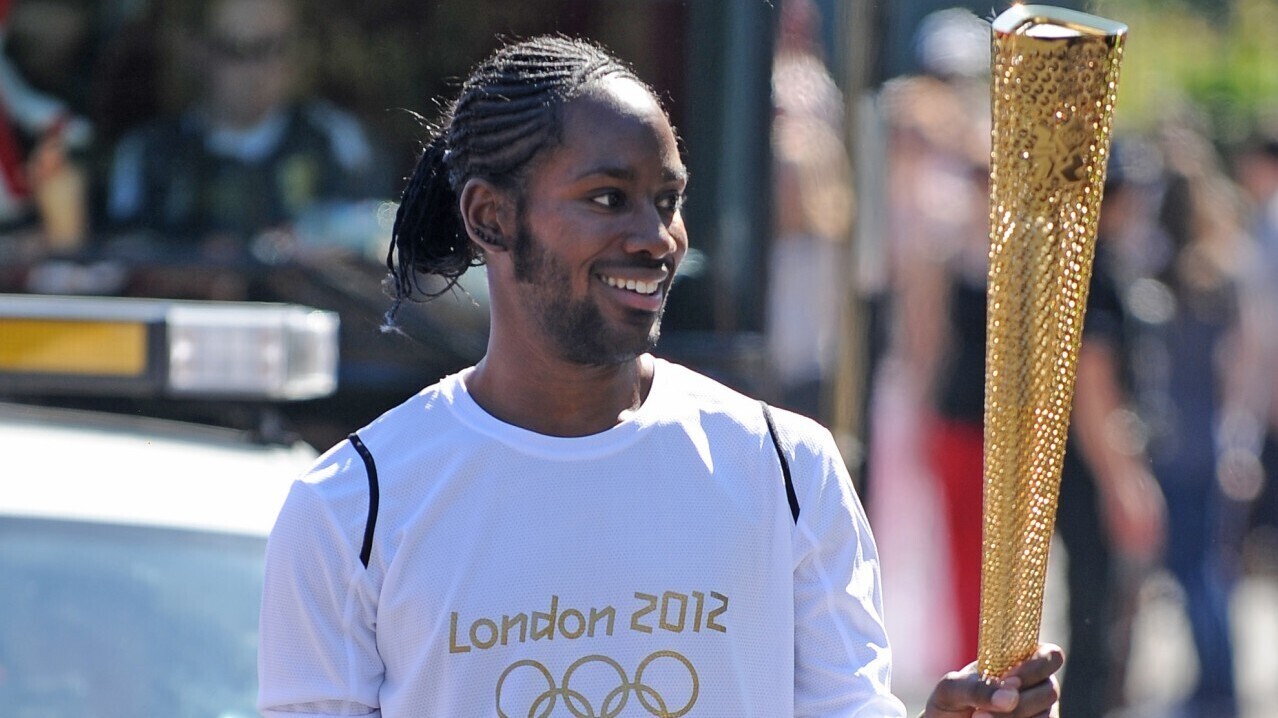
Professor Jason Arday, Cambridge’s youngest Black professor, resigned amid intense scrutiny of his work and personal history before his sudden death last month at 41. File photo: Joe Giddens/LOCOG/PA

Jason Arday never worked in an Irish university. His extraordinary rise and tragic fall belonged to Britain. Yet Ireland should not look away.
Arday, Cambridge’s youngest Black professor, resigned amid intense scrutiny of his work and personal history before his sudden death last month at 41. The lesson for Ireland concerns a form of reputational warfare for which our institutions are likely unprepared.
The future target may be Irish, but the mob won’t be. We have already seen warning signs. During this year’s Galway West by-election, the Hope and Courage Collective recorded sustained racist and xenophobic abuse directed at Labour’s Helen Ogbu, subsequently elected Mayor of Galway.
Remarkably, one US-based social-media account masquerading as Irish was responsible for a significant proportion of the material recorded.
Ogbu has since faced intense scrutiny over an inaccurate story on her website which said she came to Ireland following the assassination of her husband. She actually arrived in 2005; Sunny Ogbu was murdered in Nigeria five years later.
It was wrong. It was legitimate journalism to establish that. Ogbu apologised and Labour accepted responsibility. Context does not make something untrue become true. But context matters.
Ogbu has spent years in community and social justice work and has fostered dozens of children. That record does not purchase immunity from scrutiny. It does belong in any reasonable assessment of whether one mistake defines an entire person, especially somebody of a different race.
We routinely afford that context to established public figures. Why do mistakes made by some people remain “just” mistakes, while missteps by others become “compelling evidence” that the person themselves is somehow fraudulent?
Jason Arday’s tragedy should make Irish journalism particularly uncomfortable about that question. His public persecution did not originate organically in a British newsroom.
Stéphanie Lamy’s forensic investigation for Mediapart traces the pursuit back years, through academics and thinktanks examining Arday’s work, freedom-of-information requests, complaints to journals and universities and, eventually, an international ecosystem of anti-DEI campaigners, social-media amplifiers and proponents of so-called race science.
Among the most important was Nathan Cofnas. It is inadequate to describe Cofnas merely as an academic critic of Arday. Cofnas describes himself as a hereditarian.
He has argued that genetic differences contribute to racial differences in intelligence and that without diversity policies Black representation among professors at elite institutions such as Harvard would approach zero.
Race tells us nothing about somebody’s innate intellectual capacity. It does tell us an enormous amount about the opportunities they receive, the discrimination they experience and the suspicion with which their achievements are regarded.
Arday’s papers were picked apart like the carcass of a dead animal. Then his doctorate. His CV. His charity work. His football. His marathon running. His biography. Accusations accumulated faster than their resolution.
Collectively they constructed a devastating picture: fabulist, fraud, beneficiary of DEI indulgence. But examine those claims individually and the picture becomes considerably less convenient.
The much-mocked central claim that Arday completed 30 marathons in 35 days appears, from contemporaneous evidence subsequently examined, to have been true. Two of his 33 peer-reviewed papers required corrections; neither was retracted.
His former university stood by his doctorate following scrutiny of plagiarism allegations. The University of Bath apologised after discovering that claims it had published about professional football and snooker had inaccurately represented what Arday himself had said.
And then consider Peter Mandelson.
While academics and journalists violently pursued Arday through his doctorate, publications, CV, charity work, football and recreational running, Britain’s security vetting agency recommended that Mandelson be denied Developed Vetting before becoming ambassador to Washington.
He received the clearance anyway. If only the British state and press had shown as much curiosity about the man it was sending to Washington as others displayed about how quickly Jason Arday ran a marathon.
Because allegations have an asymmetrical relationship with truth. The allegation is shared thousands of times. The correction sits patiently on a website waiting for somebody sufficiently interested to find it.
And this is where the Arday tragedy becomes an Irish story. A sophisticated reputational campaign does not need to invent everything. It needs only to find something. An erroneous citation. An inaccurate biography. An exaggerated achievement. A stupid decade-old tweet.
Then remove proportion. Then — what's that old saying — you can “smear the bejaysus” out of someone. Aggregate. Repeat. Amplify. A posh sounding suit with a large following starts “asking questions”. A newspaper reports that questions are being asked.
An institution responds to the coverage by announcing an investigation. Suddenly the investigation itself becomes evidence that the original allegation must have been serious. The campaign manufactures its own legitimacy.
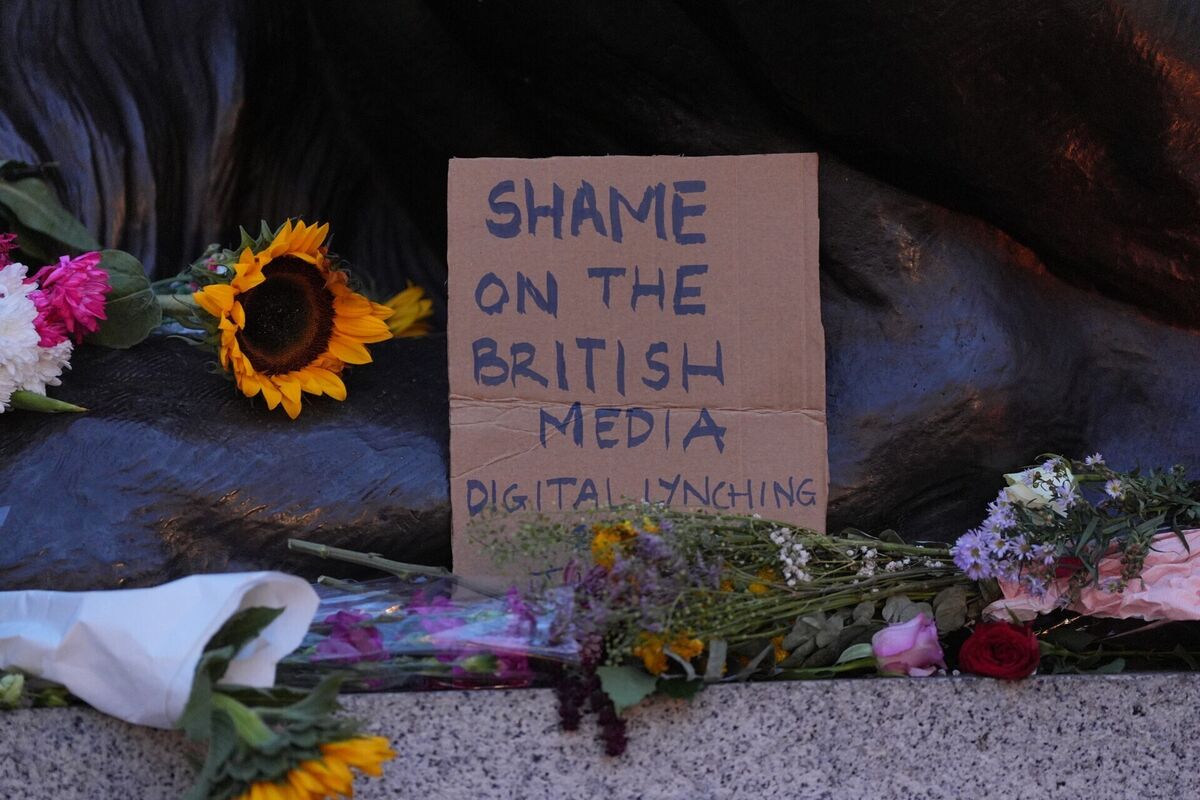
Social media is already a racial battleground in Ireland. Ogbu knows that. Dr Ebun Joseph, Ireland’s special rapporteur on racial equality and racism, has spoken about the hostility generated by her work. But anonymous racism is almost the easy part. We recognise a racial slur.
The more difficult moment comes when the dossier lands on an editor’s desk. Or in a university president’s inbox. Or when an Irish academic of colour discovers that strangers across several countries are crowdsourcing their publications, CV and personal history, searching for something that will demonstrate they never deserved their position in the first place.
What do our institutions do then? Investigate. Of course they investigate. But investigate in both directions. Is the allegation true? Who assembled it? Why? What do they believe? Whom else have they targeted? Is the scrutiny remotely proportionate to the alleged wrongdoing?
Asking those questions is not refusing to investigate. It is investigating properly.
Ireland is uniquely vulnerable to a globalised culture war. Overnight, a Black Irish academic or politician can be weaponised into content for an international outrage machine. The mob is global, but the target — and the real-world harm — remains distinctly Irish.
Jason Arday repeatedly said that what was happening to him was racist and ableist. Yet extraordinary energy went into investigating him while considerably less attention was devoted to the ideology, networks and motivations of some of those pursuing him.
That is the warning Ireland has received in time.
We cannot stop online hostility, nor should anyone be immune from legitimate scrutiny. But Irish journalism and academia control whether they become unwitting participants. When the next dossier arrives, we must investigate not just the person inside it, but the people who put them there.

CONNECT WITH US TODAY



Be the first to know the latest news and updates