Anti-immigrant extremists radicalised men who planned to bomb Galway mosque
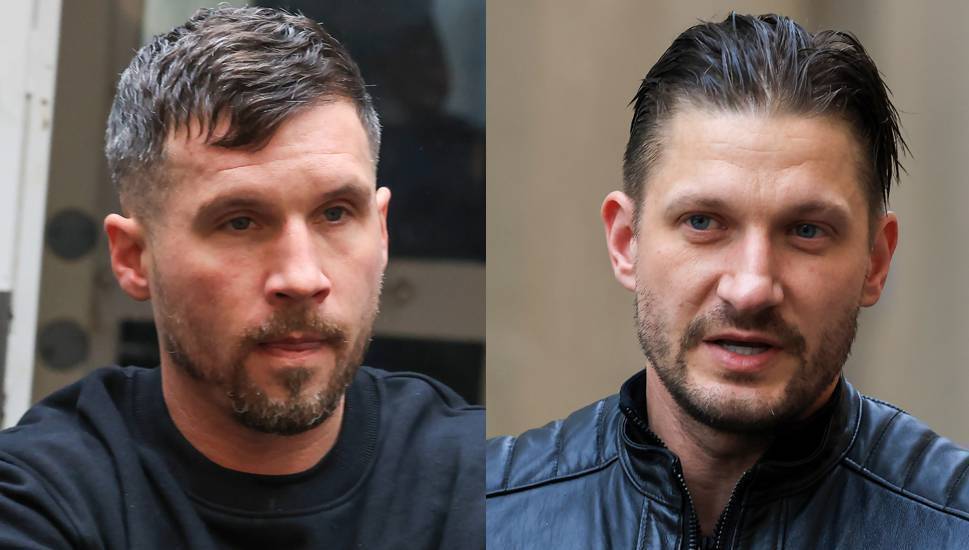
Garrett Pollock (left) and Karolis Peckauskas (right). Picture: Colin Keegan, Collins, Dublin.
Two men who planned to attack a Galway mosque using improvised explosive devices (IEDs) have claimed they were radicalised by anti-immigrant groups, but have since distanced themselves from those influences.
The three-judge court heard pleas in mitigation for two of the three would-be mosque bombers, Garrett Pollock, 36, and Darren Gorman, 34. Karolis Peckauskas, 39, offered an apology earlier this week, saying he had also been radicalised by online groups.
Peckauskas, with an address at Newfoundwell Road, Drogheda, Co Louth, previously pleaded guilty to a charge of attempting to engage in a terrorist activity or a terrorist-linked activity.
The details of the offence are that between November 4 and 5, 2025, the defendants attempted to engage in terrorist activity or terrorist-linked activity by attempting to set fire to the Maryam Mosque at Old Cottages, Monivea Road, Galway, an offence which was aggravated by hatred.
Gorman, of O’Moore Place, Portlaoise, Co Laois, and Pollock, of Kilhorne Greene, Annalong, Co Down, both pleaded guilty to the same offence.
Read More
The three-judge court previously heard that the plot was foiled when gardaí carrying out a routine drug stop became suspicious and searched the car that Pollock and Peckauskas were travelling in. In the boot, gardaí discovered bomb-making equipment along with a manifesto for a group calling itself the Irish Defence Army, complete with crests and logos.
They also discovered a statement written in the past tense claiming responsibility for bombing the Galway mosque.
Barrister Kevin White, for Pollock, said his client is deeply ashamed of his behaviour, apologises "unreservedly" to everyone impacted and accepts that what he did was wrong, criminal, and offensive.
Mr White said he had sought a report from a psychiatrist to try to understand why Pollock, who has no history of violence or political activism, would find himself before a court for this offence. The report states that Pollock had a dysfunctional childhood and struggled in school.
He has worked as a gym instructor, but in 2024, he started abusing alcohol and cocaine and lost his job following a relationship breakdown.
He began spending hours online consuming radical content, including material about immigrants committing sexual assaults or posing a threat to the Irish community. Much of the content, Mr White said, appeared to be AI-generated and was emotive and ill-informed.
Pollock began communicating with people associated with the Irish Citizen's Army, a radical anti-immigrant group. He was invited into smaller, more radicalised groups where he discovered a sense of belonging and respect, and wanted to show his new comrades that he was committed to the cause, counsel said.
Barrister Marc Thompson, for Gorman, said a psychologist had found his client to be vulnerable and diagnosed him with "extreme submissiveness". Gorman has no history of violence, aggression or hatred and "certainly no history of terrorism," Mr Thompson said.
The psychologist's report had also found that Gorman is at low risk of future violence but that risk becomes moderate to high if he re-encounters radical influences or suffers a substance abuse relapse.
Mr Thompson said Gorman is a drug addict with mental health difficulties but he is trying to deal with his issues and has been drug-free throughout his period on bail ahead of today's sentencing hearing.
Mr Thompson said Gorman has not made contact with any radical influences and asked the court to structure his sentence "to allow light at the end of the tunnel".
Ms Justice Caroline Biggs, sitting with Judge Sarah Berkeley and Judge Kevin Staunton, adjourned sentencing until October 13. The court remanded all three men in custody to that date.


CONNECT WITH US TODAY



Be the first to know the latest news and updates