Elaine Loughlin: Could Singapore's state-led housing model work in Ireland?
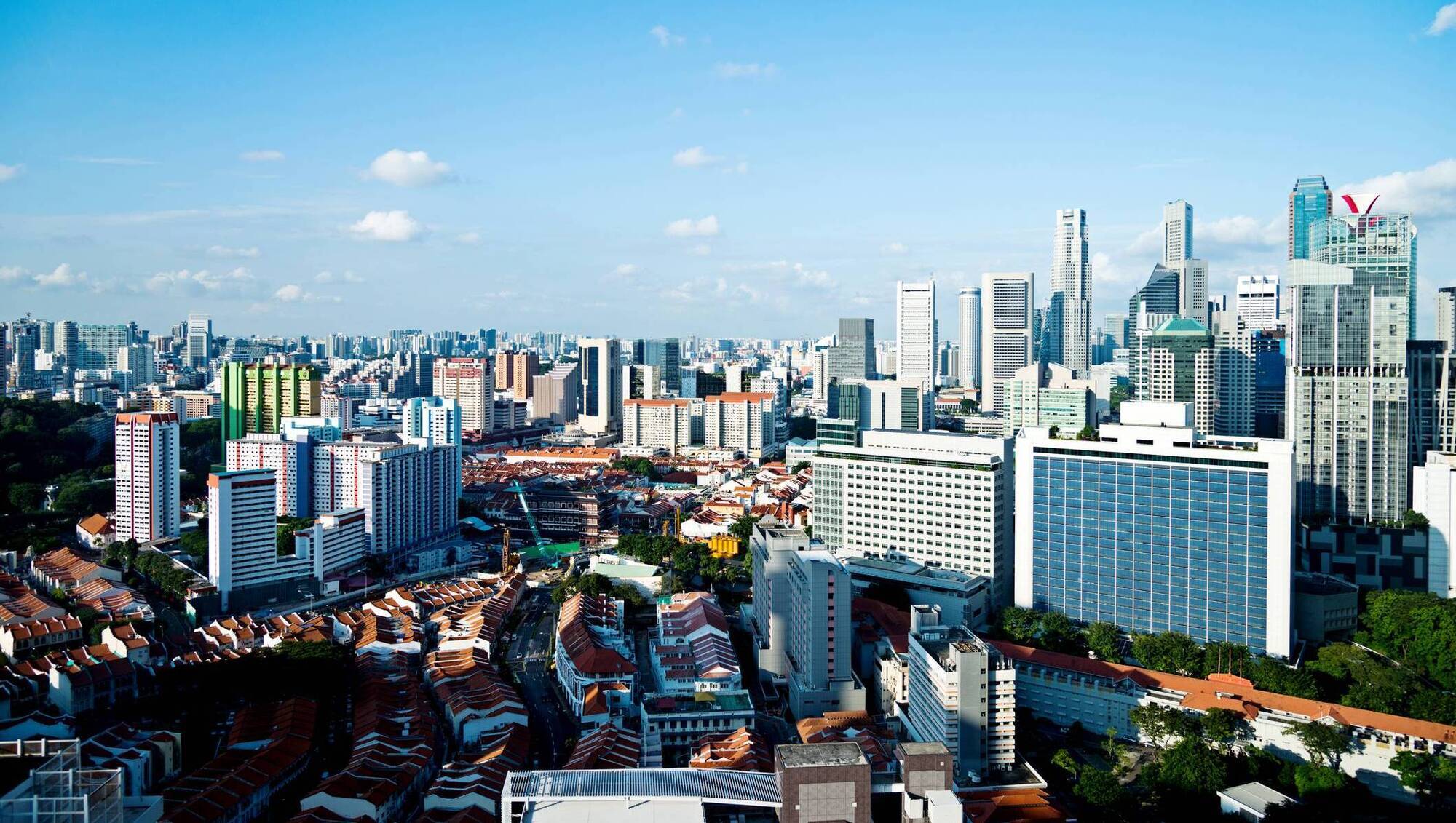
Singapore's state-led housing strategy offers striking lessons as Ireland struggles with soaring demand and decades-long waiting lists
Singapore’s signature public housing is high-rise apartments of up to 50 stories, but many of the structures are softened by green skyways and vertical gardens. File picture

Singapore’s signature public housing is high-rise apartments of up to 50 stories, but many of the structures are softened by green skyways and vertical gardens. File picture

Singapore shows that having bold ambition for social and public housing works.

Close to 80% of the Asian state’s residents live in government-subsidised housing that is designed with the social, cultural, and recreational needs of people in mind.

Nature and high-rise don’t naturally go together, but with a ‘city in a garden’ approach, the south-east Asian state has insured a densely populated area is also a lush and biodiverse environment.

Managed by the Housing and Development Board (HDB), publicly-provided housing is not just for lower-income families, but accommodates the vast majority of the population and ultimately creates strong communities.

It all sounds utopian, and perhaps that’s part of the reason why the tiny State is often voted among the most liveable places on earth.

Singapore’s situation is worlds away from Ireland’s housing crisis, which continues to spiral downwards with more than 17,000 people now living in emergency accommodation, almost 60,000 households on the social housing waiting list, and more than 53,500 families or individuals in active HAP tenancies still needing secure homes.

But the similarities between both countries are striking.

As small island nations that were once part of the British empire, both Ireland, with a population of 5.4m; and Singapore which has 6.1m inhabitants, have emerged to become two of the wealthiest States in the world, with exceptionally high GDPs per capita.

Similar to the Dublin tenements that formed a significant part of the housing landscape at the time of Irish independence; six decades ago, when Singapore was finding its feet as an independent nation, three out of four residents lived in overcrowded and filthy slums.

But in the intervening period, the divergence in approach to housing could not be more different.

This week, the Dáil heard that it will take 55 years to clear current and emerging social housing need.

Calling on the Government to fully reinstate funding for social housing acquisitions, including the tenant in situ programme, Sinn Féin’s housing spokesperson Éoin Ó Broin outlined that people are waiting up to 14 years to be housed.

In Ireland, of course, those seeking social housing must meet strict qualification criteria. A person must show that they do not have suitable alternative accommodation and must also be within the income limits, which depending on the local authority range between €30,000 and €40,000 of an annual salary for a single person.

Singapore, by comparison, has adopted an inclusive public housing approach, which has provided 1.1m government-built flats that occupants can purchase at subsidised rates.

The model means that residents own the title to their home through a 99-year lease, but the Government retains ownership of the land. It is argued that this ensures stability for residents but also means that the State is responsible for the maintenance of communal areas and public spaces.

Working Singaporeans pay into a central provident fund (CPF), which is a compulsory savings and pension plan, and they can dip into this savings pot to help with the full or partial payment of a property, or to cover monthly mortgage repayments.

Public housing is also seen as more than merely an accommodation unit.

State control of the land also allows for the incubation and rollout of a comprehensive masterplan to take in the needs of those living there, instead of a privately-led incremental and piecemeal approach to the development of an area.

Lorcan Sirr, a senior lecturer in housing at the Technological University Dublin (TUD) said: “The principle of the state taking more active control in the ownership of land does have its merits. It means you are not dependent on construction companies buying land or people selling land or even hoarding land.”

In Singapore, apartment towers are often built at varying heights with interesting design features, and typically include supermarkets, leisure facilities, cheap food vendors, or hawker centres and other services to create villages within the city.

The 'father of urban planning'

Liu Thai Ker, the architect and “father of urban planning” who was responsible for developing the HDB blueprint that would ultimately define the Singapore skyscape, died earlier this year.

During his time at the HDB, he oversaw the development of 20 new towns and about 500,000 housing units after being given the task of providing accommodation for those still living in substandard slums by Singapore’s first prime minister Lee Kuan.

Liu was a strong believer that State-provided did not have to equate to scarifying on function, and the apartments he designed were light-filled and spacious enough to comfortably raise a family.

“To me, every HDB block is as beautiful as Miss Universe,” he said of his buildings, many of which had pastel-coloured facades in a nod to the Malay culture.

Liu was also intent on fostering a sense of community, many of his buildings feature one main exit and entry, meaning residents often cross paths.

He sought the advice of sociologists to estimate how many families should live in proximity to maximize social interactions, and after this consultation it was decided that each corridor of a flat complex would share six to eight units to allow neighbours to mingle.

Today, Singapore’s signature public housing is high-rise apartments of up to 50 stories, but an emphasis on nature and quality of life mean that many of the structures are softened by innovative architecture such as green skyways and vertical gardens.

As part of a Government plan to have a park within a 10-minute walk of every home, a target of developing 130 hectares of new parks, and enhancing around 170 hectares of existing parks with more lush vegetation and natural landscapes has been set for this year.

Singapore will also double the rate of annual tree planting in the decade up to 2030, to plant 1m more trees.

The country’s first Green Building Masterplan was launched in 2006 to encourage developers to embed sustainability as part of a building’s life cycle from the onset.

Under the latest targets, 80% of new builds are to be ‘super low energy’ buildings from 2030.

Other nations

Other nations have adopted aspects of Singapore’s public housing approach or have created similar versions themselves. Vienna is also often cited as a model of social housing to follow.

Last week, London Mayor Sadiq Khan announced £100m of direct investment in a stalled East London regeneration site as part of a new “Singapore-style” development.

He made the announcement during a trade mission to Singapore and Japan, confirming that the Greater London Authority (GLA) would now provide direct funding to help deliver 7,000 new homes on a 60-acre site in the Royal Docks that has lain dormant for more than 40 years.

Of course, no model is ever perfect, and Singapore is not without its drawbacks.

It has been governed by the People’s Action Party (PAP) since 1959 and is often described as a “managed” democracy due to the fact despite regular elections, it effectively is a one-party State. This has allowed the Government to continue with consistent policies around housing, which has included measures that give greater weight to the traditional nuclear family when allocating units.

In recent years, concerns have also been raised around affordability due to increasing re-sale values, which jumped post-covid, when the usual level of construction was stalled.

But Singapore has created a model that provides affordable homes to the majority of the population, something that is akin to a fever dream in this country.

More in this section

Revoiced

Newsletter

Had a busy week? Sign up for some of the best reads from the week gone by. Selected just for you.

Cookie Policy Privacy Policy Brand Safety FAQ Help Contact Us Terms and Conditions

© Examiner Echo Group Limited